Montana Home Repair Grants 2026: USDA, WAP & Local Help
In 2026, Montana’s home repair landscape is defined by extreme weather resilience and a strategic shift toward energy independence. While free government money is a myth, the real pathways in the Treasure State are found through the USDA, a network of ten Human Resource Development Councils (HRDCs), and utility-backed safety nets. (Compare this with the repair strategies used in neighboring Idaho).
This guide provides a comprehensive breakdown of the verified grants and assistance programs active across Montana this year, including specialized sections for documentation and eligible repairs. If you need broader funds to fix your home across the country, check our main directory.
The 2026 Statewide Programs
USDA Section 504 Home Repair Program
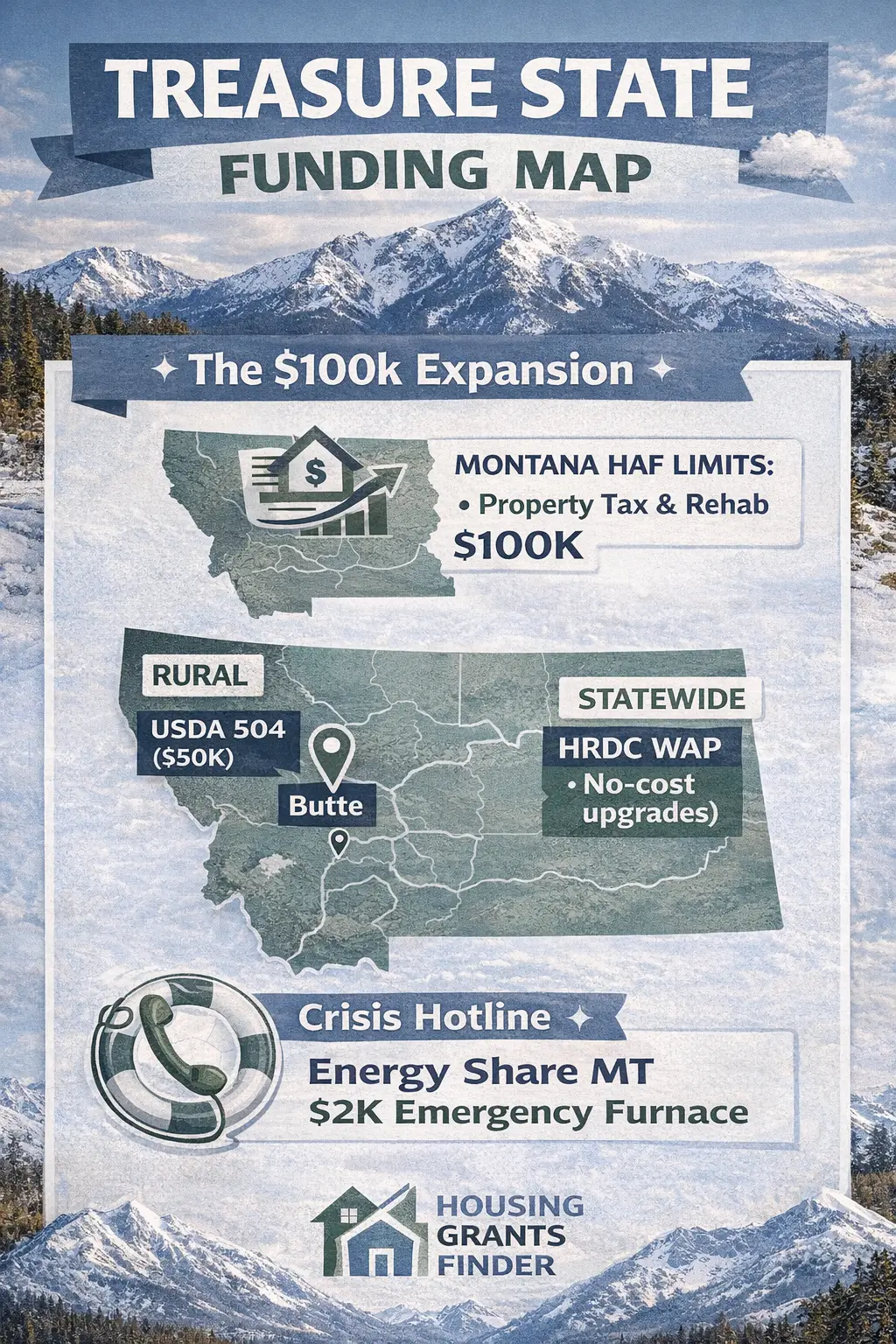
This remains the primary resource for rural Montana. For 2026, the USDA has maintained higher caps to account for the rising cost of materials and labor in the Mountain West.
Loans up to $40,000 (1% fixed interest) and grants up to $10,000 for seniors (age 62+).
- The Disaster Bonus: If your home is in a Presidentially Declared Disaster area (including recent flood or fire-impacted counties), the grant limit can rise to $15,000, with a combined assistance ceiling of $55,000.
- Best For: Structural foundation issues, failing roofs, and unsafe electrical systems.
Website: USDA Rural Development Montana
Montana Homeowner Assistance Fund (HAF)
One of the best-kept secrets in 2026 is the expansion of the HAF program. While it began as a pandemic-era safety net, it has evolved into a robust repair tool.
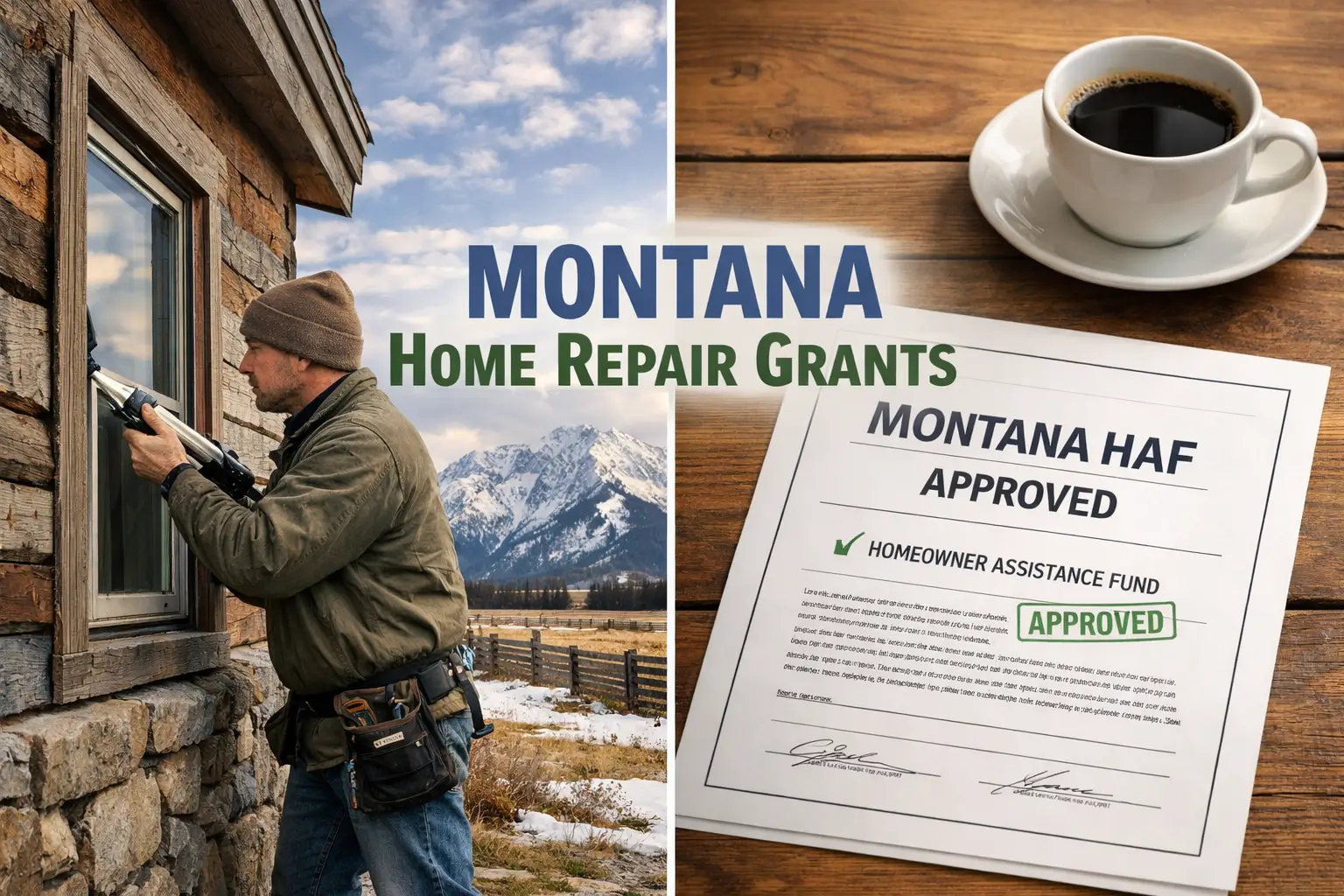
Eligible homeowners can receive up to $100,000 for critical repairs that prevent displacement.
- Key Benefit: This can cover massive projects that smaller grants won’t touch, including extensive structural rehab and property tax arrears.
- Eligibility: You must be under 100% of the Area Median Income (AMI) and have experienced financial hardship.
Website: Montana Housing HAF
Energy, Comfort, and Winter Survival
In a state where winter temperatures frequently drop below zero, a failing furnace isn’t just an inconvenience, it’s a life-threatening emergency.
Montana Weatherization Assistance Program (WAP)
Managed through the Department of Public Health and Human Services (DPHHS) and delivered by the state’s ten Human Resource Development Councils (HRDC housing rehab programs), WAP is Montana’s first line of defense against staggering heating bills (providing vital low-income weatherization MT needs).
- The Help: No-cost building upgrades including attic/sidewall insulation, air sealing, and furnace safety repairs or replacements.
- The Strategy: In Montana, WAP is inextricably linked to LIHEAP (Low Income Home Energy Assistance Program). If you apply for help paying your heating bills, you are often automatically screened for weatherization.
- Eligibility: Generally 200% of the Federal Poverty Level (approx. $40,880 for a two-person household in 2026).
Website: Montana DPHHS Weatherization
Energy Share of Montana
When you need speed rather than a long-term construction project, Energy Share is the answer. This non-profit fills the gaps that government programs cannot reach.
- The Help: One-time assistance of up to $2,000 every five years for emergency furnace (emergency heating repair Montana) or water-heater repairs.
- Key Benefit: Speed. When a furnace dies in January, you don’t have months to wait for a USDA audit. Energy Share is built for crisis intervention.
- Website: Energy Share of Montana
Table 1: Statewide and Federal Safety Nets
These programs cover the largest geography and offer the highest dollar amounts for structural and energy needs.
Specialized Pathways: Veterans, Tribal, and Regional Help
One of the biggest mistakes homeowners make is applying to generic programs when a specialized pathway exists for their specific demographic or location.
Veteran Disability Housing Grants (VA)
For Montana veterans with service-connected disabilities, the VA provides the most substantial funding available in the state (essential VA disability home modifications).
- Specially Adapted Housing (SAH): For FY 2026, grants can reach up to $126,526 to build or remodel a home for independent living (widening doorways, installing ramps, etc.).
- Special Home Adaptation (SHA): Provides up to $25,350 for 2026 to improve mobility within a current primary residence.
Website: VA Housing Assistance
Tribal Housing Improvement Program (HIP)
Administered by the BIA and local tribes, this is a safety-net program for American Indians living in approved tribal service areas.
- The Help: Can cover everything from essential “safe and sanitary” repairs (Category B) to full home replacement (Category C) for homes that are beyond saving.
- Eligibility: Requires tribal membership, residency in a tribal area, and income below 150% of DHHS poverty guidelines.
Butte-Silver Bow: Residential Metals Abatement (RMAP)
Montana has very specific regional help due to its mining legacy. In the Butte Priority Soils area, the focus isn’t on roofs, but on contamination (the Butte RMAP lead testing program).
- The Help: 100% funded free sampling and abatement of lead, arsenic, and mercury in attic dust, soil, and paint.
If you live in this area, this is a critical health safety net that adds immense value to your property at no cost.
Contact: 406-497-5040.
Required Documentation Checklist
Montana programs are paperwork-intensive. To avoid pending status or rejection, have these digital or physical copies ready:
- Proof of Identity: Social Security cards for all household members and valid Montana IDs.
- Proof of Ownership: A copy of your Warranty Deed or current property tax statement.
- 2026 Income Verification:
- Last 60 days of pay stubs.
- 2026 Social Security or Disability award letters.
- Signed copies of your most recent IRS Form 1040 (preferred).
- Utility History: Your last 12 months of heating/electric bills (essential for Weatherization).
- Mortgage Statement: Proof that you are either current on payments or have a plan for reinstatement (required for HAF).
- Bids & Estimates: At least one written estimate from a licensed Montana contractor for the specific repairs requested. (Always avoid contractor scams).
What Repairs Are Covered
Government and non-profit grants prioritize Safety, Sanitation, and Stability over aesthetic upgrades.
Commonly Allowed Repairs:
- Roofs: Replacement of leaking or structurally unsound roofing material.
- HVAC: Repair or replacement of failing primary furnaces, boilers, or water heaters.
- Electrical: Remediation of Knob and Tube wiring or outdated panels that pose fire risks.
- ADA Accessibility: Ramps, widening doorways, grab bars, and walk-in tubs for seniors or disabled residents.
- Structural: Foundation stabilization or repair of failing joists and subfloors.
Strictly Disallowed Repairs:
- Cosmetic Upgrades: New kitchen cabinets, high-end backsplashes, or luxury flooring.
- Luxury Features: Hot tubs, swimming pools, or decorative landscaping.
- New Construction: Programs will not fund the building of a new addition or finishing a basement for extra living space.
- Preventative Replacement: Replacing a functional, safe furnace just because it is old (unless it fails a specific safety audit).
FAQs
Are there real home repair grants in Montana in 2026?
Yes. Primary options include USDA Section 504 grants, the expanded $100,000 HAF repair grant, and weatherization programs managed by local HRDCs.
Can seniors get free home repair help?
Yes. Seniors age 62+ can receive up to $10,000 in USDA grants for safety repairs if they meet very-low-income requirements and cannot afford a loan.
What if my furnace breaks in the middle of winter?
Contact Energy Share of Montana or your local HRDC immediately. They provide emergency furnace repair grants and “Crisis” LIHEAP funding to restore heat quickly.
What if I live in a rural town?
Rural residents have the best access via USDA Section 504. Contact your regional Rural Development office in Bozeman, Billings, or Missoula to begin.
How do I get my home tested for lead?
Residents in Butte-Silver Bow can get free lead and metal testing through RMAP. Elsewhere, contact your HRDC for active HUD Lead Reduction funds.
Can tax relief help me afford repairs?
Indirectly, yes. Montana’s 2026 tax structure offers a reduced 0.76% rate for primary residences, which lowers monthly costs and frees up maintenance funds.
Conclusion
Montana’s 2026 assistance landscape rewards the proactive. For major work, the USDA Section 504 remains the gold standard, but the $100,000 HAF repair expansion represents a once-in-a-generation opportunity for low-to-moderate income owners. For energy-related issues, getting onto the LIHEAP/Weatherization list before the April 30 seasonal transition is critical.
- Check USDA Eligibility: Use the USDA Map to see if your town is “Rural.”
- Contact your HRDC: This is the gatekeeper for weatherization, emergency furnace help, and LIHEAP.
- Audit your HAF Status: Visit the Montana Housing portal to check the current availability of the $100k repair grant.