Pennsylvania Home Repair Grants 2026: Whole-Home & LIHEAP
Pennsylvania home repair grants may help some homeowners fix safety problems such as roof leaks, heating failure, plumbing issues, electrical hazards, accessibility needs, and weatherization problems. Help is usually local, not one statewide application, so eligibility depends on income, county, repair type, funding, and program rules.
For 2026, the main paths to check are the Whole-Home Repairs Program PA, PHARE-supported local repair programs, LIHEAP Crisis for heating emergencies when the season is open, Philadelphia BSRP, and USDA Section 504 for eligible rural homeowners.
Quick Answer: Who can get home repair grants in PA?
Pennsylvania homeowners may qualify for home repair help through county Whole-Home Repairs agencies, PHARE-supported local programs, LIHEAP Crisis, Philadelphia BSRP, Weatherization, or USDA Section 504. The right program depends on where you live, income limits, the type of repair, whether the home is owner-occupied, and whether funding is currently open.
- Major repairs: Start with your county Whole-Home Repairs agency.
- No heat or broken furnace: Check LIHEAP Crisis when the season is open and contact your County Assistance Office.
- Philadelphia emergencies: Check PHDC’s Basic Systems Repair Program.
- Rural homeowners: Check USDA Section 504 loans and grants.
- Energy loss or old heating systems: Ask your local Weatherization agency.
Quick Match: Find Your Pennsylvania Fix
| Program Name | Your Need | The Real-World Limit |
|---|---|---|
| Whole-Home Repairs | Urgent Safety & Roof Fixes | Up to $50,000 Grant (≤80% AMI) |
| LIHEAP Crisis | Emergency Furnace Fix | Available only in Season |
| BSRP Program | Major City Repairs (Philly) | Targeted for Electrical/Plumbing |
| USDA Section 504 | Rural Health Repairs | $10,000 Grant (Seniors 62+) |
| PHARE Grants | Affordable Housing Fixes | Varies by Local Nonprofit |
Important: Do not start with a general call to Harrisburg for an individual repair application. DCED points homeowners to the county agency or local subrecipient that serves their area. Use the official agency list first, then ask about current funding, waitlists, required documents, and whether emergency intake is open.
Who Qualifies for Home Repair Help in Pennsylvania?
Pennsylvania does not use one single statewide homeowner application for repairs. Most help flows through county agencies, nonprofit subrecipients, city housing programs, or federal rural offices. The right path usually depends on your income, your county, and whether the problem is an emergency, a major system failure, an accessibility issue, or a rural health and safety repair.
If you are comparing home repair grants PA resources, remember that PA grants for home repairs and low income home repair assistance PA options usually depend on local intake, not a single state form. For emergency home repair grants Pennsylvania searches, describe urgent hazards clearly during intake.
- Whole-Home Repairs: Usually for homeowners at or below 80% AMI through the county agency or nonprofit serving your area.
- Philadelphia emergency repairs: BSRP is for owner-occupied single-family homes with emergency electrical, plumbing, heating, or roofing issues.
- Heating emergencies: LIHEAP Crisis may help when your household is in danger of being without heat during the season.
- Rural homeowners: USDA Section 504 is a major option for very low-income homeowners, especially seniors. Read our full USDA Section 504 Guide.
- Older homeowners: If age or mobility is part of the problem, also review our guide to Pennsylvania home repair grants for seniors.
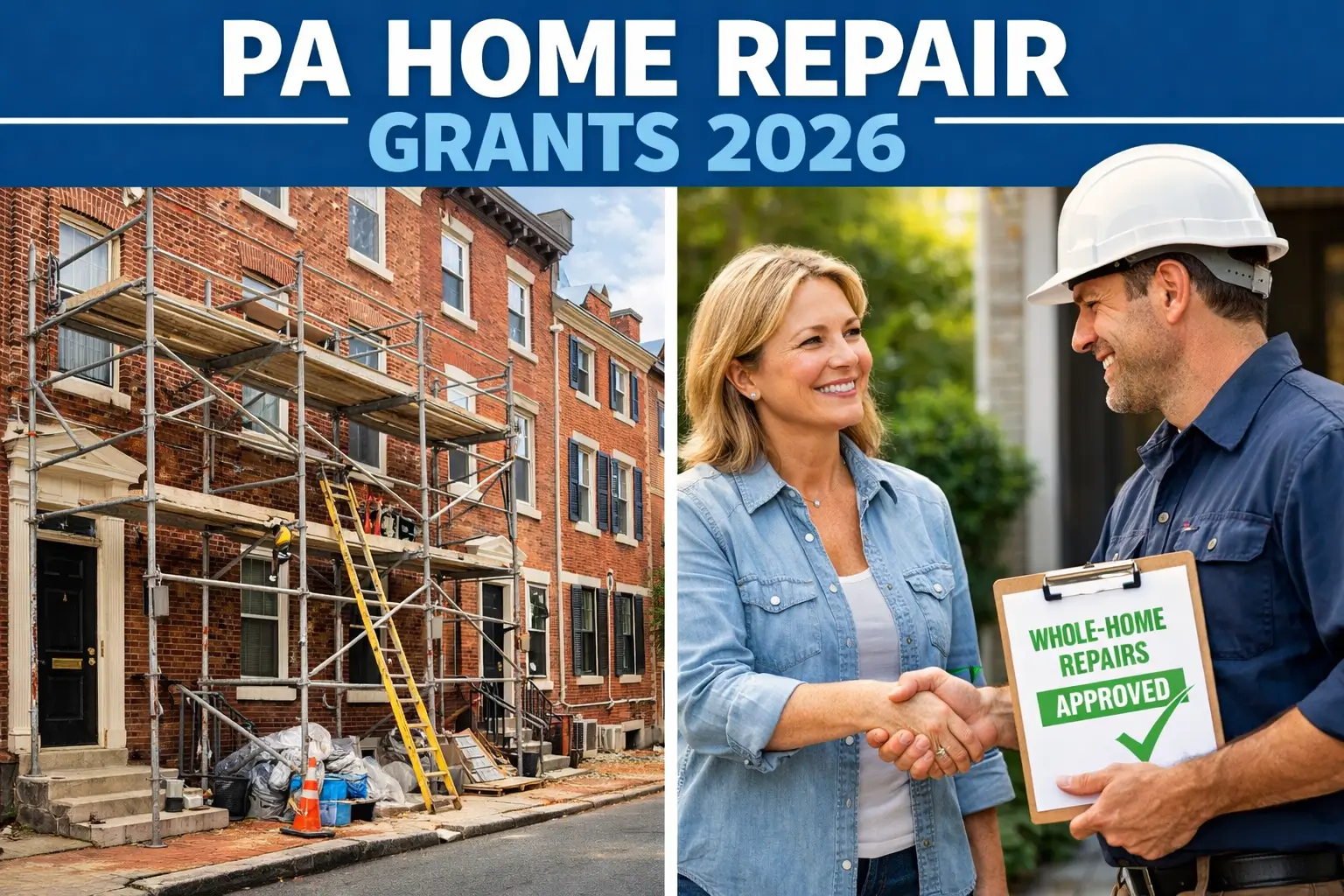
The Whole-Home Repairs Program PA is one of the strongest repair paths for habitability, safety, accessibility, energy, and water-efficiency issues. It is county-administered, so approval, waitlists, repair priorities, and available funding vary by local agency.
The $50,000 Repair Limit
Eligible homeowners may receive repair help of up to $50,000 per unit through a grant or forgivable loan, depending on county rules, funding, and the repair need. This may include structural, health and safety, accessibility, weatherization, or habitability repairs.
For roof-specific options, also read our guide to government grants for roof replacement.
The Waitlist and Interest List
Many counties use waitlists or interest lists because demand is high. If your county is not taking new applications, ask whether an interest list, emergency intake, or PHARE-supported repair funding is currently available.
- Timing note: Allegheny County’s rules for 2026 state that repairs must be completed by the end of the year to meet funding cycles.
- Application tip: If your county says they aren’t taking applications, ask specifically for the Home Repair Interest List. Money often recycles back into the program when other homeowners drop out or move.
Eligibility (AMI Limits)
You must earn at or below 80% of the Area Median Income (AMI). Since AMI is county-specific, a family of four in Bucks County might have a much higher income limit than a family in rural Potter County. In 2026, administrators are checking 2025 tax returns and mortgage statements with extreme precision.
Contact: Find Your Local Agency List (DCED)
PHARE and Local Nonprofit Repair Help
The PHARE Fund is important in Pennsylvania, but many homeowners misunderstand how it works. PHARE is not a single statewide homeowner application. It is a statewide funding source that supports affordable housing, rehabilitation, and related housing initiatives through local nonprofits, housing agencies, and county-level partners.
- What this means for you: You usually will not “apply to PHARE” the way you apply to LIHEAP or USDA.
- Best use: Think of PHARE as a local funding source that may sit behind county rehab programs, nonprofit repair efforts, accessibility work, or preservation projects.
- Practical tip: When you contact a county agency or nonprofit, ask whether they have current PHARE-supported repair money in addition to Whole-Home Repairs.
City-Specific Help: 2026
While Philadelphia BSRP eligibility is a standard search, other cities have high-impact programs you should know about.
Pittsburgh & Allegheny
The Allegheny County Residential Rehabilitation Program offers 0% interest loans for major fixes. If you live in the city limits, look for the Urban Redevelopment Authority (URA). They often have specific pots of money for roof and facade work.
Reading & Berks County
The City of Reading offers a Homeowner Housing Rehabilitation Program. It targets low-income families at or below 80% AMI. They are very strict about lead-safe certifications.
Lancaster County
Recent reports show a surge in funding for the Critical Repair Program. This is a lifesaver for seniors who need bathroom modifications to stay in their homes.
Allentown & Lehigh
Check the Lehigh County Housing Rehabilitation Program. They prioritize emergency repairs. If your roof is actively leaking into your electrical panel, you can often skip to the front of the line.
If Your Furnace Dies: LIHEAP Crisis & WAP
When your heat fails in January, you cannot wait for a grant cycle to begin. This is where LIHEAP Crisis and the Weatherization Assistance Program (WAP) come in.
Free Furnace Repair Pennsylvania
If your furnace is red-tagged by the gas company or stops working entirely, contact your local County Assistance Office and check the official PA DHS LIHEAP page. The 2025–2026 LIHEAP season is now closed, so furnace-related crisis help depends on the next open season, emergency rules, and available funding. (See our Emergency Furnace Guide).
- Cash grant: When LIHEAP is open, Pennsylvania’s regular cash grant may help with heating bills and is usually sent directly to the utility or fuel provider, not as cash to the homeowner.
- Crisis help: LIHEAP Crisis may help during an open season when a household has no heat, broken heating equipment, leaking lines, lack of fuel, or another qualifying heating emergency.
- Fastest route: If heat is off or unsafe, contact your County Assistance Office and ask whether any emergency heating, LIHEAP, weatherization, or local nonprofit repair help is available.
Check current PA DHS LIHEAP status
The PA Department of Human Services also uses COMPASS for benefit screening and applications when available.
Weatherization (WAP)
WAP focuses on energy savings, comfort, and health/safety work such as air sealing, insulation, heating system safety, and minor repairs needed for weatherization. PA DCED lists eligibility at or below 200% of the federal poverty level, with priority for higher-risk residents such as seniors, people with disabilities, families with children, and high energy users. The average expenditure is currently listed at $8,547 per household, depending on the home audit results.
If the repair involves old windows, doors, insulation, or energy loss, compare this with our windows and door replacement grants guide. Your local Weatherization Assistance Program provider may be a Community Action Agency or another approved local agency.
Philadelphia: Basic Systems Repair Program (BSRP)
If you live in the city of Philadelphia, the PHDC provides free repairs for electrical, plumbing, heating, and roofing emergencies.
The Scope: BSRP focuses on emergencies such as leaking water service lines or roofing failures that meet a significant ceiling collapse threshold.
The Rule: You must be current on property taxes and your water bill, or be on a signed payment agreement.
- The Friction: If you own other residential property, you are disqualified. This program is strictly for your primary, single-family home.
Website: PHDC Philadelphia BSRP
USDA Section 504: Rural Pennsylvania Repairs
If you live in a rural ZIP code outside major hubs like Philly or Pittsburgh, the USDA Rural Development office is a 2026 cornerstone for seniors.
For USDA Section 504 Pennsylvania help, the official program is also known as Section 504 Home Repair.
- The Grant (Age 62+): Up to $10,000, strictly for removing health and safety hazards. (This increases to $15,000 if the home was damaged in a disaster area).
- The Loan (All Ages): Up to $40,000 at a 1.0% fixed interest rate over 20 years.
- Repayment rule: USDA grants generally must be repaid if the property is sold in less than 3 years. USDA also reviews income, rural eligibility, ownership, credit access, and whether a loan is possible before grant help is awarded. (Learn more in our USDA 504 Guide).
Website: USDA PA Single Family Housing Repair Loans & Grants
Three Reasons Pennsylvanians Get Rejected in 2026
1. The Back Tax Rule
If you owe property taxes to your school district, township, or county, your application is a No until you have a signed, official Payment Plan in your hand. Most programs will not invest state funds in a house that the county might seize for unpaid taxes.
2. Owner of Record Issue
If the house is still in your late grandmother’s name, or if you haven’t finished the probate process, you are not the Owner of Record. You cannot get a grant until you fix this. If you are in a Tangled Title situation, contact a local legal aid office like Community Legal Services before you apply.
3. Lack of Homeowner’s Insurance
Almost every 2026 program, from WHR to Bucks County’s rehab fund, requires a valid insurance declaration page. If your insurance has lapsed, you are ineligible for the repair grant until coverage is restored.
How to Apply for Home Repair Help in Pennsylvania
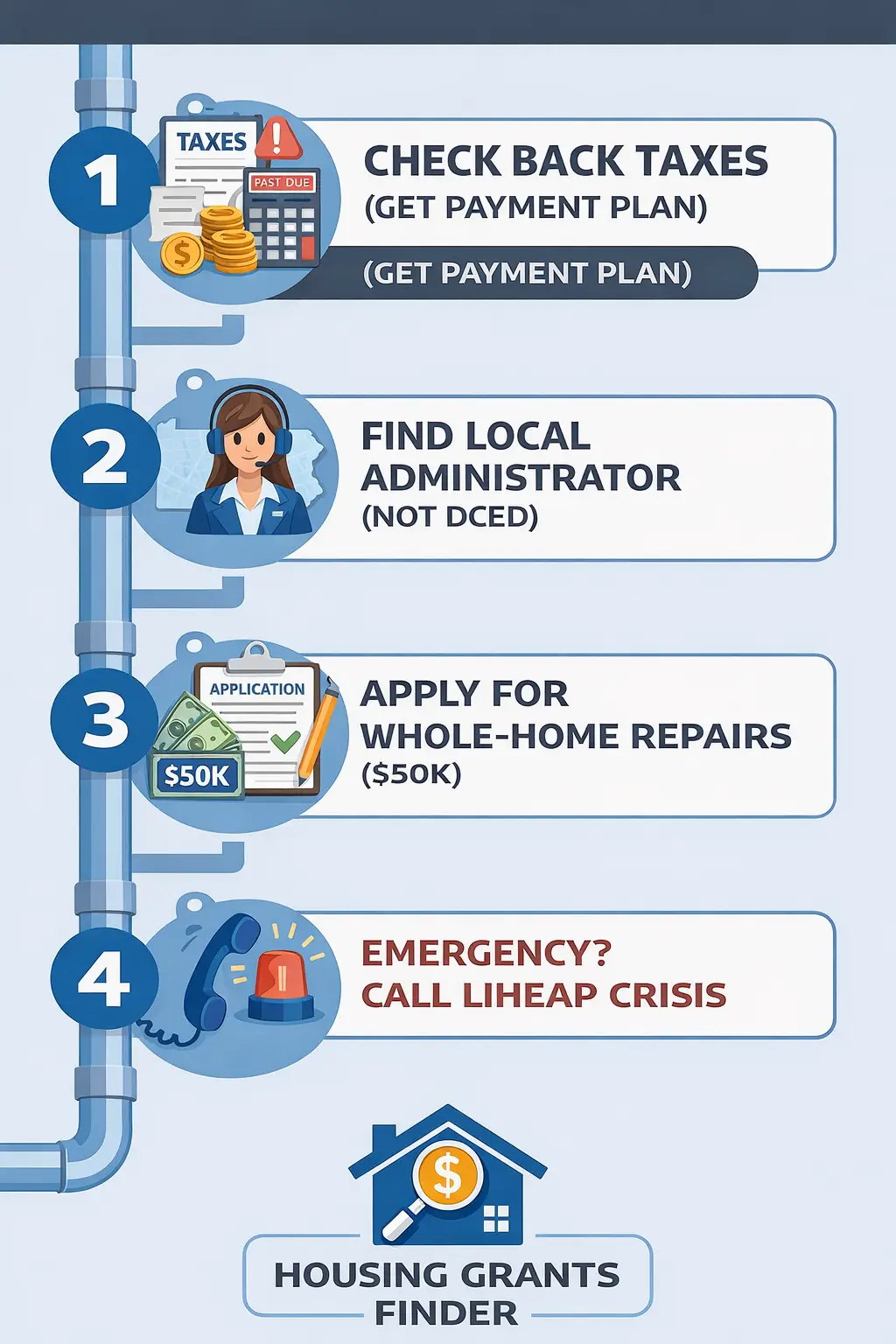
- Match the repair to the right program first: Whole-Home Repairs for larger county-administered rehab, LIHEAP Crisis for heating emergencies, BSRP for Philadelphia emergency systems repairs, and USDA Section 504 for eligible rural homeowners.
- Find the local administrator: For Whole-Home Repairs, use the county agency list instead of calling Harrisburg. For Philadelphia, start with One Philly Front Door or the PHDC operator.
- Gather documents early: Most programs will ask for proof of ownership, income records, ID, insurance documents, and details about the repair issue.
- Before signing repair paperwork, review our contractor fraud and home repair scam guide.
- Fix tax or title problems before applying: If you have back taxes, tangled title, or no current insurance, deal with that first because many local administrators screen for those issues early.
- Use the right urgency language: If the problem is a life-safety hazard, say that clearly during intake. Roof collapse risk, no heat, active sewage, and major electrical dangers are often handled differently from routine repairs.
FAQs
Why do most people get rejected?
The most significant cause of rejection is back taxes. Most Subrecipients won’t put state money into a house that the county might seize for unpaid taxes. You must have an official, signed Payment Plan in your hand before you apply.
Can I get help if I’m a renter?
Sometimes, but the structure is different. Under the Whole-Home Repairs Program, help for owner-occupied homes is typically structured for homeowners, while small landlords may be able to receive loans of up to $50,000 per unit for eligible repairs, with some loan-forgiveness provisions depending on program rules. In practice, your landlord or property owner has to work with the local county or nonprofit administrator.
What happens if I sell my house?
There is a clawback period. If you use the Whole-Home Repairs grant and sell within 5 to 10 years, you’ll likely have to pay a portion back from your sale profits. For USDA grants, if you sell in less than 3 years, you owe every penny back.
How long is the wait?
Expect a wait of 12 to 24 months. Pennsylvania has some of the oldest housing in the country, so demand is enormous. If your situation poses a Life-Safety Hazard, such as a collapsed roof or raw sewage, tell the intake officer immediately.
What are the 2026 income limits?
They vary by county. Most programs use the 80% AMI rule. For Weatherization (WAP), the limit is 200% of the Poverty Level, which is roughly $64,300 for a family of four in 2026.
Conclusion
Pennsylvania home repair help in 2026 is real, but it is highly local. The strongest paths are Whole-Home Repairs for county-administered rehab, LIHEAP Crisis for heating emergencies, BSRP for eligible Philadelphia emergency repairs, and USDA Section 504 for rural homeowners who qualify.
The most important move is not calling the state capital. It is finding the correct local administrator for your county or city, getting your ownership and income documents ready, and fixing tax, title, or insurance issues before your intake starts.