Minnesota Home Repair Grants 2026: MHFA, USDA, Heat Help
Minnesota homeowners may be able to get help through MHFA repair programs, Fix Up loans, USDA Section 504, Weatherization, city home improvement grants, and nonprofit repair partners. The best option usually depends on where you live, your income, and whether the repair involves heating, roofing, plumbing, accessibility, energy loss, or another health and safety issue.
This guide covers the main Minnesota home repair grants and repair assistance options for low-income homeowners, seniors, rural households, and families dealing with urgent repairs. If you need broader nationwide help, visit housinggrantsfinder.com.
Start Here: MHFA, Fix Up, USDA, Local Grants, or Weatherization?
Most Minnesota homeowners lose time by applying to the wrong program first. Start with the repair problem, then choose the best funding path.
- Very low income and major safety repair: Start with MHFA RLP or ELP through a local administrator.
- Moderate income and larger financed repair: The Minnesota Fix Up loan may be the better fit if you can repay a loan.
- Rural senior or safety hazard: USDA Section 504 is usually the strongest first call.
- City-specific help: Blaine, Andover, Ramsey County, Washington County, and local HRA programs may move faster than statewide options.
- No heat or energy loss: Start with Energy Assistance, Weatherization, or crisis repair before looking at a general rehab loan.
Who Qualifies for Minnesota Home Repair Grants?
Most Minnesota repair programs use the same basic filters before approving help.
- Owner-occupancy: You usually need to live in the property as your primary residence.
- Income: MHFA RLP and ELP are aimed at very low-income households, while Fix Up loans allow higher income limits.
- Repair type: Stronger applications involve heating failure, roof leaks, unsafe plumbing, electrical hazards, accessibility barriers, or code-related problems.
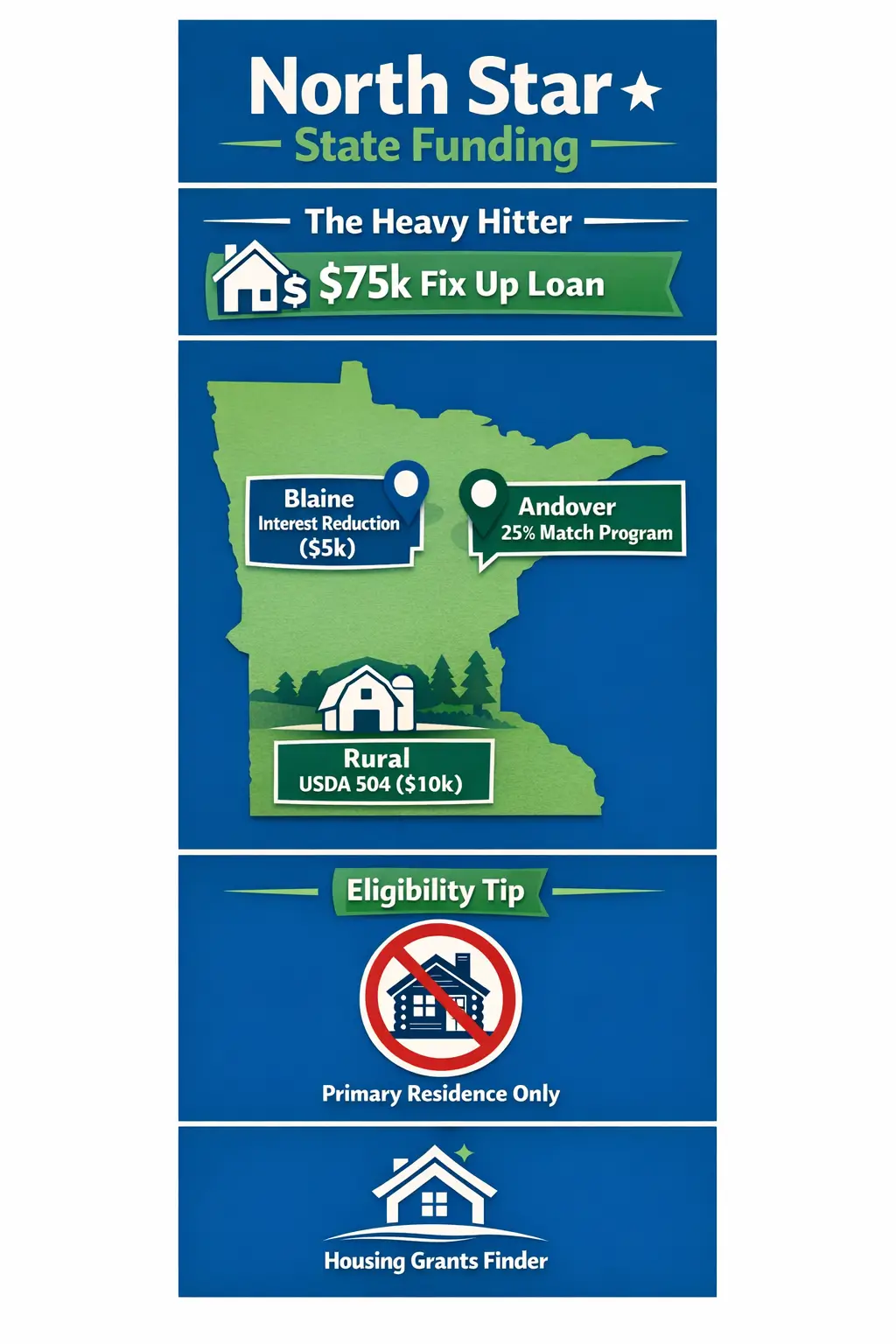
- Property use: Cabins, second homes, and non-primary residences usually do not qualify.
- Documentation: Have proof of ownership, income records, benefit letters, repair photos, and contractor estimates ready before applying.
MHFA Rehabilitation & Emergency Programs
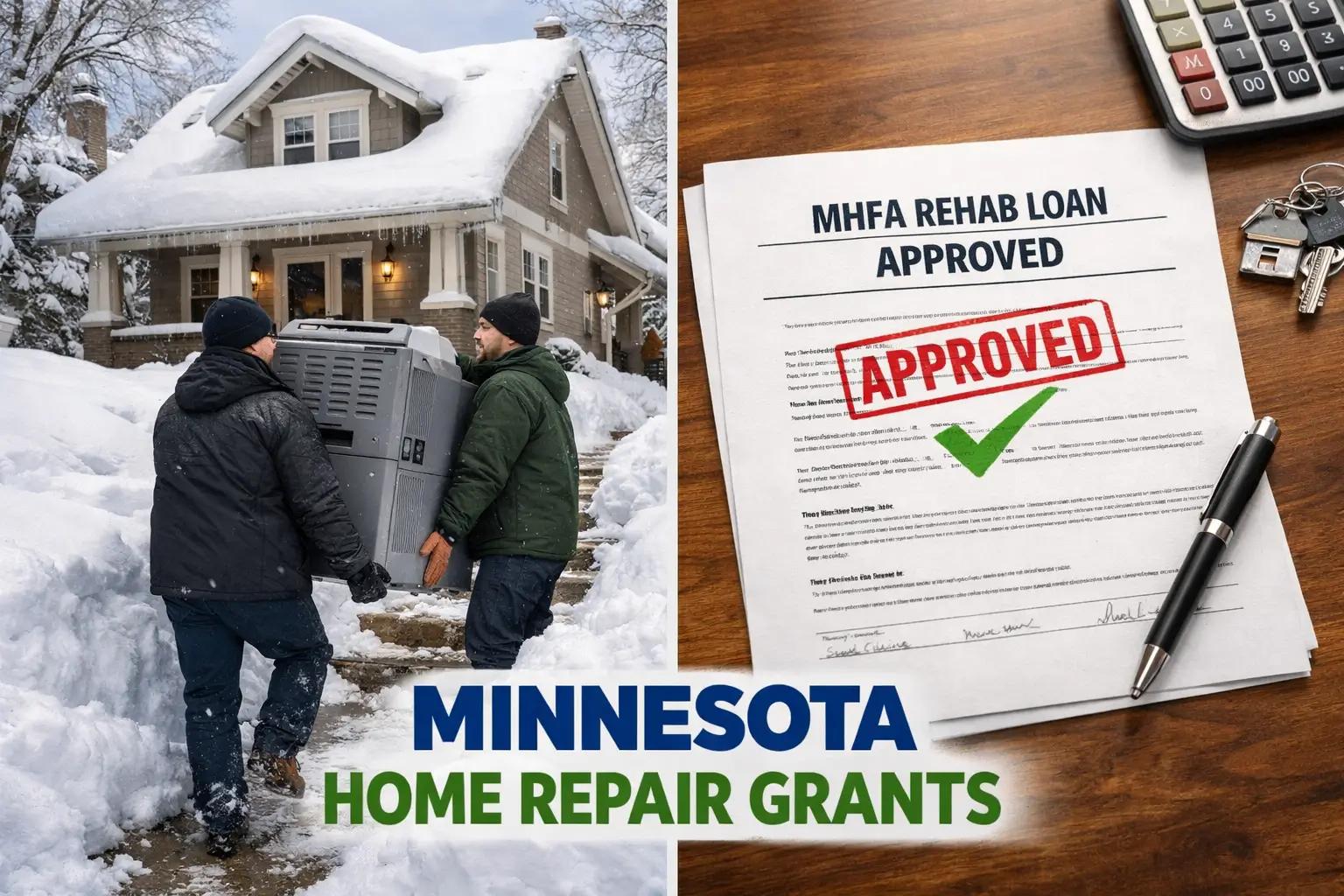
This is the best-kept secret for homeowners with very low incomes. Minnesota Housing (MHFA) offers two programs: the Rehabilitation Loan Program (RLP) and the Emergency and Accessibility Loan Program (ELP), which are essentially silent grants. You can get up to $37,500 at 0% interest.
- The Benefit: The entire loan is forgiven if you stay in your home for 10 years. It vanishes.
- You cannot apply directly through the state. You must find a local administrator, like United Cap or your county’s HRA, to start the paperwork.
These funds are for correcting deficiencies. If you want to remodel a kitchen just for looks, you will be rejected. The focus is strictly on HVAC replacement in Minnesota, roofs, and plumbing repair emergencies in Minnesota.
THE $75,000 HEAVY HITTER: Minnesota Housing Fix Up Loan
If you make too much for the forgivable RLP but still need a home improvement loan that Minnesota can support, the Fix Up Program is your primary engine. You can borrow between $2,000 and $75,000 for repairs that improve your home’s livability or energy efficiency.
- The Rates: Rates currently range from 3.00% to 7.99%, which is often lower than a standard fixed-rate home equity loan.
- Disaster Bonus: If you live in an officially declared disaster area, you can get up to $75,000 at 0% interest with a 10-year term.
You must use a participating lender, such as MNCEE. Do not go to your neighborhood bank; they likely won’t have the specific MHFA paperwork.
Official Link: Minnesota Housing Fix Up Program | MNCEE Fix Up Fund
Emergency Furnace, Roof, and Critical Repair Help
If the repair cannot wait, do not start with the slowest loan option. Match the hazard to the fastest repair path.
- No heat emergency: Call 2-1-1 and ask about Energy Assistance Program crisis repair. For the broader process, see our LIHEAP emergency furnace repair guide.
- Roof leak or storm damage: Check insurance first, then compare NeighborWorks, MHFA, USDA, or local repair programs if the damage creates a health or safety issue. For roof-specific paths, see government grants for roof replacement.
- Plumbing or electrical danger: Describe the problem as a habitability or safety issue, not a general upgrade.
Metro-Area: Blaine, Andover, and Ramsey
Localized grants move much faster because your neighbors manage the money.
Blaine: Interest Reduction & Grants
- Blaine has a Priority Deadline of March 15, 2026.
- They offer an interest-reduction benefit of up to $5,000 for qualifying households. You can get a loan of up to $50,000 at 4% fixed for 10 years.
- Official Link: Blaine Home Improvement Grants
Andover: The 25% Match
- The city pays 25% of your project cost, up to a maximum of $2,500.
- Your project must cost at least $2,000. It’s great for smaller jobs like window replacement in Minnesota or siding fixes.
- Official Link: Andover Grant Program
Ramsey & Washington Counties
- Ramsey County: Offers a Residential Rehab Deferred Loan for critical repairs.
- Washington County: Their Repair and Renovate program provides low-interest loans for roof replacements and essential systems in Minnesota.
- Official Link: Ramsey Home Programs
THE RURAL LIFELINE: USDA Section 504
If you live in Greater Minnesota (Duluth, St. Cloud, or rural farming counties), the USDA Section 504 home repair grant in Minnesota is your best bet.
- The Grant: Up to $10,000 for seniors (62+) to remove health and safety hazards.
- The Loan: Up to $40,000 at a 1% fixed interest rate. You can combine them for a $50,000 total package.
- Lived-In Detail: The USDA is very picky about modest homes. If you have an in-ground pool or a luxury shed, they will likely reject you.
Official Link: USDA Minnesota 504 Portal
Rebuilding Together & Hearts and Hammers
If you have zero room in your budget for a loan, look at these volunteer-led organizations.
- Rebuilding Together Minnesota: It focuses on fall prevention and accessibility home modification grants that Minnesota needs. If your income is below 50% AMI, they can provide donated labor for furnace replacement and plumbing.
- Hearts & Hammers (Twin Cities): Specifically handles exterior painting and siding repairs for homeowners who are 60+, disabled, or veterans.
- Official Links: Rebuilding Together | Hearts & Hammers
Help for Seniors, Accessibility, and Mobile Homes
Minnesota repair help is often stronger when the project protects an older homeowner, disabled resident, veteran, or household living in a manufactured home.
- Seniors: USDA Section 504 is one of the strongest options for rural homeowners age 62 and older. You can compare broader options on our home repair grants for seniors page.
- Accessibility: Ramps, safer bathrooms, grab bars, and wheelchair access should be framed as safety and mobility needs. For bathroom-specific options, see walk-in tub and bathroom safety grants.
- Mobile homes: Weatherization and some local programs may help, but larger structural loans often depend on land ownership, resident-owned cooperative status, or the condition of the home.
Are You Eligible?
Minnesota’s income limits are surprisingly high, but the rules are strict about your residency.
- High Limits: For the Minnesota Housing Fix Up loan, household income limits can go as high as $201,300, depending on your county.
- The Residency Trap: You must own and occupy the home. If you are fixing a cabin in Up North that isn’t your primary residence, you will be rejected on sight.
- Asset Rule: For some senior-specific grants (senior accessibility grants MN), if you have more than $15,000 in savings not including retirement, you may be forced to spend that down first.
How to Actually Apply
Step 1: The Award Letter First
Gather your 2026 Social Security Award Letter. Most agencies will reject 2025 letters immediately. This is the reason people get stuck in the “pending” pile.
Step 2: Use the HOC Directory
The Minnesota Homeownership Center maintains an updated directory twice a year. Use it to find hyper-local funds that don’t appear on state websites.
- Official Link: Homeownership Center Directory
Step 3: The Thursday Call
If you haven’t heard back in two weeks, call your local agency on Thursday morning. This is when staff typically clear the weekend’s chaos. Be polite but persistent. (Be mindful of avoiding contractor fraud).
Know What You’re Signing: Grants vs Loans in Minnesota
Not every Minnesota repair program is a free grant. Many options are forgivable loans, deferred loans, or low-interest loans.
- MHFA RLP and ELP: These can work like silent or forgivable loans if you meet the occupancy rules.
- Fix Up loan: This is a loan, not a grant, even if the rate is better than many private options.
- USDA Section 504: The grant portion is usually for eligible seniors, while the loan portion must be repaid.
- Volunteer programs: Groups like Rebuilding Together may provide labor or safety repairs instead of giving money directly to the homeowner.
For a broader repayment breakdown, see pay back home repair grants.
FAQs
Can I fix my roof after a storm?
Yes, but check your insurance first. If they deny the claim, call NeighborWorks; they offer a Metro Home Improvement Loan for code corrections and health items.
What if I have a No Heat emergency?
Call 2-1-1 immediately. Minnesota has a Cold Weather Rule, but it doesn’t pay for a new furnace; the Energy Assistance Program (EAP) Crisis fund does.
Can I fix a mobile home?
Yes, through United Cap or low-income weatherization assistance MN programs. You usually need to own the land or be in a resident-owned cooperative to get the larger structural loans.
Conclusion
Minnesota home repair help works best when you choose the right starting point. Use MHFA RLP or ELP for very low-income safety repairs, Fix Up loans for larger financed projects, USDA Section 504 for rural senior repairs, Weatherization for energy-related work, and city or county programs for local deadlines.
Before applying, gather your 2026 income documents, proof of ownership, repair photos, contractor estimates, and any insurance denial letters if storm damage is involved. For broader help, visit housinggrantsfinder.com and avoid home repair scams before signing with any contractor.