Walk-In Tub Assistance 2026: USDA, VA & Medicaid Options
If a bathtub or shower has become a fall risk, you may be able to get help through USDA Section 504, Medicaid HCBS waivers, VA disability housing benefits, local aging-in-place programs, or medical tax deductions. The strongest cases are usually tied to safety, mobility, disability, or a doctor-documented need.
This guide explains the main grants for walk-in tubs, walk-in shower help, bathroom safety funding, and rebate-style options available in 2026. If you are looking for a government grant for walk-in shower upgrades or a safer bathing setup for a senior, start by matching your situation to the programs below.
🚿 Check Bathroom Grant Eligibility
Find USDA, VA, and Medicaid waivers for walk-in tubs in your zip code.
Which Bathroom Safety Program Should You Try First?
Do not apply everywhere at once. Start with the program that matches your status and the reason the bathroom is unsafe.
- Rural homeowner age 62+: Start with USDA Section 504 if the bathroom creates a health or safety hazard.
- Medicaid waiver participant: Ask your caseworker about Environmental Accessibility Adaptations, not a normal bathroom remodel.
- Veteran: Start with VA HISA if the change is medically necessary, or SAH/SHA if the disability is severe and housing-related.
- Higher-income homeowner: A medical tax deduction may be more realistic than a grant.
- Need broader home repair help: Compare related options on our home repair grants for seniors guide.
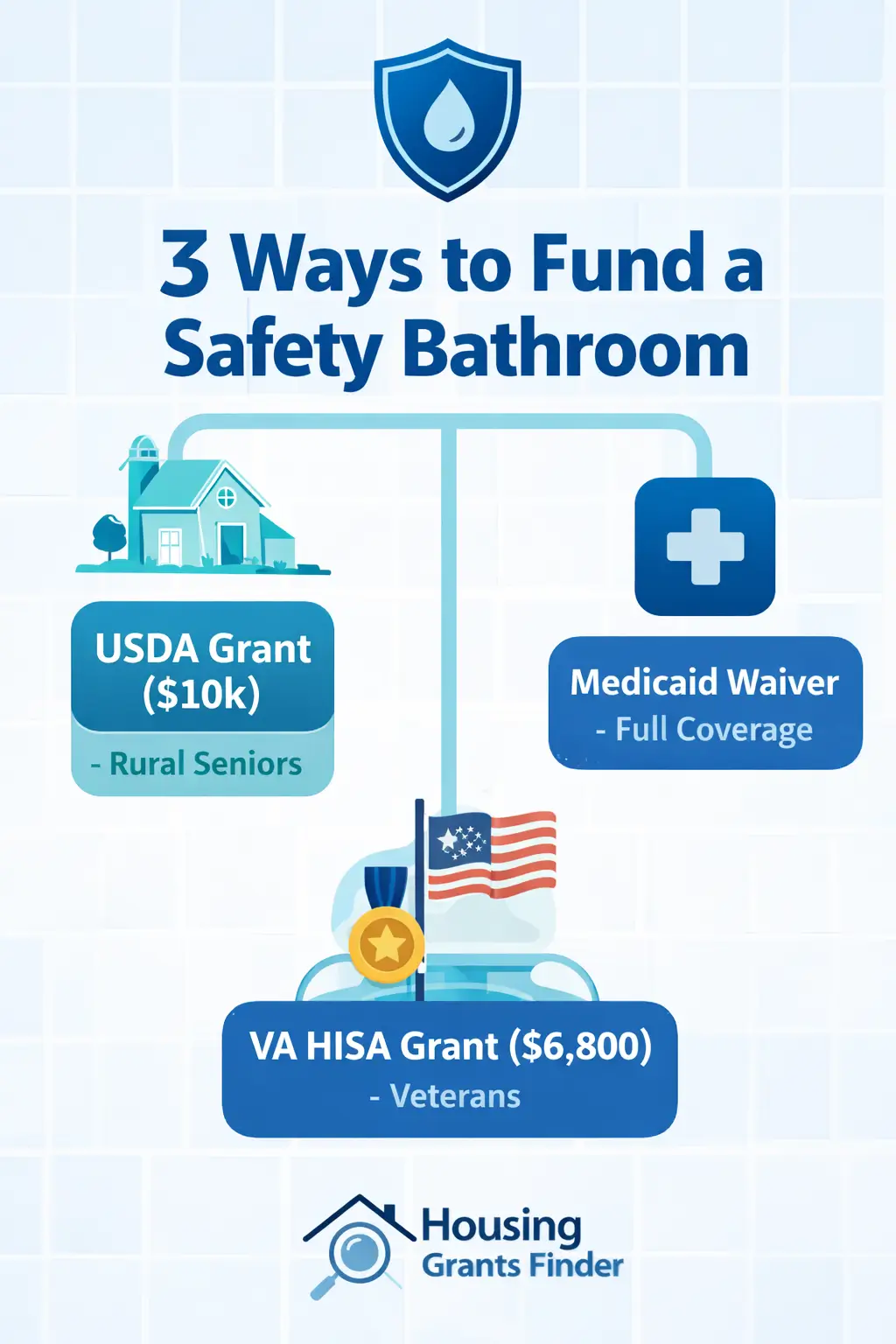
If you’ve heard Medicare doesn’t pay for that, you’ve only heard half the story. While traditional Medicare usually says no, there are three major backdoors: Medicaid EAA waivers, VA HISA grants, and the USDA 504 program, specifically designed to turn a dangerous bathroom into a safe haven for $0.
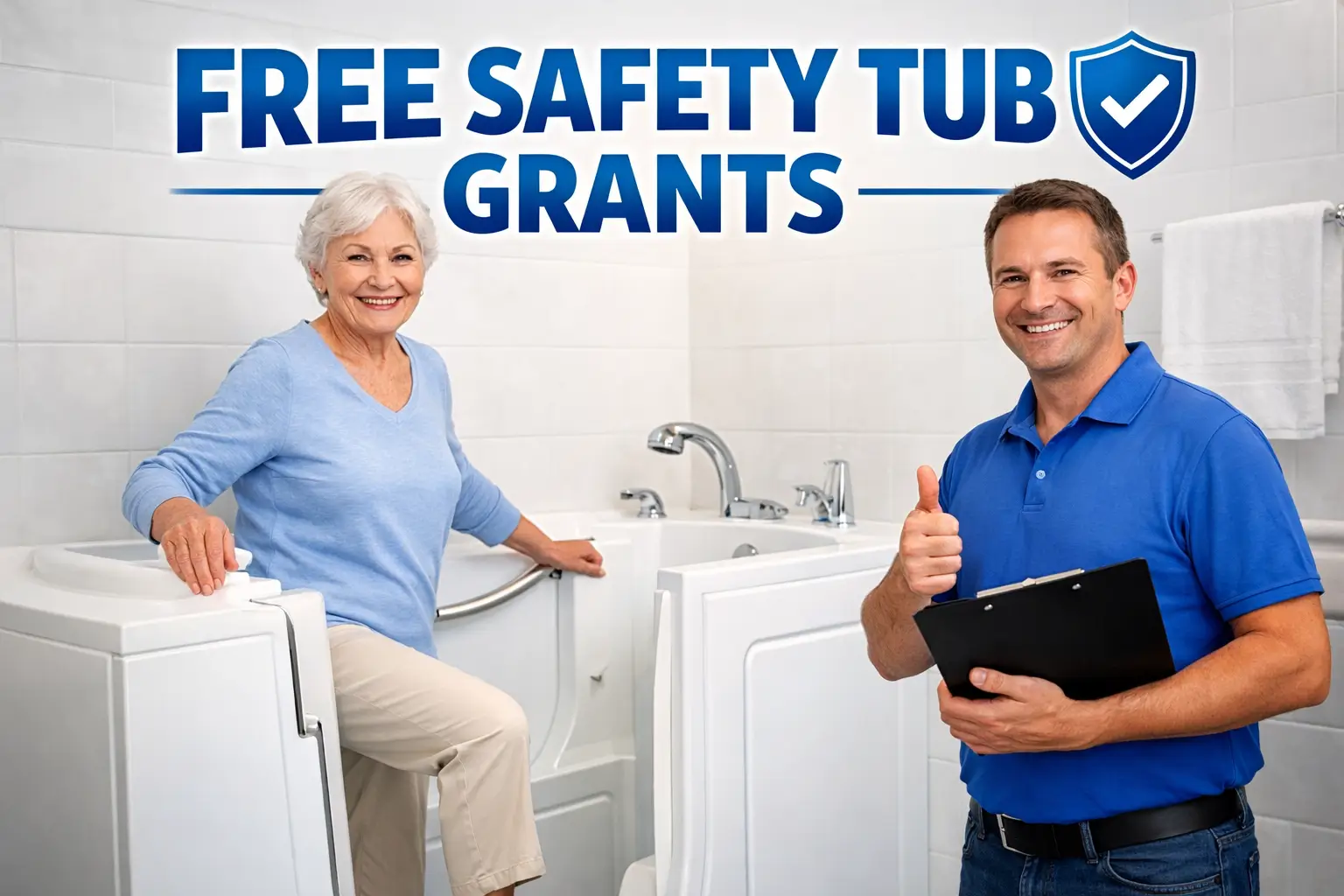
Who Qualifies for Walk-In Tub or Shower Help?
Most programs do not pay for a bathroom upgrade because it looks nicer. They help when the current bathroom creates a health, safety, disability, or fall-risk problem.
- Medical need: A doctor, occupational therapist, or caseworker may need to document that the current tub or shower is unsafe.
- Age or disability: Seniors, veterans, people with disabilities, and Medicaid waiver participants usually have the strongest pathways.
- Income limits: USDA and Medicaid-based options usually have income or asset rules.
- Owner or renter status: Homeowners have more options, but some Medicaid waiver cases may work for renters with landlord approval.
- Repair wording: Describe the project as fall prevention, accessibility, or bathroom safety, not luxury remodeling.
USDA Section 504 Safety Shortcut
The Single Family Housing Repair Loans & Grants program (Section 504) is the ultimate resource for rural seniors. For 2026, the USDA has prioritized bathroom modifications as a core strategy for maintaining rural housing stability.
The Funding Breakdown
- The Grant: Up to $10,000 (A lifetime gift for homeowners aged 62+). See our full seniors grant guide for age details.
- The Loan: Up to $40,000 at a fixed 1% interest rate.
- The Disaster Bonus: If your home is in a Presidentially Declared Disaster Area (from 2024–2025 storms), the grant limit can jump to $15,000, with a combined funding cap of $55,000. (Check our Disaster Recovery Guide for more).
- Official Website: USDA Rural Development 504
- Contact: (202) 720-1494
Medicaid EAA Waivers: The $2,982 Rule
While Straight Medicaid rarely covers home modifications, HCBS (Home and Community-Based Services) Waivers are the key for 2026. These programs use a legal billing category called Environmental Accessibility Adaptations (EAA).
Understanding the Limits
In most states, eligibility for these waivers is capped at 300% of the Federal Benefit Rate (FBR). For 2026, the individual FBR is $994/month, meaning you generally qualify if your income is at or below $2,982 per month.
- The Magic Phrase: When speaking to your caseworker, say: “I am requesting an assessment for Environmental Accessibility Adaptations to prevent institutionalization.”
- State Highlights: California (Medi-Cal) and Florida (SMMC LTC) have expanded their EAA caps to cover “Total Bathroom Transitions” that replace old tubs with roll-in showers and grab bars.
Walk-In Shower Grants and Curbless Shower Help
Many people search for walk-in tub grants, but a curbless shower may be easier to justify when the person uses a wheelchair, walker, shower chair, or has a serious fall risk. Medicaid and VA programs often look at the safest medically necessary option, not the most expensive product.
If you are searching for a government grant for walk-in shower work, frame the request around mobility and fall prevention. Ask for a safety bathroom modification, roll-in shower, grab bars, non-slip flooring, or doorway widening when those changes are medically necessary.
For homeowners who also need wider repair help, compare this page with our USDA Section 504 home repair program guide.
The VA Housing Grants: Record-High Caps
For Veterans, the VA offers the most streamlined path to a bathroom remodel. For the 2026 Fiscal Year, the federal government has adjusted these caps to their highest levels ever to account for construction inflation.
The HISA Grant
This is the most common grant because it does not always require a service-connected disability.
| Benefit Tier | Eligibility |
|---|---|
| Up to $6,800 | Veterans with a service-connected disability (50%+ rating). |
| Up to $2,000 | All other Veterans enrolled in the VA health care system. |
The SAH Grant (The Big Rebuild)
For 2026, the Specially Adapted Housing (SAH) grant has increased to a maximum of $126,526. This is reserved for Veterans with severe mobility issues and can be used for a total, top-to-bottom ADA bathroom gut-and-rebuild.
- Official Website: VA Disability Housing Grants | Support: (800) 827-1000
The IRS Medical Necessity Tax Refund
If your income is too high for a direct grant, you can essentially create your own walk-in tub rebates through the IRS. Under IRS Publication 502, if you purchase the unit for medical reasons, the cost (minus any increase in your home’s value) is a deductible medical expense.
- The Payoff: If you spend $15,000 and are in the 22% tax bracket, you could see a $3,000+ tax refund.
- Requirement: You must have a Letter of Medical Necessity (LMN) from your doctor before the contractor starts.
Non-Profit Aging in Place Programs
- Johns Hopkins CAPABLE Model: This evidence-based program pairs an Occupational Therapist with a handyman to fix high-risk bathroom areas. Many local Habitat for Humanity affiliates and senior centers now implement this specific model.
- Rebuilding Together: A national non-profit that provides the labor for free if the senior provides the materials, like the tub or shower kit. Find Your Local Chapter.
How to Apply for a Government Grant for a Walk-In Shower
The application path depends on the program, but the strongest files usually include the same basic proof.
- Get medical documentation: Ask your doctor or occupational therapist for a Letter of Medical Necessity explaining the fall risk or mobility issue.
- Choose the right program: Use USDA for rural senior homeowners, Medicaid waivers for eligible long-term care participants, and VA HISA or SAH for veterans.
- Get written estimates: Ask contractors to separate safety items like grab bars, non-slip flooring, doorway widening, and shower conversion.
- Do not start work early: Many programs will deny reimbursement if the project starts before approval.
- Watch for scams: Avoid ads promising a free tub with no income check, no medical need, and no official application. Review our contractor fraud guide before signing anything.
FAQs
Does Medicare Part B pay for walk-in tubs?
No. They classify them as convenience items. However, Medicare Advantage (Part C) plans vary. In 2026, roughly 21% of individual MA plans offer some bathroom safety benefits. Check your Evidence of Coverage for SSBCI (Special Supplemental Benefits for the Chronically Ill).
What’s the total cost with installation in 2026?
Expect to pay between $12,000 and $17,000 for a full professional installation, including the specialized plumbing and electrical work required for hydrotherapy motors.
Are there really Free tubs for seniors?
Yes, but only through the USDA 504 Grant or a Medicaid Waiver. You must prove a medical necessity for fall prevention to trigger these specific funds.
Is a walk-in shower covered as well?
Yes. In many cases, Medicaid and the VA actually prefer curbless showers because they are safer for wheelchair users. The funding rules are identical for both.
How do I avoid Free Tub scams on social media?
Warning: If an ad on Facebook says the government is giving away tubs to everyone with no income check, it is a scam. Apply only through official channels such as 2-1-1, USDA.gov, or VA.gov.
Conclusion
A walk-in tub or curbless shower is most likely to get funded when the request is tied to fall prevention, disability access, or medical necessity. Start with USDA Section 504 if you are a rural senior homeowner, Medicaid EAA if you are already connected to waiver services, and VA HISA or SAH if you are a veteran with a documented housing need.
Before applying, get a doctor’s note, collect written estimates, and avoid starting work until the program approves the project. For broader repair options, visit Housing Grants Finder.