FEMA Disaster Recovery Grants 2026: HUD, SBA and Appeals
If your home was damaged by a declared disaster, start with FEMA first. FEMA can help with urgent needs, temporary housing, and basic home repairs, while HUD CDBG-DR, SBA disaster loans, USDA rural repair help, insurance, and state recovery programs may cover longer-term rebuilding gaps.
This guide explains how FEMA disaster recovery grants, HUD disaster recovery funds, SBA loans, USDA repair help, insurance documents, appeals, and contractor rules work together after a storm, flood, wildfire, tornado, or other declared disaster.
Immediate Disaster Action
Apply as soon as your county is approved for Individual Assistance. Deadlines are disaster-specific, so check your FEMA portal or DisasterAssistance.gov for the exact date.
Quick Answer: What Should You Do First After Disaster Damage?
Apply with FEMA first, even if you have insurance. FEMA may help with immediate needs and basic repairs, but it will not duplicate insurance payments. After that, save your FEMA registration number, insurance letters, repair photos, contractor estimates, and receipts because HUD CDBG-DR, SBA, USDA, and state recovery programs may ask for the same documents later.
While there are no secret triggers or instant $100,000 grants, knowing the actual reforms can help you access Serious Needs Assistance for immediate essentials and unlock higher caps for home repairs. Here is the accurate way to navigate the system today.
Serious Needs Assistance: Immediate Help for Essentials
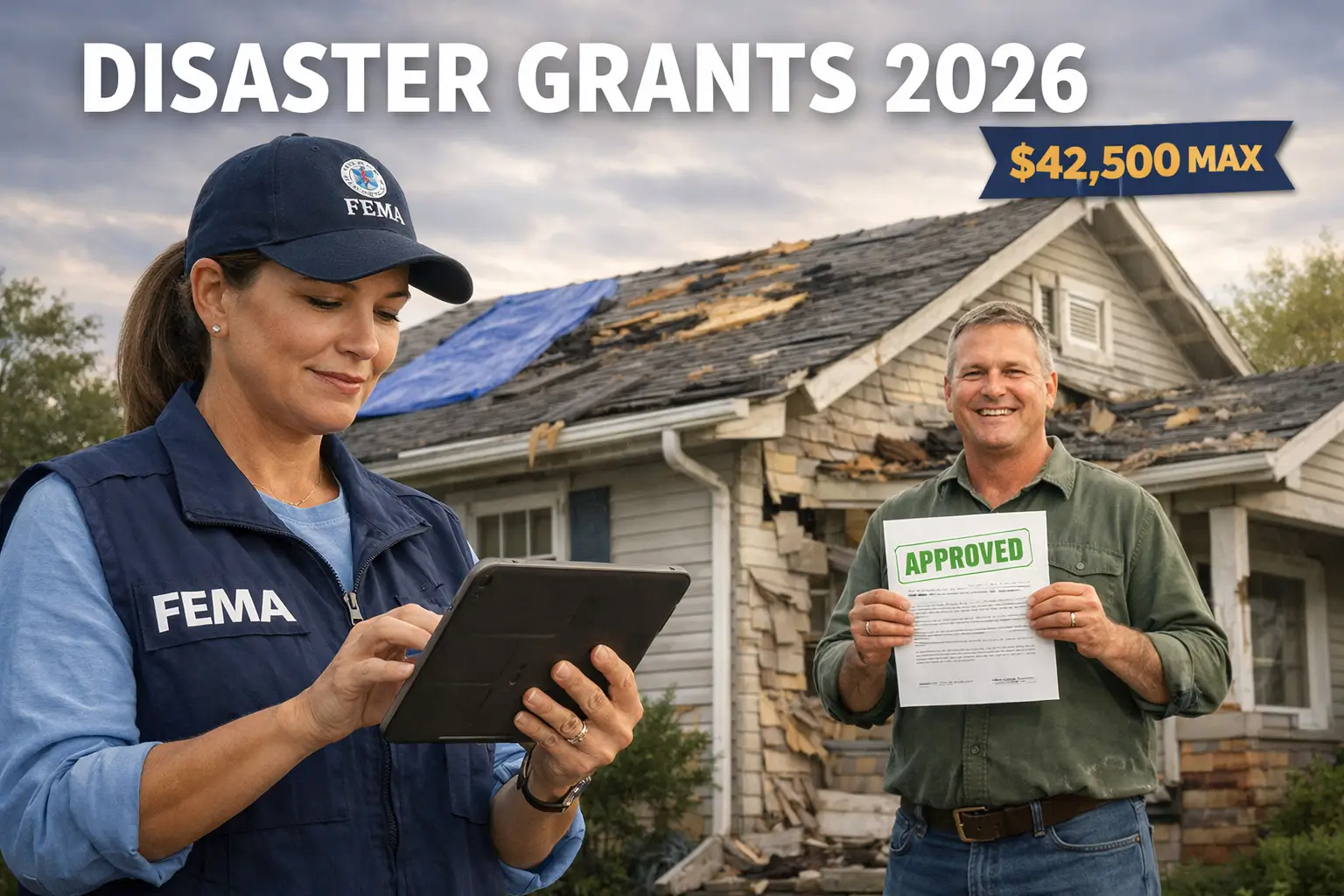
Serious Needs Assistance is FEMA help for urgent essentials after a declared disaster. It may help with immediate needs such as food, water, baby formula, medication, emergency supplies, or other critical items while your larger housing or repair claim is reviewed.
- Best use: Immediate essentials, not full home rebuilding.
- Important: The amount and availability can vary by disaster and fiscal year, so verify the current figure in your FEMA account or disaster notice.
- Application tip: If you have urgent needs for food, water, medicine, baby supplies, or safe shelter, answer the FEMA application questions accurately and upload benefit or identity documents quickly.
The FEMA-First Application Strategy
FEMA is usually the first disaster recovery application homeowners should complete. Your FEMA registration number becomes a key document for later recovery steps, including insurance gap reviews, SBA disaster loans, state housing recovery programs, and some HUD CDBG-DR programs.
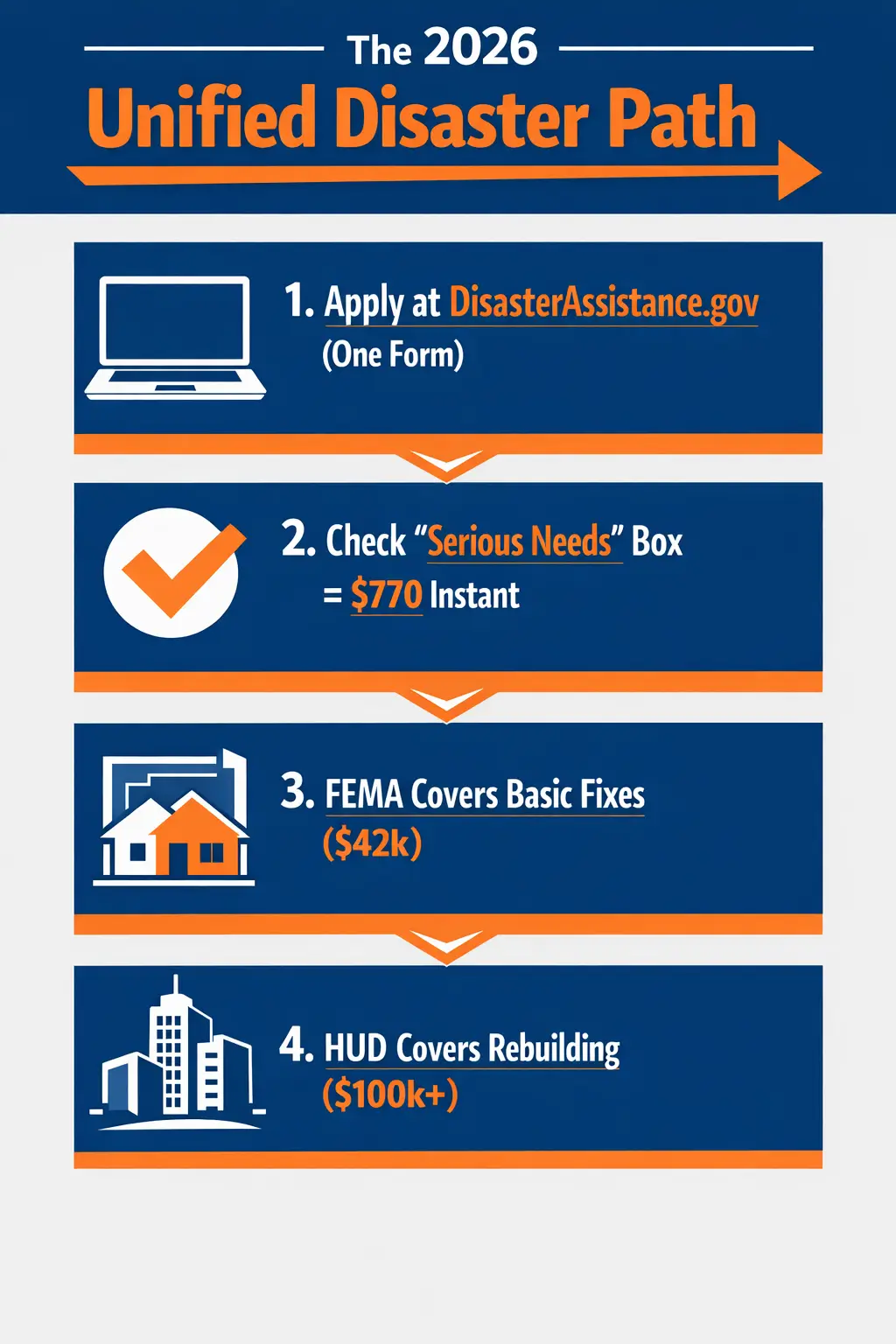
- Step 1: Apply at DisasterAssistance.gov once your county is approved for Individual Assistance.
- Step 2: Save your FEMA registration number, inspection notes, decision letters, and appeal deadlines.
- Step 3: File your insurance claim and upload the settlement or denial letter when FEMA asks for it.
- Step 4: Check state or local recovery programs later, especially HUD CDBG-DR programs, because they often open after FEMA and insurance reviews.
For rural homeowners, also compare FEMA help with USDA Section 504 repair assistance, especially if the home needs health and safety repairs after a declared disaster.
What FEMA, HUD, SBA, and USDA Actually Pay For
| Program | What It Is | Best For | Key Limit |
|---|---|---|---|
| FEMA Individual Assistance | Federal disaster assistance | Urgent needs, temporary housing, basic safe repairs | Does not duplicate insurance benefits. |
| HUD CDBG-DR | Long-term recovery funding run through states or local grantees | Rebuilding, unmet needs, housing recovery after major disasters | Often opens later than FEMA. |
| SBA Disaster Loan | Low-interest loan | Large repair gaps not fully covered by grants or insurance | It must be repaid. |
| USDA Section 504 | Rural repair loan and grant program | Very-low-income rural homeowners, especially seniors 62+ | Location, income, age, and safety rules apply. |
FEMA vs. HUD: Bridging the Gap
Many survivors feel lowballed because FEMA only covers the cost of a safe, sanitary home, not a beautiful one. To get fully rebuilt, you must bridge the gap between FEMA and HUD.
| Agency | Program Name | 2026 Max Grant | Real-World Use Case |
|---|---|---|---|
| FEMA | Individual Assistance (IA) | $42,500 | The Fix: Pays for a working toilet, a kitchen sink, and plywood to patch the roof. |
| HUD | CDBG-DR Grant | $100,000+ | The Rebuild: Pays for flooring, cabinets, paint, and complete structural restoration. |
| USDA | Rural Disaster Grant | $10,000 | The Bonus: Extra funding for rural homeowners to “stack” on top of FEMA. |
Insurance Gap: What FEMA Needs From You
You can apply for FEMA even if you have homeowners or flood insurance. The key rule is duplication of benefits. FEMA generally will not pay for the same repair your insurance already covered, but it may review deductibles, uncovered damage, underinsured repairs, temporary housing gaps, or items denied by your insurer.
- Upload your insurance settlement letter: This shows what was covered and what was not.
- Upload denial letters: If insurance refused roof, mold, flood, wind, or structural damage, FEMA needs that proof.
- Keep receipts: Save receipts for temporary lodging, cleanup, emergency repairs, tarping, generators, supplies, and contractor estimates.
- Keep photos: Take clear photos before cleanup, during cleanup, and after temporary repairs.
Roof Repair After a Disaster: Ask About FORTIFIED Standards
If federal, state, insurance, or local recovery money is being used to replace a storm-damaged roof, ask whether the program requires a stronger roof standard. Some states, insurers, or recovery programs may prefer or require upgraded roof methods such as sealed roof decks, stronger fasteners, and high-wind materials.
- What to ask: “Does this repair need to meet a FORTIFIED, wind mitigation, flood-resistant, or local resilience standard?”
- Why it matters: A standard repair may not qualify if the funding program requires stronger rebuilding rules.
- Contractor safety: Never let a contractor rush you into signing after a disaster. Check our home repair scam warning guide before paying a deposit.
Important: For roof-specific funding paths, compare this with our roof replacement grant guide.
Video Guide: What to Expect Before Applying for FEMA Assistance
If FEMA Says No: How to Fix a Denial
A FEMA denial does not always mean the case is over. Many denial letters are really requests for missing documents, insurance proof, identity verification, occupancy proof, or repair evidence.
- Identity issue: Upload a government ID, utility bill, lease, mortgage statement, or other address proof if FEMA cannot verify you.
- Insurance issue: Upload your settlement letter, denial letter, or proof that insurance did not cover the full loss.
- Occupancy issue: Upload utility bills, tax records, lease documents, or other proof that you lived in the damaged home.
- Damage issue: Upload photos, contractor estimates, inspection notes, repair receipts, and a written explanation of why the home is unsafe or unlivable.
Appeal deadlines are strict, so check the date on your FEMA decision letter and submit the missing proof before the deadline.
Plan B: What to Do if FEMA Says No
If you are denied federal help because your damage was pre-existing or you are slightly over the income limit, use these 2026 alternatives:
- State-Led Housing Recovery: States such as Florida and North Carolina now operate their own housing programs that take over when FEMA funds are exhausted.
- Medical Hardship Waiver: If a household member has a respiratory condition (Asthma/COPD) and the storm caused mold, use a medical waiver to force FEMA to pay for Proactive Remediation (professional mold removal) regardless of your standard grant cap.
- The Gap-Fillers: Contact the Salvation Army (HeatShare) or St. Vincent de Paul. They keep private “disaster pots” for families who fall through the cracks of government programs.
Fast Answers for Disaster Recovery
What is the first step after disaster damage?
Apply with FEMA at DisasterAssistance.gov once your county is approved for Individual Assistance. Then save your FEMA registration number, insurance letters, photos, receipts, and repair estimates.
Does FEMA pay to fully rebuild a home?
Usually no. FEMA focuses on making the home safe, sanitary, and functional. Full rebuilding often depends on insurance, SBA loans, HUD CDBG-DR, state recovery programs, or nonprofit help.
What is HUD CDBG-DR used for?
HUD CDBG-DR is long-term disaster recovery funding. It is usually run by state or local grantees after major disasters and may help with unmet housing repair, rebuilding, infrastructure, or recovery needs.
FAQs
Does FEMA cover mold damage in 2026?
Yes. Under the new Proactive Remediation rules, you no longer have to wait for a full inspection to begin cleanup. If you have a medical condition like asthma and can provide photos and receipts of professional mold removal, FEMA can reimburse these costs as part of your initial grant.
Can I apply for FEMA if I have private insurance?
Absolutely. You should apply for FEMA the same day you file your insurance claim. While FEMA won’t duplicate benefits, it covers the gap left by insurance, such as deductibles and underinsured limits. You will simply need to upload your insurance settlement letter later.
What is the Serious Needs Assistance $770 payment?
This is a 2026 upfront payment for immediate essentials such as food, water, and baby formula. Unlike regular home repair grants, this is often approved within 24-48 hours of your application if you declare an immediate need.
Why was my FEMA application denied for “Identity Verification”?
This is soft denial in 2026. It usually means your current address doesn’t match your public records, like your driver’s license. To fix this, simply upload a copy of a utility bill or lease agreement from the last 3 months to your portal.
How long do I have to apply after a storm?
Generally, you have 60 days from the date of the federal disaster declaration. However, in 2026, many states will be granted automatic 30-day extensions for significant events. Always check the Individual Assistance Dashboard for your specific county’s deadline.
Conclusion
Disaster recovery money usually comes in layers. FEMA helps first with urgent needs and basic safety repairs. Insurance determines what is already covered. SBA disaster loans may help with larger repair gaps. HUD CDBG-DR and state programs often come later for long-term rebuilding. USDA Section 504 may also help rural homeowners with health and safety repairs.
Your strongest move is to apply early, keep every document, upload insurance letters quickly, and appeal if FEMA asks for more proof. For broader repair funding options after a disaster, visit Housing Grants Finder.