New Jersey Home Repair Grants 2026: Lead, Heat, County Aid
New Jersey homeowners may be able to get help through lead abatement funding, emergency heating programs, weatherization services, county rehabilitation loans, and USDA repair assistance in rural areas. The best option usually depends on whether the problem involves lead hazards, a failed furnace, a major code issue, or an urgent habitability repair.
This guide covers the main New Jersey home repair grants and repair assistance options for low-income homeowners, seniors, and households dealing with roof, heating, plumbing, safety, and lead-related problems. If you are comparing active NJ repair help by program type, start with the sections below.
Who Qualifies for New Jersey Home Repair Grants?
Most New Jersey repair programs use the same core filters before they approve an application.
- Owner-occupancy: You usually need to live in the home as your primary residence.
- Income limits: Many programs use AMI-based caps, often 80% AMI or lower.
- Repair type: The strongest applications involve lead hazards, failed heating systems, roof leaks, plumbing failures, electrical danger, or code-related health and safety issues.
- Municipal status: Property taxes, sewer liens, and water liens often have to be current before funds are released.
- Property type: Condos, HOA-managed exteriors, and some mobile homes may face extra restrictions.
LRAP and Pre-1978 Rules
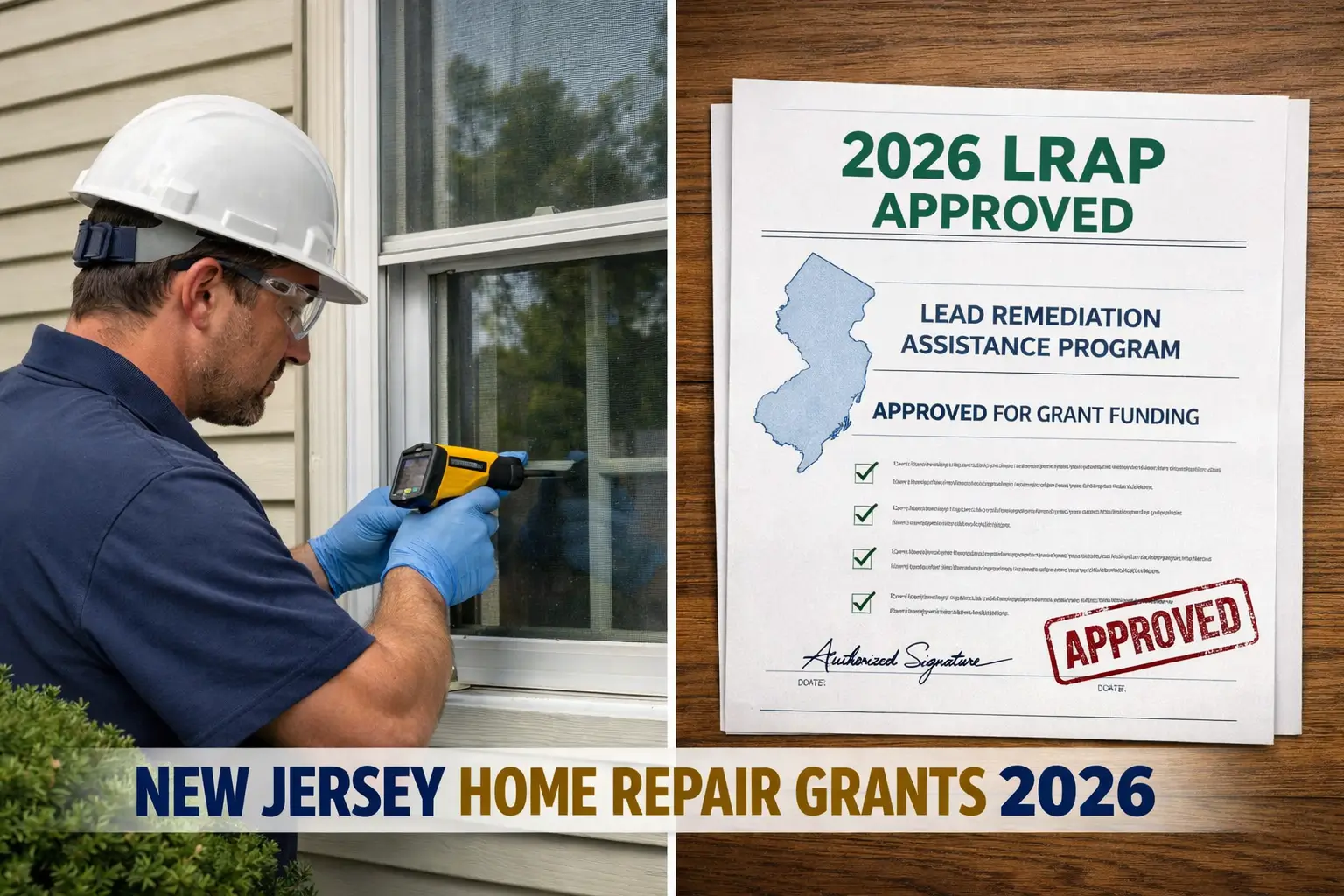
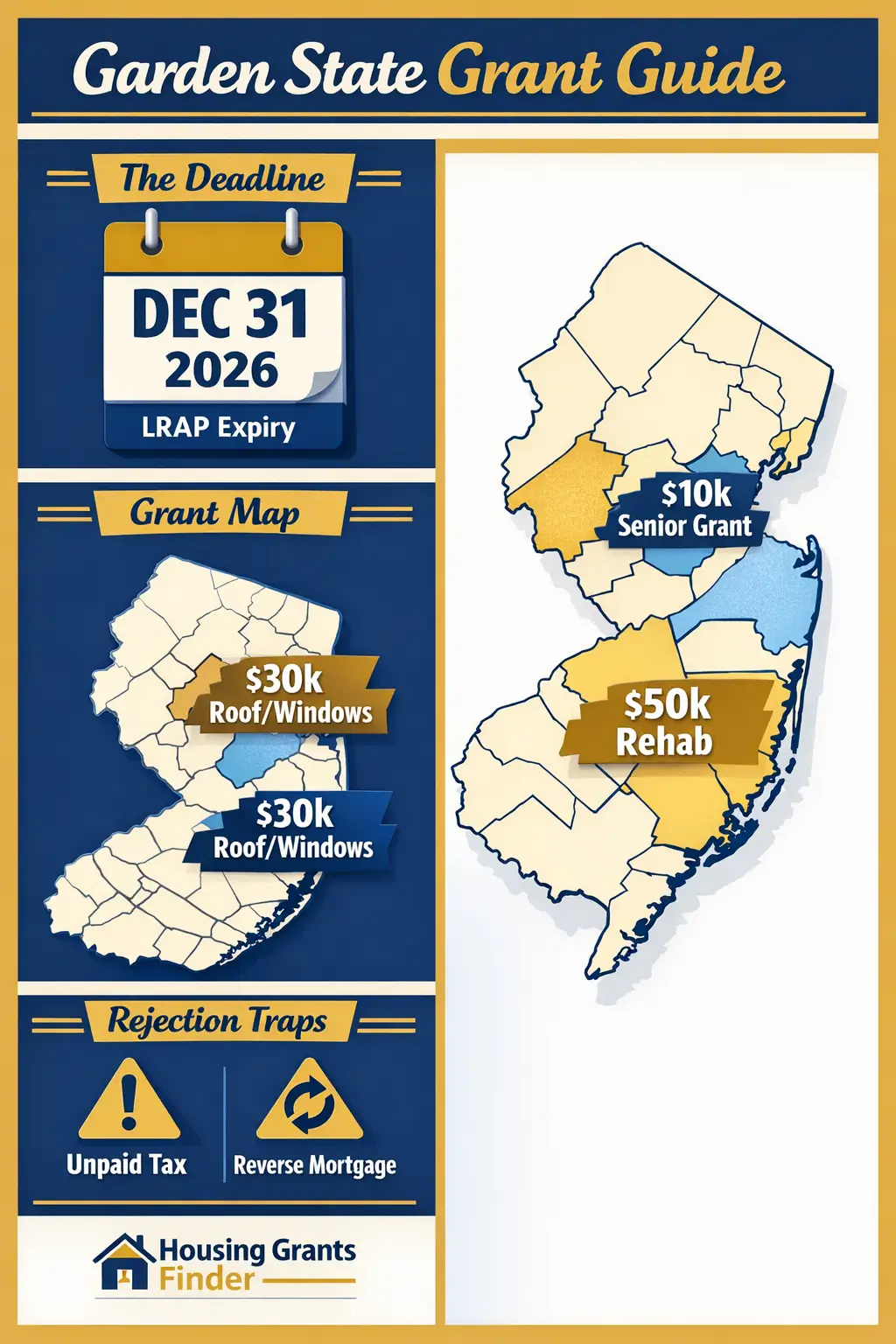
The most time-sensitive resource in New Jersey right now is the Lead Remediation and Abatement Program (LRAP). Funded by a massive $180 million federal pool (ARPA), this money must be spent by December 31, 2026.
If your home was built before 1978, you are likely sitting on lead paint. This is a significant health risk for children and a massive financial burden to fix out of pocket.
- The Deal: You receive free lead inspections, risk assessments, window replacements, and full lead paint abatement funding.
- The Funding: Local agencies, including the City of East Orange and Gateway Community Action, are currently processing 2026 applications. You can start your screening via the DCAaid Eligibility Tool.
- The Catch: Your household income must be at or below 80% of the Area Median Income (AMI).
Contractors are booked months in advance due to the 2026 spending deadline. If you don’t submit your application by Spring 2026, you may find that all qualified lead-safe contractors in your area are already booked for the year.
Energy & Heating: Survival Guide
New Jersey’s 2026 energy season is currently at its peak. Between the Universal Service Fund (USF) and the Weatherization Assistance Program (WAP), significant funds are allocated through June 30, 2026.
The Emergency Heater Trap
Many people apply for LIHEAP, believing it only covers gas or electric bills. This is a mistake. If your furnace is broken or unsafe, you need a replacement under the Heating Improvement Program (HIP) or Emergency Mechanical Systems (EMS).
- Action: When you call your local agency, do not just ask for help with the bill. Say: “My primary heating source is failing, and I need emergency heater repair.“
- Where to Apply: Check the NJ Board of Public Utilities Assistance page for the latest emergency contacts and USF updates.
Weatherization Assistance Program (WAP)
WAP is designed to lower your monthly bills by making your home more energy-efficient.
- Repairs: Includes attic insulation, duct sealing, and blower door testing to identify air leaks.
- Waitlists: Expect a waitlist of 9 to 12 months for standard weatherization.
- Note: The DCAaid portal often lags during business hours. Try filing your pre-application late on a Tuesday or Wednesday night.
Start Here: Lead, Heating Emergency, County Rehab, or USDA?
Most homeowners lose time by applying in the wrong place first. In New Jersey, the right starting point depends on the actual problem.
- Pre-1978 home with children: Start with LRAP and lead screening first.
- Red-tagged or broken furnace: Start with the emergency heating route, not standard weatherization. You can also compare the broader process here: LIHEAP emergency furnace repair.
- Major systems or code repairs: County rehab and deferred-payment loan programs are usually the better fit.
- Rural counties: USDA Section 504 may be your strongest first call.
County-Specific Comparisons
Most New Jersey counties use a Deferred Payment Loan model. These are 0% interest and require $0 monthly payments. You settle the balance only when you sell the home or transfer title.
- Union County: Offers a Senior Home Improvement Grant of $10,000. Perfect for minor, urgent safety fixes for residents aged 62+. (See senior grants).
- South Orange Village: In 2026, it offers a 10-year forgivable loan of up to $10,000.
To find the specific contact for your town, consult the New Jersey Community Action Association Directory.
New Jersey Help for Seniors, Disability Access, and Bathroom Safety
Some of the best New Jersey repair opportunities are missed because homeowners describe them as remodeling instead of safety or accessibility work.
- Seniors: Union County already offers a senior-focused repair option, and rural seniors may also fit USDA Section 504.
- Disability access: Accessibility-related repairs should be framed as health, safety, and mobility needs, not cosmetic updates.
- Bathroom safety: If the real need is a safer shower, grab bars, or aging-in-place upgrades, compare broader options here: grants for walk-in tubs and bathroom safety.
- Repayment structure: Many county programs are deferred loans, not pure grants. For repayment differences, see pay back home repair grants.
Specialized Funding: USDA and Veterans
The USDA Section 504 Rural Map
For those in rural areas such as Salem, Cumberland, or Sussex counties, the USDA Section 504 program is a lifesaver.
- The Grant: Up to $10,000 for seniors (62+) to remove health hazards.
- The Loan: Up to $40,000 at a fixed 1% interest rate for 20 years.
- Check Eligibility: You can check your address directly on the USDA Rural Development (NJ) Portal.
Veteran Disability Housing Grants
The VA has increased its grant limits for the 2026 fiscal year.
- SAH Grant: Up to $126,526 for major remodels.
- SHA Grant: Up to $25,350 for more minor changes.
Why Most Applications Get Rejected
The Property Tax Wall
If you are even one quarter behind on your property taxes, the county will freeze your application.
- The Workaround: Set up an official Payment Plan with your town. Most agencies will accept this as being current.
The Reverse Mortgage Problem
Most county programs place a lien on your property. If you have a reverse mortgage, the bank will often block the county from adding a second lien.
The HOA Rejection
If you own a condo or townhome, the program will only fix what is inside your walls. Roofs or exteriors managed by a Homeowner’s Association are typically ineligible.
FAQs
Can I fix a mobile home in New Jersey?
Only through the USDA 504 program or specific municipal grants. Most county programs are restricted to stick-built homes.
Will this hurt my credit score?
No. Applying for these programs does not involve a hard credit pull. The deferred loans are recorded as mortgages, not as consumer debt.
What if I have an unpaid sewer or water bill?
New Jersey counts these as municipal liens. You must clear these or have a payment plan in place before funds are released.
What if repairs cost more than the grant?
You must pay the difference. Most NJ agencies require proof of gap funding in your bank account before approving the contract. (Watch out for contractor scams during this process).
Conclusion
New Jersey home repair funding is strongest when you match the repair to the right program first. Lead issues should start with LRAP, heating emergencies should start with the utility and emergency repair path, county rehab programs are best for larger system failures, and rural homeowners should compare local help with USDA Section 504.
Before applying, make sure your taxes and municipal liens are under control, your income documents are current, and your repair problem is described as a health or safety issue when that is the real risk. For broader help, visit housinggrantsfinder.com.