South Carolina Home Repair Grants 2026: SC Safe & HTF
South Carolina homeowners may be able to get help with serious repair needs such as roof damage, HVAC failure, septic or plumbing problems, electrical hazards, foundation issues, accessibility needs, and storm-mitigation upgrades. The right program depends on your county, income, owner-occupied status, insurance, repair type, funding availability, and whether the work is approved before it starts.
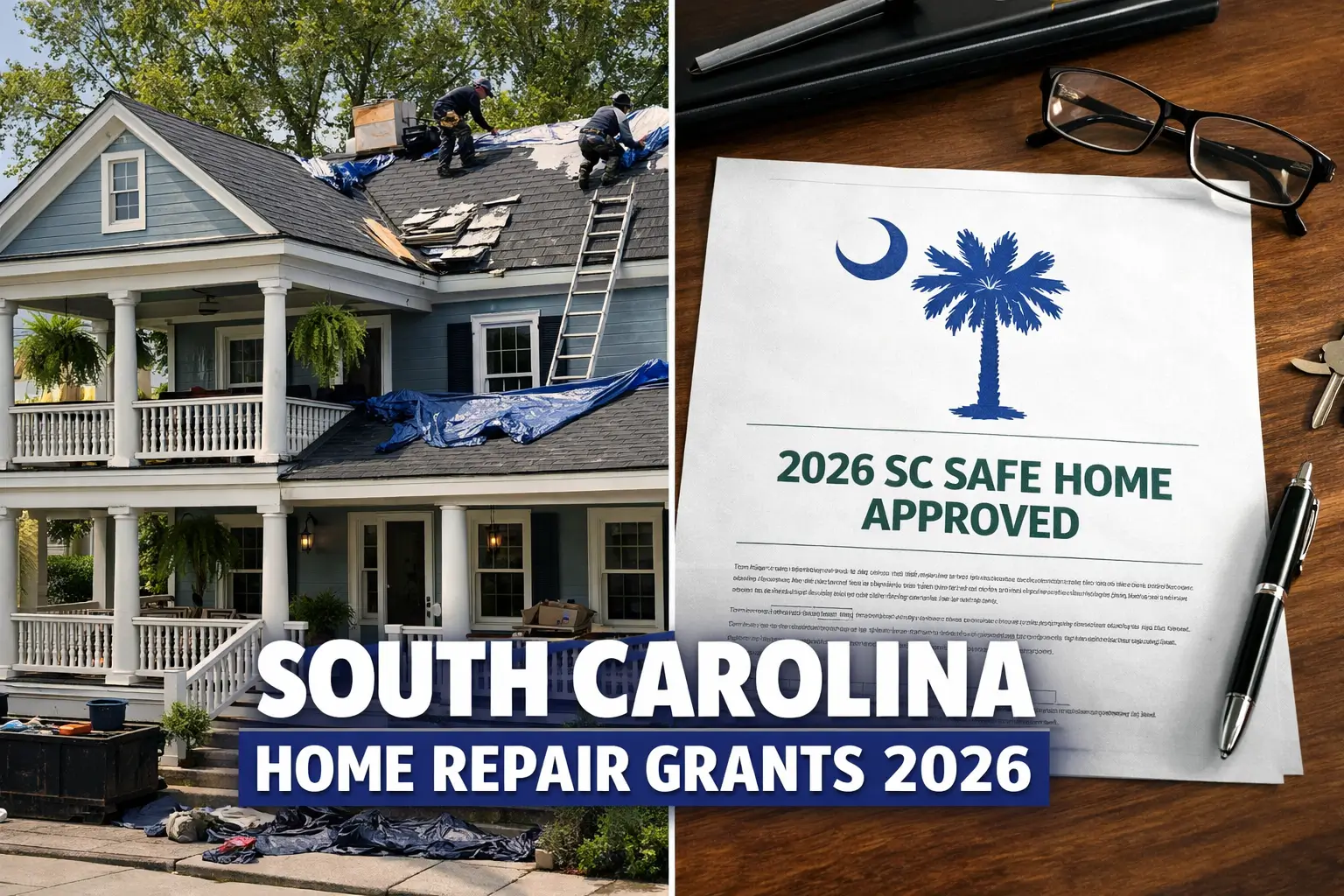
For 2026, the main South Carolina repair paths to check are SC Safe Home for coastal wind-mitigation when applications reopen, SC Housing Trust Fund partner repairs, USDA Section 504 for eligible rural homeowners, Weatherization and LIHEAP for energy-related needs, and county programs such as Richland, Charleston, Greenville, Lexington, and Spartanburg.
Quick Answer: Who can get South Carolina home repair help?
South Carolina homeowners may qualify for repair help through SC Safe Home, SC Housing Trust Fund partner agencies, USDA Section 504, Weatherization, LIHEAP, or county repair programs. There is not one single statewide repair grant that pays every homeowner directly.
- Coastal roof or storm protection: Check SC Safe Home, but note the official page currently says it is not accepting new grant applicants.
- Major health and safety repairs: Check HTF partner agencies, Habitat affiliates, Community Action Agencies, or local housing offices.
- Rural senior or very-low-income repairs: Check USDA Section 504.
- Heating, cooling, insulation, or high energy bills: Check Weatherization and LIHEAP.
- County-level repair help: Check Richland, Charleston, Greenville, Lexington, Spartanburg, or your local Community Development office.
SC Housing Trust Fund (HTF)
The South Carolina Housing Trust Fund (HTF) may support beneficiary home repairs through approved nonprofit partners, local housing agencies, Habitat affiliates, Community Action Agencies, or other eligible organizations. Homeowners usually do not apply to SC Housing for a direct personal repair check.
Possible repairs: HTF-supported repair work may include major health and safety needs such as roofs, HVAC, septic or plumbing, electrical issues, accessibility barriers, and foundation-related repairs when the local partner’s program allows it.
- You don’t apply to the state directly. You must work with an Approved Nonprofit Partner, such as a local Habitat for Humanity or Community Action Agency.
- Call your local Regional Council of Governments (COG). Ask them: Which nonprofit is currently managing the 2026 HTF Beneficiary funds for my county?
Link: SC Housing Trust Fund
Who qualifies for HTF beneficiary home repairs?
The South Carolina Housing Trust Fund repair track is built for lower-income homeowners who need major health and safety work, not cosmetic upgrades. In practice, this program is aimed at households at or below 80% of Area Median Income, and the work is usually delivered through an approved nonprofit partner or local housing agency rather than through a direct state homeowner portal.
- Best fit: Owner-occupied homes with major problems involving roofs, HVAC, septic or plumbing, electrical systems, or foundations.
- How it works: You usually need to find the nonprofit, Habitat affiliate, Community Action Agency, or local partner handling beneficiary home repair work in your county.
- Good companion read: If your repair need is tied to aging in place, see our home repair grants for seniors guide.
Coastal Protection: SC Safe Home
SC Safe Home may help eligible coastal homeowners make approved wind-mitigation upgrades such as roof retrofits, secondary water barriers, high-wind roof covering, storm shutters, impact-rated windows, impact-rated doors, and garage door protection. However, the official SC Safe Home page currently says the program is not accepting new grant applicants. Keep this section, but mark the status clearly and tell readers to sign up for reopening updates.
- Current status: The official portal is not accepting new grant applicants right now. Homeowners should review documents early and sign up for reopening reminders on the official SC Safe Home site.
Who qualifies for SC Safe Home?
- Location rule: The home must be in an eligible South Carolina coastal county.
- Occupancy rule: You must own and occupy the home as your primary residence, and it must be a single-family detached structure.
- Insurance rule: You must maintain an active homeowners insurance policy.
- Prior grant rule: If you already received and used a Safe Home grant on the property, you generally cannot receive another one.
- Important scope rule: This program is for mitigation upgrades such as stronger roofs, shutters, and related storm-protection work. It is not a general remodeling or whole-home repair grant.
For other roof-specific help, compare this with our government roof replacement grants guide.
SC Safe Home also uses matching and non-matching mitigation grants, so it is better to think of this as a storm-hardening program rather than a universal free roof grant.
You must have an active Homeowners Insurance policy. If your insurer has dropped you, you are not eligible for this grant.
Official Link: SC Safe Home Official Site
Statewide Heating, Cooling, and Weatherization Help
LIHEAP and Weatherization
If your biggest issue is a failing HVAC system, unsafe heating equipment, or a house that leaks air and drives up your bills, South Carolina also has statewide help through LIHEAP-linked weatherization and the Weatherization Assistance Program.
- Income rule: These weatherization tracks generally use a 200% of poverty guideline standard.
- What they can cover: Furnace repair or replacement, cooling system repair or replacement, insulation, air sealing, windows, doors, water heaters, and some energy-related roof repair measures.
- When this is the better fit: Use this route when the home is dangerous or unaffordable because of heating or cooling problems, not just because you need a general rehab grant.
- Related help: If your immediate problem is heating failure, review our LIHEAP emergency furnace repair guide.
If the repair involves old windows, doors, insulation, or air leaks, also read our window and door replacement grants guide.
For AC, furnace, or heating-related help, compare this with our free AC and heating grants guide.
The County-by-County Treasure Map
In 2026, many South Carolina counties have launched their own Emergency Repair pots using federal CDBG funds.
Richland County: Minor Home Repairs
Richland County Community Development uses HUD-related funds to support low- and moderate-income residents in unincorporated areas of the county. The county lists Minor Home Repairs as one of its services for income-eligible homeowners with critical health and safety needs.
- Best fit: Critical health and safety repairs in eligible unincorporated Richland County areas.
- Verify before publishing: Do not list a fixed $25,000 cap or 5-year forgiveness rule unless the current program page or application packet confirms it.
- Link: Richland County Community Development
Charleston County: Critical Home Repair and Wells/Septics
Charleston County Community Development lists several housing-related programs, including Critical Home Repair and Wells, Septic Tanks & Connections. The Wells/Septics page currently says the application period is closed, so homeowners should verify open intake before preparing documents.
- Possible help: Critical repair, wells, septic systems, water/sewer connections, or other community development programs depending on the current funding round.
- Heirs’ property caution: If the deed is unclear or tied to an estate, ask the county or a legal aid group what ownership proof is required before applying.
- Do not overstate: Remove “up to $15,000+” unless the current Charleston application packet confirms that amount.
- Link: Charleston County Community Development
Greenville County: Community Development
Greenville County Redevelopment Authority and local partners may offer housing rehabilitation or critical repair help when funding and intake are available. Application windows, waitlists, equity requirements, income limits, and eligible repairs can change, so verify the current program packet before listing a fixed rule.
Homeowners should ask whether the current repair option is a grant, deferred loan, forgivable loan, or another form of assistance before applying.
Link: Greenville County Redevelopment Authority
Lexington County: Minor Home Repair
Lexington focuses on Minor Home Repairs for residents at or below 80% AMI.
- Repairs: Roofing, electrical, and plumbing.
- Note: You must be current on your mortgage and taxes.
- Link: Lexington County Community Development
Spartanburg County: Owner-Occupied Rehab
The Spartanburg County Community Development office partners with local agencies for substantial rehab projects.
- Limit: Can vary, but typically covers major code violations up to $15,000.
- Link: Spartanburg County Community Development
South Carolina Repair Application Checklist
Before applying, check the issues that commonly delay or block South Carolina repair applications:
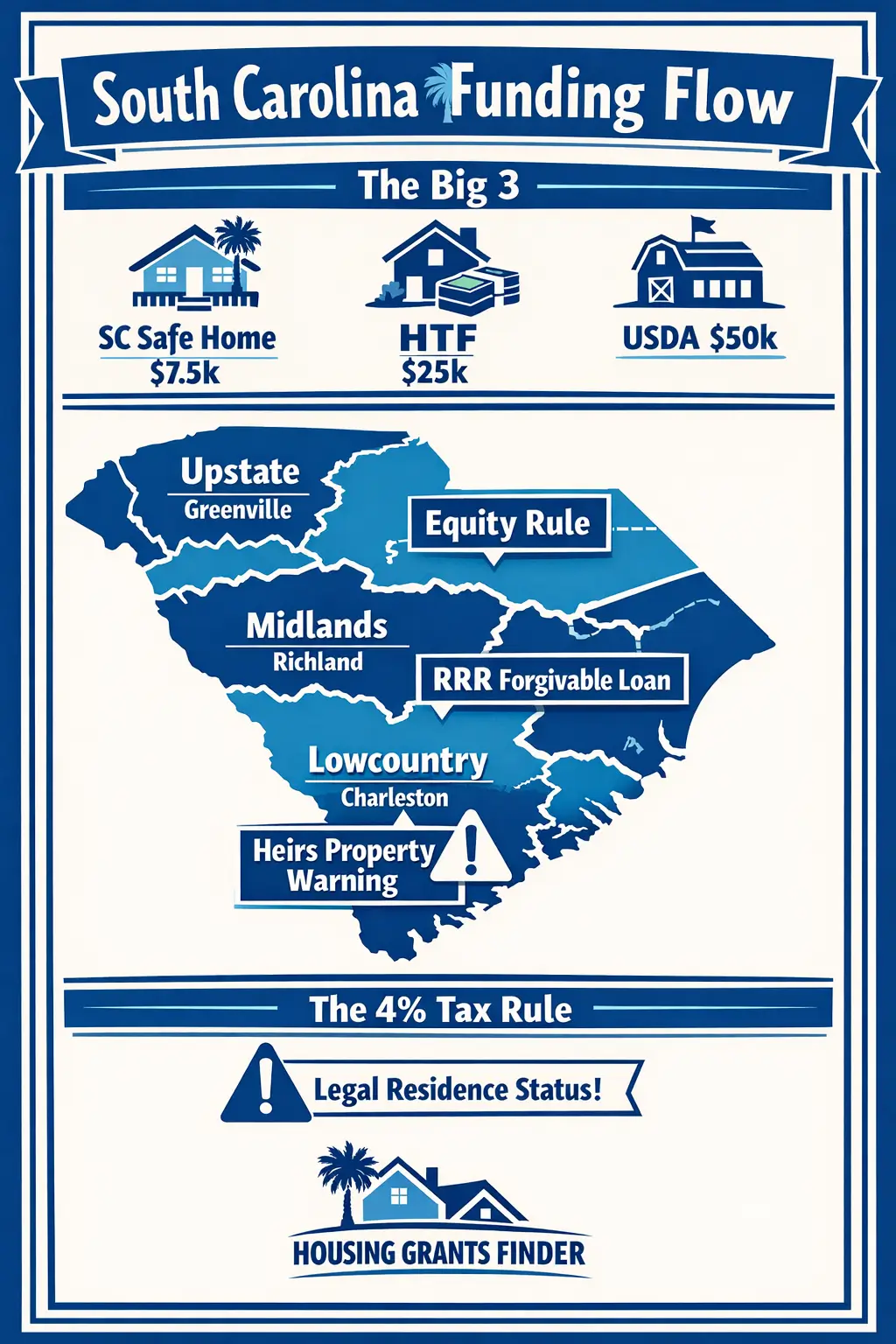
- Owner-occupied tax status: Many programs ask for proof that the property is your primary residence. In South Carolina, the 4% legal residence tax assessment can help show owner-occupancy, while a 6% assessment may create extra questions.
- Current income documents: Agencies may ask for recent Social Security letters, benefit letters, pay stubs, tax records, or income proof for all household members. Use the document year and format the program requests.
- Contractor and permit rules: Many programs require licensed, registered, or approved contractors and may require permits or inspections. Before signing anything, review our home repair scam and contractor fraud guide.
Specialized Help: Seniors & Veterans
Weatherization (WAP)
Weatherization may help with energy-related repairs such as insulation, air sealing, duct work, heating or cooling efficiency, and approved HVAC-related measures when the local energy audit and funding rules support it. It is not a guaranteed free HVAC replacement program.
- The Process: A state-certified energy auditor inspects your home to find the most cost-effective upgrades (insulation, air sealing, HVAC).
- Eligibility: Targeted at those below 200% of the Poverty Level.
Veteran HISA Grants
If you are a veteran with a disability, the VA provides Home Improvements and Structural Alterations (HISA) grants.
- The Limit: Up to $6,800 for service-connected conditions.
- Detail: This can be used for medically necessary bathroom modifications, like walk-in tubs or roll-in showers. (More on senior grants).
- Link: VA HISA Official Page
How to Apply in South Carolina
- Match the repair to the right path: Use SC Safe Home for storm-hardening, HTF beneficiary repair for major structural or system failures, county CDBG repair programs for local emergency rehab, and LIHEAP or weatherization when heating or cooling problems are driving the crisis.
- Find the real local gatekeeper: For HTF-style repair help, ask your local Council of Governments or housing office which nonprofit or partner is handling the current repair funds in your county.
- Fix title and tax issues first: If the property is not taxed at the 4% owner-occupied rate, or if the deed is still tangled in heirs’ property issues, many applications stop before inspection.
- Keep documents ready: Most programs will ask for deed records, tax records, proof of residency, income documents, and insurance information before they move your file forward.
- Understand repayment rules: Some county programs are grants, while others are deferred or forgivable loans. If you need a plain-English explanation, see when home repair grants have to be paid back.
Before accepting a deferred loan or forgivable repair award, read our guide on when home repair grants have to be paid back.
FAQs
Is SC Safe Home accepting applications right now?
South Carolina Department of Insurance currently says SC Safe Home is not accepting new grant applicants. Homeowners should sign up for reopening reminders and prepare documents before the next application cycle.
Are there South Carolina home repair grants for roof replacement?
Possibly. Roof help may be available through SC Safe Home when open, HTF partner agencies, USDA Section 504, Richland County, Charleston County, or local CDBG repair programs. Approval depends on location, income, ownership, insurance, repair type, funding, and program rules.
Can I get a grant for a mobile home in South Carolina?
It depends on the program. SC Safe Home requires an owner-occupied single-family freestanding structure. USDA, Weatherization, or some local programs may have separate rules for manufactured homes. Verify title, foundation, land ownership, and program eligibility before applying.
Does the program pay the contractor or the homeowner?
Many repair programs pay approved contractors or vendors directly instead of giving the homeowner cash. Do not sign a satisfaction or completion form until the work is inspected and the repair problem is actually fixed.
Do South Carolina repair grants have to be repaid?
It depends. Some help may be a grant, some may be a deferred loan, and some may become repayable if you sell or stop occupying the home within the required period. USDA Section 504 grants generally must be repaid if the property is sold in less than 3 years.
Can Weatherization help with HVAC or insulation?
Yes, Weatherization may help eligible households with energy-related measures such as insulation, air sealing, duct work, and approved heating or cooling efficiency improvements. It is not a guaranteed free HVAC replacement program.
Conclusion
South Carolina home repair help in 2026 works best when you match the problem to the correct intake path. SC Safe Home is for coastal storm-hardening, HTF beneficiary repair is for bigger structural and systems work through approved local partners, county CDBG programs handle many emergency repair needs, and LIHEAP or weatherization is often the better fit when heating or cooling failure is the real crisis.
The best next step is to confirm your owner-occupied tax status, clear any title problems, and identify the exact nonprofit, county office, or local housing partner that handles repair intake in your area before the next funding window fills up.