Wisconsin Home Repair Grants 2026: WHEDA, USDA, Heat Help
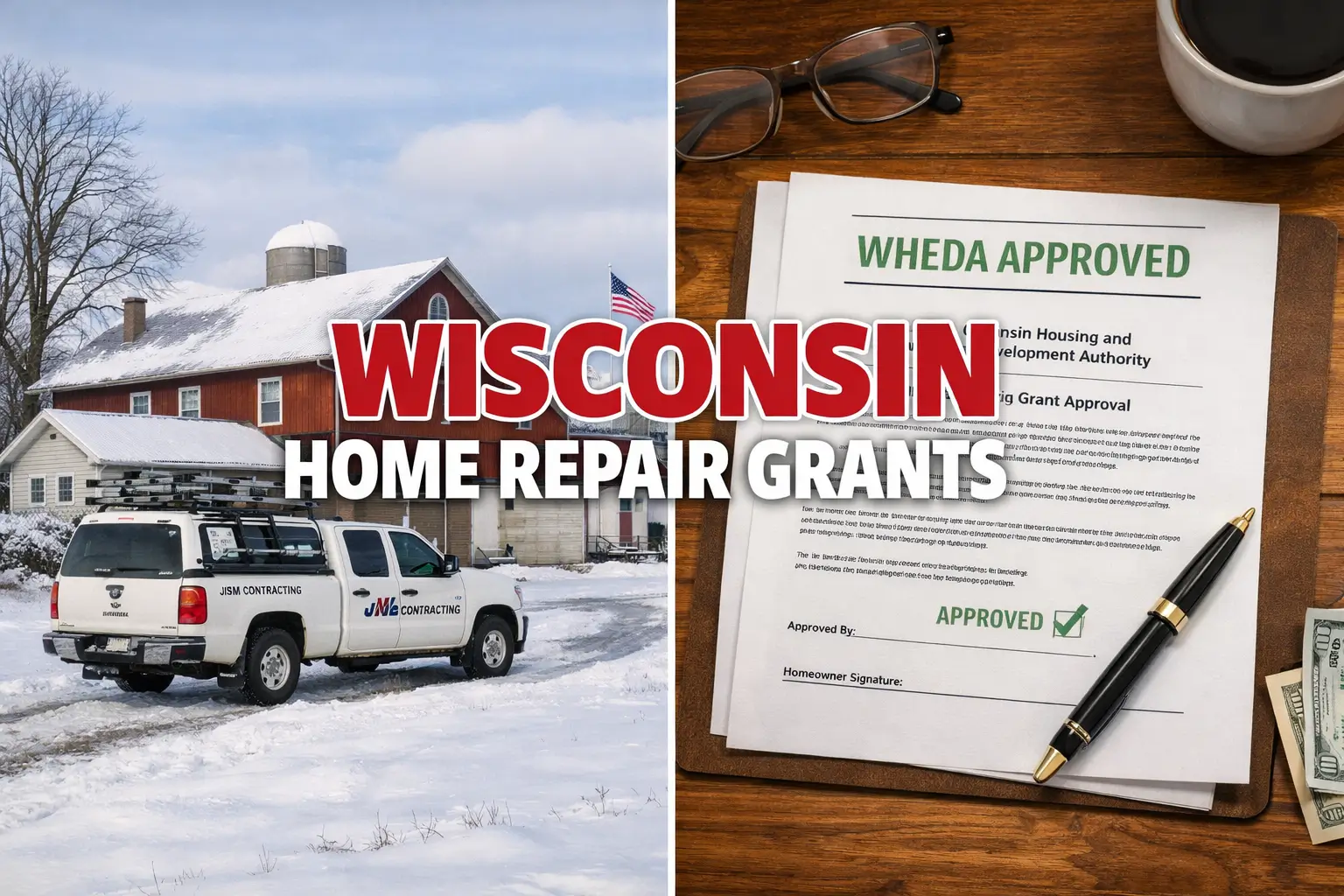
Wisconsin homeowners may be able to get help through WHEDA home improvement loans, CDBG housing rehabilitation programs, USDA Section 504, Weatherization, local Milwaukee repair partners, and emergency furnace assistance. The best option usually depends on where you live, your income, your credit, and whether the repair involves heat, roofing, electrical work, accessibility, or another health and safety issue.
This guide covers the main Wisconsin home repair grants and repair assistance options for low-income homeowners, seniors, rural households, and families dealing with urgent repairs. If you need broader nationwide help, visit housinggrantsfinder.com.
Start Here: WHEDA, USDA, CDBG, or Weatherization?
Most Wisconsin homeowners lose time by applying to the wrong program first. Start with the repair problem, then match it to the right funding path.
- Major repair with decent credit: WHEDA HILP may be the right starting point if you can handle a loan and meet the credit rules.
- Rural senior or safety hazard: USDA Section 504 is usually stronger for older rural homeowners who need health and safety repairs.
- Southern Wisconsin county rehab: CDBG deferred-payment loans can help with larger habitability repairs in participating counties.
- No heat or high energy bills: Start with Weatherization or emergency energy assistance before looking at general rehab loans.
- Milwaukee resident: Check Take Root, Habitat, VIA CDC, and neighborhood-specific repair options before assuming the state is the fastest route.
Who Qualifies for Wisconsin Home Repair Help?
Most Wisconsin repair programs use the same basic filters before approving help.
- Owner-occupancy: You usually need to live in the property as your primary residence.
- Income: Limits vary by program. WHEDA may allow higher income than Weatherization or CDBG rehab programs.
- Repair type: The strongest cases involve heating failure, roof leaks, unsafe electrical systems, plumbing issues, accessibility barriers, or code-related hazards.
- Property status: Taxes, mortgage status, title, insurance, and credit can affect approval depending on the program.
- Documentation: Have income records, proof of ownership, tax status, repair photos, and contractor estimates ready before applying.
WHEDA Home Improvement Loan (HILP)
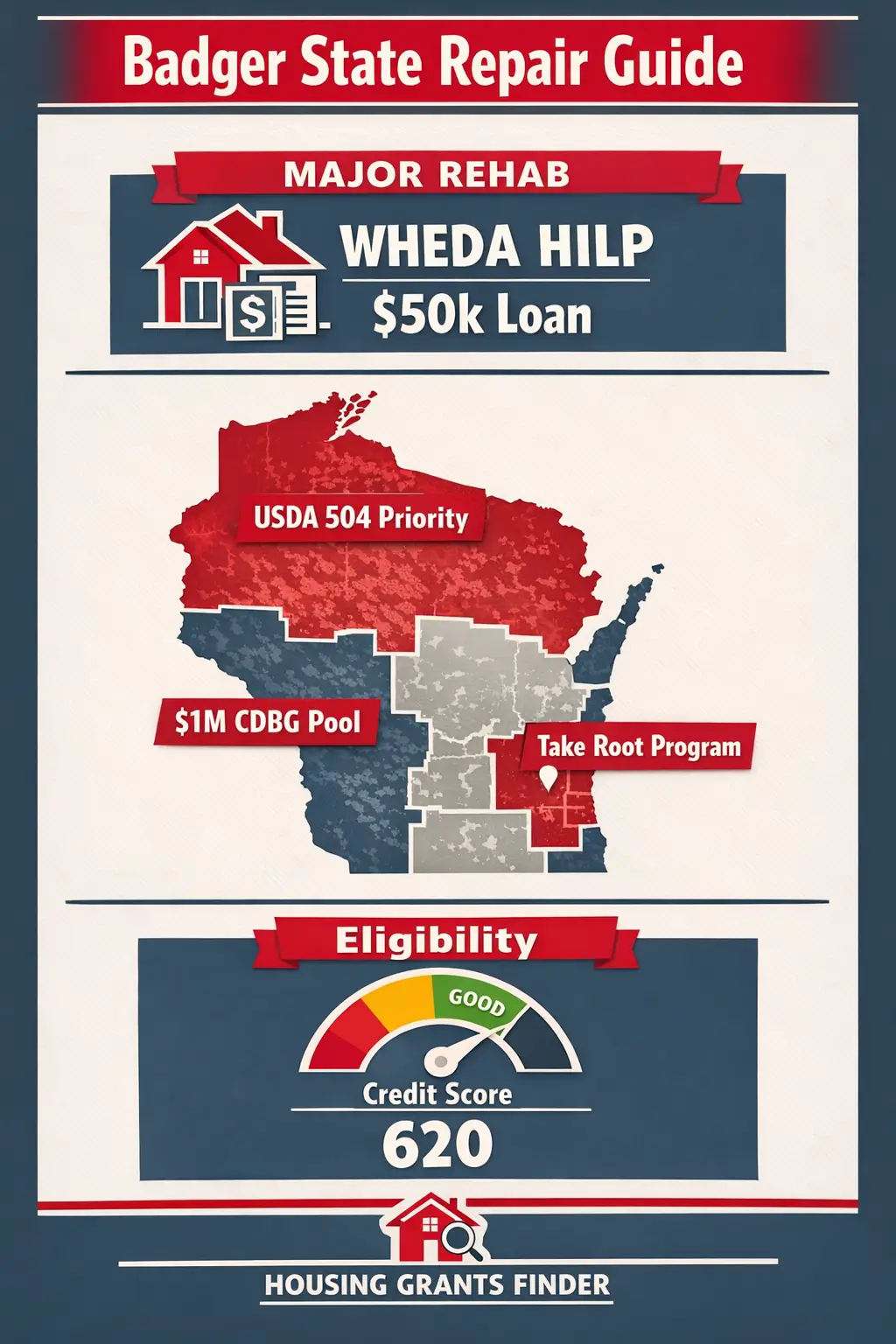
As of early 2026, the Wisconsin Housing and Economic Development Authority (WHEDA) has refreshed its flagship home improvement loan program. This is the primary resource for major structural work that won’t be fully covered by grants.
You can borrow between $10,000 and $50,000 for repairs such as replacing a furnace, repairing a roof, or adding square footage.
- WHEDA uses participating lenders to provide below-market rates for housing rehabilitation projects.
- The Catch: You must be current on your mortgage and property taxes. If you are more than 60 days delinquent on taxes, your application will be denied immediately.
Note: This program requires a credit score of at least 620. It is not a no-questions-asked grant, so have your credit report ready before you call.
Official Link: WHEDA HILP Portal
Southern Housing Region (CDBG)
The Southern Housing Region (including Sauk, Columbia, Dodge, and Jefferson) currently has $1,000,000 in home repair assistance available in Wisconsin.
It is a 0% interest, deferred-payment loan. You do not pay it back until you sell the house, no longer occupy it, or at the 30-year mark.
- The Benefit: It covers expensive jobs, such as emergency roof repair Wisconsin residents need or assistance with electrical repair needs.
- Landlord Bonus: Installment loans at 0% interest are available to landlords renting to low- to moderate-income tenants.
- The Priority: Funds are first-come, first-served.
Official Link: Sauk County/Southern Region Housing Rehab
Emergency Furnace, Roof, and Critical Repair Help
If the repair cannot wait, do not start with the slowest loan option. Match the hazard to the fastest repair path.
- No heat emergency: Call 2-1-1 and ask about Wisconsin energy assistance, crisis help, and furnace repair. For the broader process, see our LIHEAP emergency furnace repair guide.
- Roof leak or structural hazard: CDBG rehab, USDA Section 504, or WHEDA may help depending on income, location, and loan eligibility. For roof-specific paths, see government grants for roof replacement.
- Electrical or plumbing danger: Describe the issue as a health and safety hazard, not a general upgrade.
THE RURAL LIFELINE: USDA Section 504
If you live in a rural area (typically under 20,000 population), the USDA Section 504 home repair grant in Wisconsin is your strongest safety net.
- The Grant: Up to $10,000 (lifetime) for seniors (62+) to remove health and safety hazards.
- The Loan: Up to $40,000 at a 1% fixed interest rate for a 20-year term. Combining loans/grants is strongly encouraged. (See full USDA guide).
- The Rule: Grants must be repaid only if the home is sold within 3 years.
The property must be modest. If your house has an in-ground pool or is valued way above the county average, the USDA may reject the application.
Official Link: USDA Wisconsin 504 Portal
Regional: Milwaukee & Local Gems
Milwaukee: Take Root & Habitat
Milwaukee has a high density of specialized home repair programs available to residents.
- Sherman Park NID: Offers up to $5,000 in home improvement assistance.
- Milwaukee Habitat: Provides a dedicated Repair Your Home program for low-income owners.
- VIA CDC: Offers specialized support for homeowners, though their portals can be glitchy; call them directly for the 2026 intake forms.
Wausau & Eau Claire
- Wausau Free Assistance: Monitor local news (WSAW); the 2026 home repair assistance deadline often falls in late February.
- Eau Claire Rehab: Offers a specialized housing rehab loan for Eau Claire homeowners to use for major siding and window projects.
Specialized Funding: Veterans & Accessibility
If you need accessibility modification grants or a wheelchair ramp grant, look beyond standard housing offices.
- Veterans: Access the SAH, SHA, or HISA adaptation grants for disability-related home modifications.
- Medicaid Waivers: Wisconsin’s HCBS waivers and Money Follows the Person can fund environmental modification to keep you in your home.
- Aging in Place: Contact your local Area Agency on Aging (AAA). They often use Older Americans Act funds for minor home assessments and safety repairs.
Help for Seniors, Accessibility, and Mobile Homes
Wisconsin repair help is often stronger when the repair protects an older homeowner, a disabled resident, or someone trying to stay safely in the home.
- Seniors: USDA Section 504 is one of the strongest starting points for rural homeowners age 62 and older. You can compare broader options on our home repair grants for seniors page.
- Accessibility: Ramps, grab bars, safer bathrooms, and wheelchair access should be framed as safety and mobility needs. For bathroom-specific options, see walk-in tub and bathroom safety grants.
- Mobile homes: USDA and SWCAP may help in some cases, but ownership of the land, foundation status, and habitability rules matter.
Are You Eligible? The 2026 Income Rules
Most people assume they make “too much” for help, but Wisconsin uses Area Median Income (AMI).
- WHEDA HILP: Open to households making up to 120% of the AMI.
- Weatherization (WAP): For 2026, the income cap for a family of four is roughly $73,888.
- The Residency Trap: These funds are for owner-occupied households. If you are fixing a second home or a vacation cabin, you will be rejected on sight.
How to Actually Get the Money
Step 1: The Award Letter First
Gather your 2026 Social Security Award Letter. Most Wisconsin agencies will reject 2025 letters immediately. This is the reason people get stuck in the system.
Step 2: Use the Energy Benefit Portal
Many statewide programs now use a central site: energybenefit.wi.gov. Try applying on Tuesday or Wednesday night to avoid Monday-morning site crashes.
Step 3: The Tuesday Call
If you haven’t heard back in two weeks, call your local Community Action Agency on Tuesday morning. This is when staff typically clear the weekend’s chaos.
Know What You’re Signing: Grants vs Loans in Wisconsin
Not every Wisconsin repair program is a free grant. Many options are loans, deferred-payment loans, or services delivered through local agencies.
- WHEDA HILP: A loan, not a grant. Credit, taxes, mortgage status, and lender approval matter.
- CDBG rehab: Often works as a 0% deferred-payment loan that is repaid later when you sell or stop occupying the home.
- USDA Section 504: The grant portion is usually for eligible seniors, while the loan portion must be repaid.
For a broader repayment breakdown, see pay back home repair grants.
FAQs
Can I fix a mobile home?
Yes, but only if you own the land it sits on. SWCAP and USDA 504 can help with skirting and furnace repairs.
Do I have to repay the money?
0% deferred payment home repair loans are only repaid when you sell the home. USDA grants are free after 3 years.
What if I have a No Heat emergency?
Call 2-1-1 immediately for Crisis Assistance to arrange furnace replacement in as little as 48 hours.
Conclusion
Wisconsin home repair help works best when you choose the right starting point. Use WHEDA HILP for larger financed repairs, USDA Section 504 for rural safety needs, CDBG rehab for participating counties, Weatherization for energy-related work, and local Milwaukee partners for neighborhood repair help.
Before applying, gather your 2026 income documents, proof of ownership, tax status, repair photos, and contractor estimates. For broader help, visit housinggrantsfinder.com and avoid home repair scams before signing with any contractor.