LIHEAP Emergency Fund: Get Free Furnace Repair in 48 Hrs
If your heat just went out and you are looking at a $6,000 repair bill you can’t afford, don’t panic. You don’t have to wait weeks for a standard grant while your house freezes. There is a faster way to get help, designed for people in your exact situation.
By using the federal 18-hour rule and the LIHEAP emergency fund, you can have a licensed professional come to your door for a $0 repair or a complete replacement. This guide shows you exactly how to skip the line and get the heat back on before your pipes freeze, even if your bank account is empty.
🚨 Immediate Crisis Action
If you have a Shut-Off Notice or No Heat, do not apply online. Call the National Energy Assistance Referral (NEAR) hotline immediately: 1-866-674-6327.
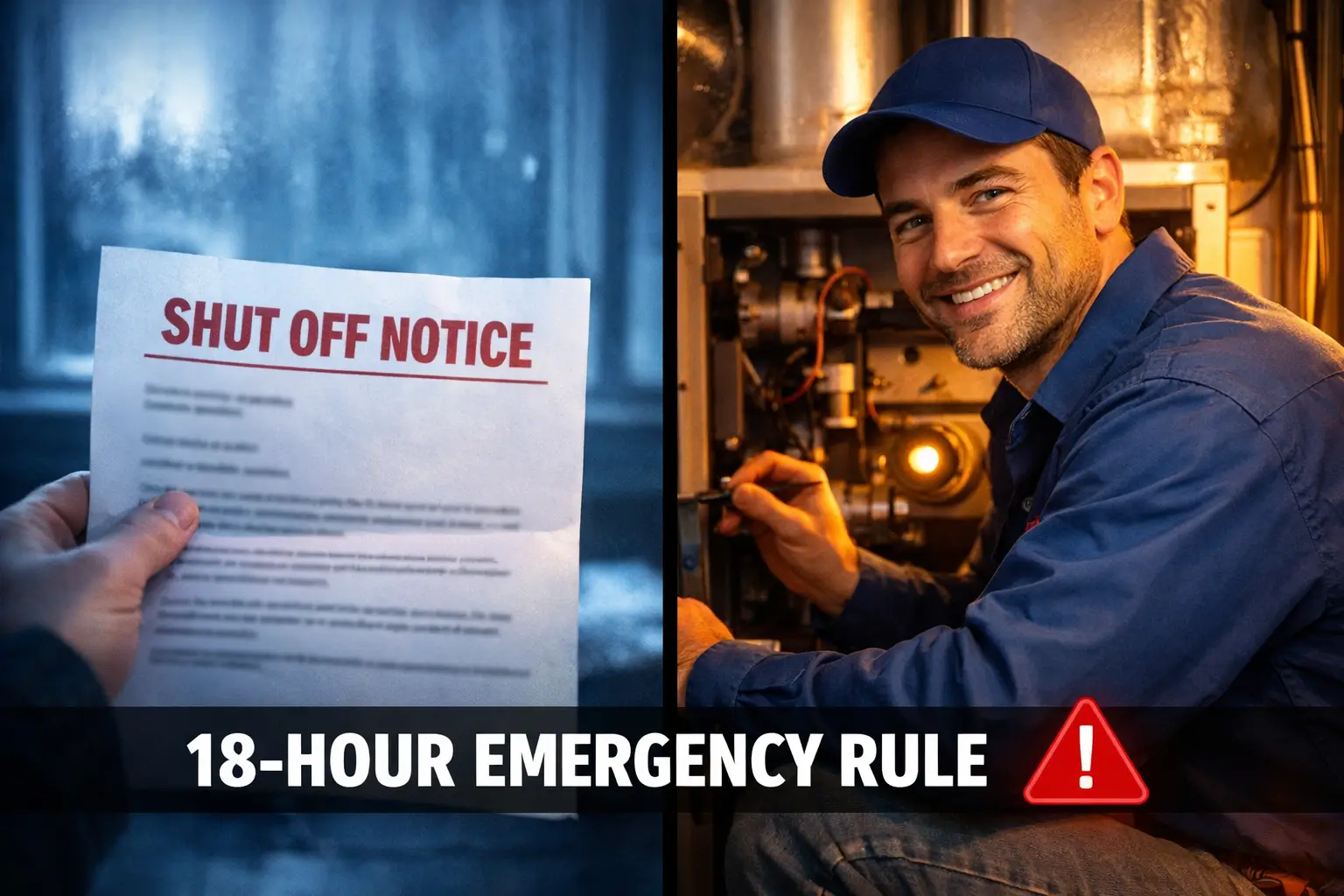
The Legal Panic Button: The 18/48 Hour Rule
Most local agencies won’t volunteer this information, but under Section 2604(c) of the Federal LIHEAP Statute, they are legally bound by a strict clock once you declare a crisis:
- The 48-Hour Rule: For standard crises such as shut-off notices or low fuel, the agency must assist within 48 hours.
- The 18-Hour Rule: If your situation is Life-Threatening, like the house is below freezing or a member has a high-risk medical condition (similar to medical priority for senior grants), they must act within 18 hours.
The Strategy: When you call, don’t say you need help with a bill. Use the legal phrasing: “I am declaring a life-threatening energy crisis and require an emergency intervention under the federal 18-hour rule.”
Pro Tip: Your Right to a Fair Hearing
If an agency tells you the money is gone or denies your request without a valid reason, you have a legal right to a Fair Hearing. In an emergency, most states are required to hear your appeal within 2 to 10 business days. Always contact the Fair Hearing Coordinator immediately if you believe you were unfairly turned away.
Emergency Furnace & AC Funding
The biggest mistake homeowners make is assuming LIHEAP only covers monthly bills. In reality, every state manages an emergency equipment fund. While it is called HERR in New York, it is known as ECIP in California and HEARTWAP in Massachusetts.
This is a direct-payment grant for emergencies, under which the government pays the contractor 100% of the bill.
| Service Category | 2026 Grant Cap (Avg) | Technical Requirement |
|---|---|---|
| Emergency Repair | Up to $4,000 | Covers blowers, gas valves, or igniters. |
| Total Replacement | Up to $8,000 | If the unit is “Red-Tagged” or unsafe. |
| Chimney/Boiler Work | Full Cost | Necessary for safe venting of toxic gases. |
Note: If a gas company technician Red-Tags your unit (shuts it down for safety), keep that tag! That physical paper is the fastest proof you can provide to trigger an $8,000 replacement grant in any state. (For older systems, consider checking our Energy Rebate Stacking Guide for non-emergency upgrades).
The Summer Cooling Crisis Expansion
Under the 2026 HHS Extreme Heat Initiative, many states have expanded their crisis rules to include air conditioning. If the heat index in your area hits local danger thresholds, usually 95°F+:
- AC Repair/Replacement: The same 18- or 48-hour emergency response rules apply to cooling systems for seniors and families with children.
- Window Unit Grants: Local agencies can often provide and install high-efficiency window AC units at $0 cost during heatwaves.
Eligibility & The Medical Hardship
To qualify in 2026, your household income must typically be at or below 60% of your State’s Median Income (SMI).
The Categorical Fast-Track
Skip the weeks of paperwork if anyone in your home receives SNAP, SSI, TANF, or Means-Tested Veterans’ Benefits. A single approval letter for these programs grants immediate eligibility for the entire house.
The Medical Hardship Waiver
Are you slightly over the income limit? Ask for a Medical Hardship Waiver. If a doctor signs a statement confirming that a lack of heat or AC will worsen a chronic condition, such as asthma, heart disease, or COPD, agencies can often waive standard income caps to approve your repair.
How to Apply
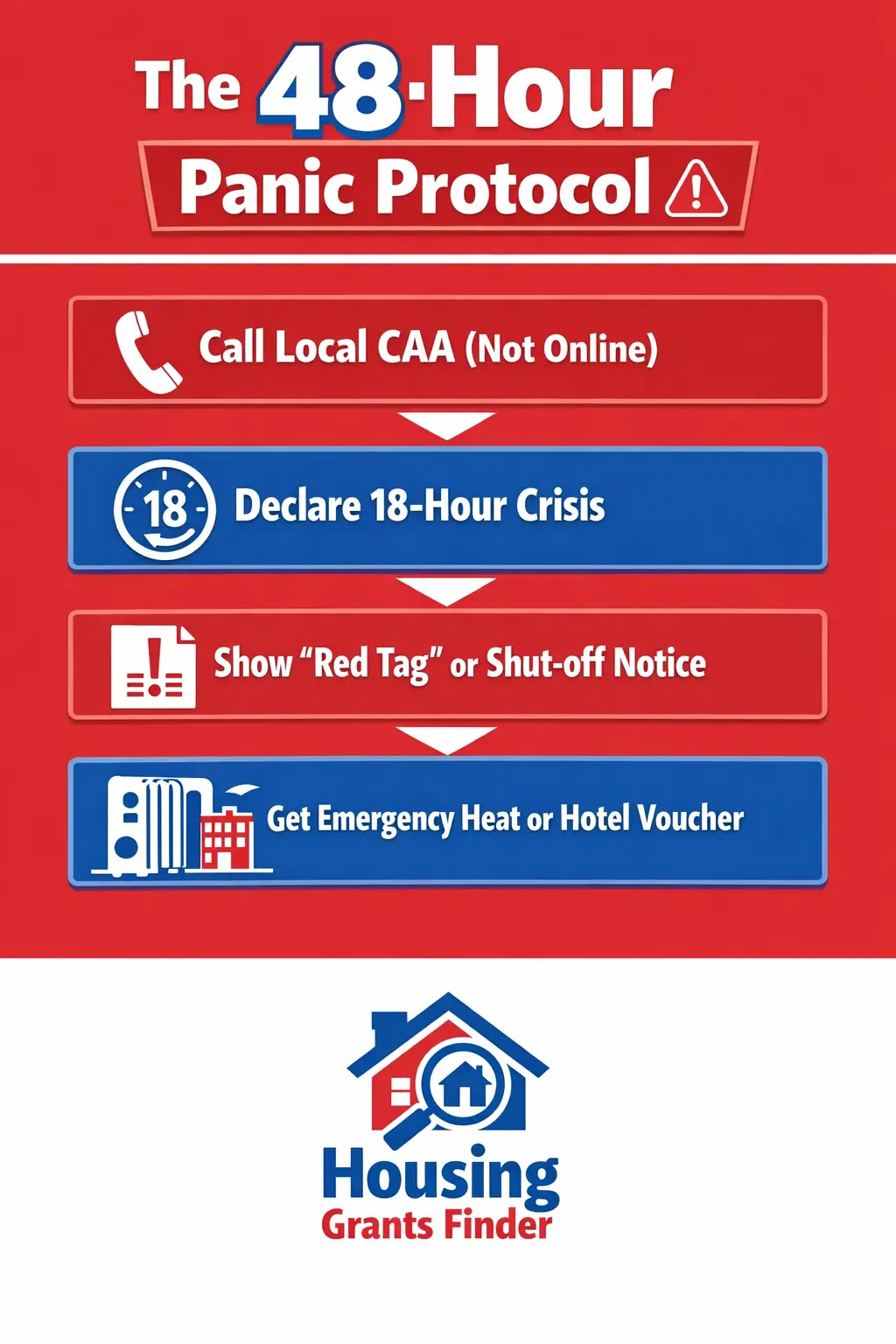
If you are shivering right now, do not use the standard online portal. It is too slow. Follow this Panic Protocol instead:
- Locate your Community Action Agency (CAA): These are the local non-profits that hold the checkbook. Use theNational LIHEAP Office Map to find your county’s specific emergency number.
- Declare the Crisis: Clearly state you are in a Life-Threatening Energy Crisis.
- Provide Proof: Email your shut-off notice, a photo of your fuel tank gauge, or your Red Tag report.
- Demand an Interim Solution: If a tech can’t come today, the agency is often required to provide emergency space heaters or a hotel voucher to keep you safe tonight.
What to Do if Funds Are Exhausted
LIHEAP is a Block Grant, and money can run out. If your local office says they are tapped out, don’t give up:
- Utility-Funded Programs: Ask about CARE (California), PIPP (Illinois/Ohio), or TAP (Pennsylvania). These are funded by the utility companies, not the government.
- Private Fuel Funds: Groups such as the Dollar Energy Fund and Operation Fuel often have gap funding when federal funds are exhausted.
- Charity Gap-Fillers: Contact the Salvation Army (HeatShare) or St. Vincent de Paul. They set aside funds for families just above the income limit who are in crisis.
Video Guide: Understanding Crisis Assistance
Watch this official guide from the federal Office of Community Services (OCS) to understand exactly how the Crisis Assistance component works when you are facing a shut-off.
FAQs
Can I get a free furnace if mine is just old?
No. Crisis funds are for units that are broken or dangerous. For “old but working” units, use the WAP efficiency programs or the HEAR rebates for modern upgrades.
I’m a renter. Can I get a new furnace?
The grant typically goes to the owner, but LIHEAP can provide portable heaters and initiate a code-enforcement referral to compel your landlord to repair the primary system.
Does this cover a leaking roof?
Only if the leak is directly causing the furnace to fail. For general roof leaks, look to USDA Section 504 or Disaster Roof Grants.
Conclusion
In 2026, a failing furnace or a utility shut-off isn’t just an inconvenience, it’s a legal emergency. The federal mandates within the LIHEAP Crisis Program are designed to ensure that no household is left in a dangerous environment due to a lack of funds.
Whether you are using the 18-hour life-threatening rule or triggering a $0 furnace replacement through the HERR fund, you have the power to demand immediate action.