Arkansas Home Repair Grants 2026: Strengthen AR & USDA Guide
Owning a home in Arkansas is a high-stakes battle against the elements. You might be fighting Delta humidity that rots porch wood or a sudden tornado that can peel back a roof in seconds. In 2026, the state is flush with funds for storm-proofing and energy transitions. (Compare with Louisiana’s hurricane programs).
This guide helps you locate funds through federal and state home repair grant programs. You will learn who is eligible and what you receive. If you are looking for housinggrantsfinder resources, start here.
State & Federal Grant Programs
Strengthen Arkansas Homes
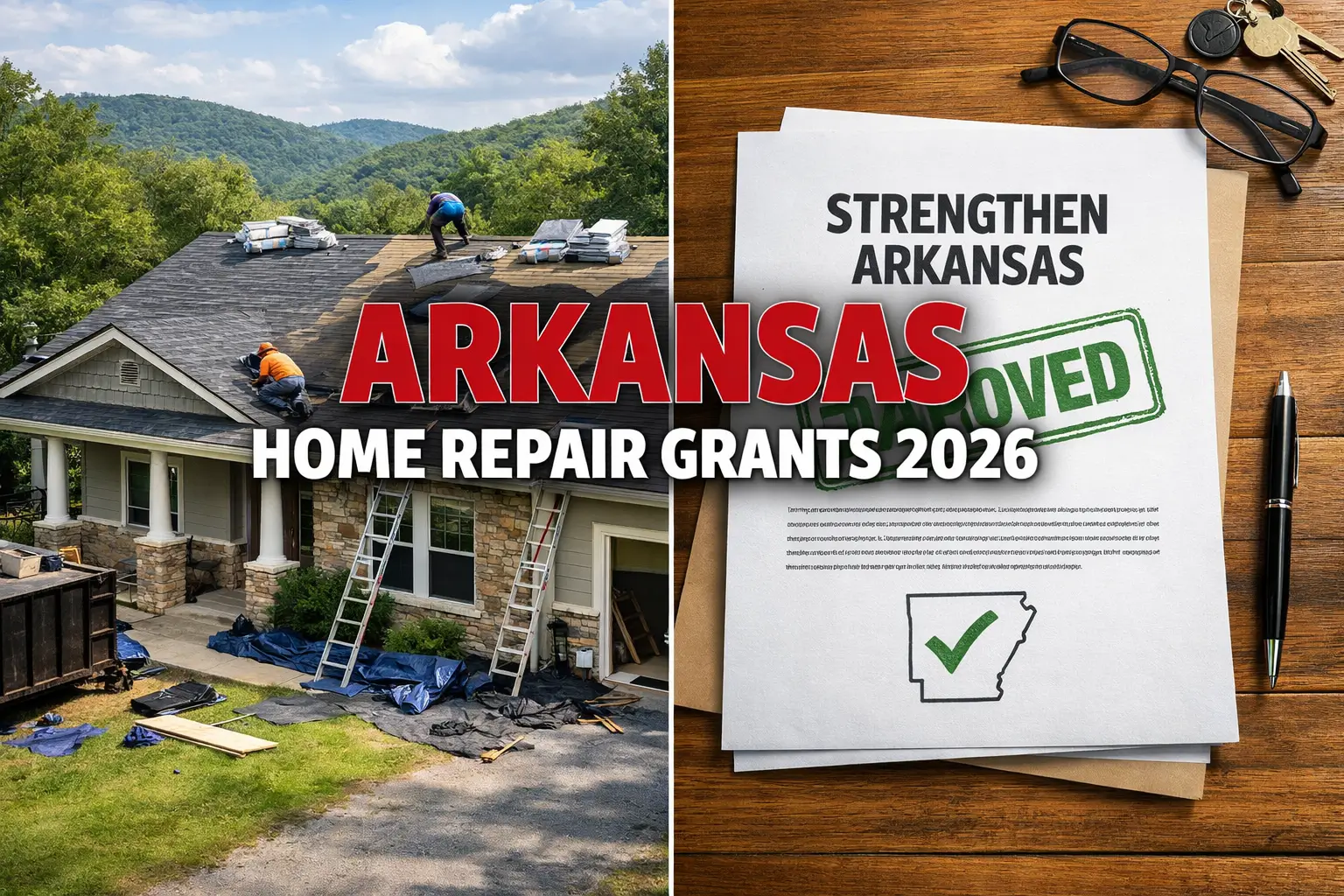
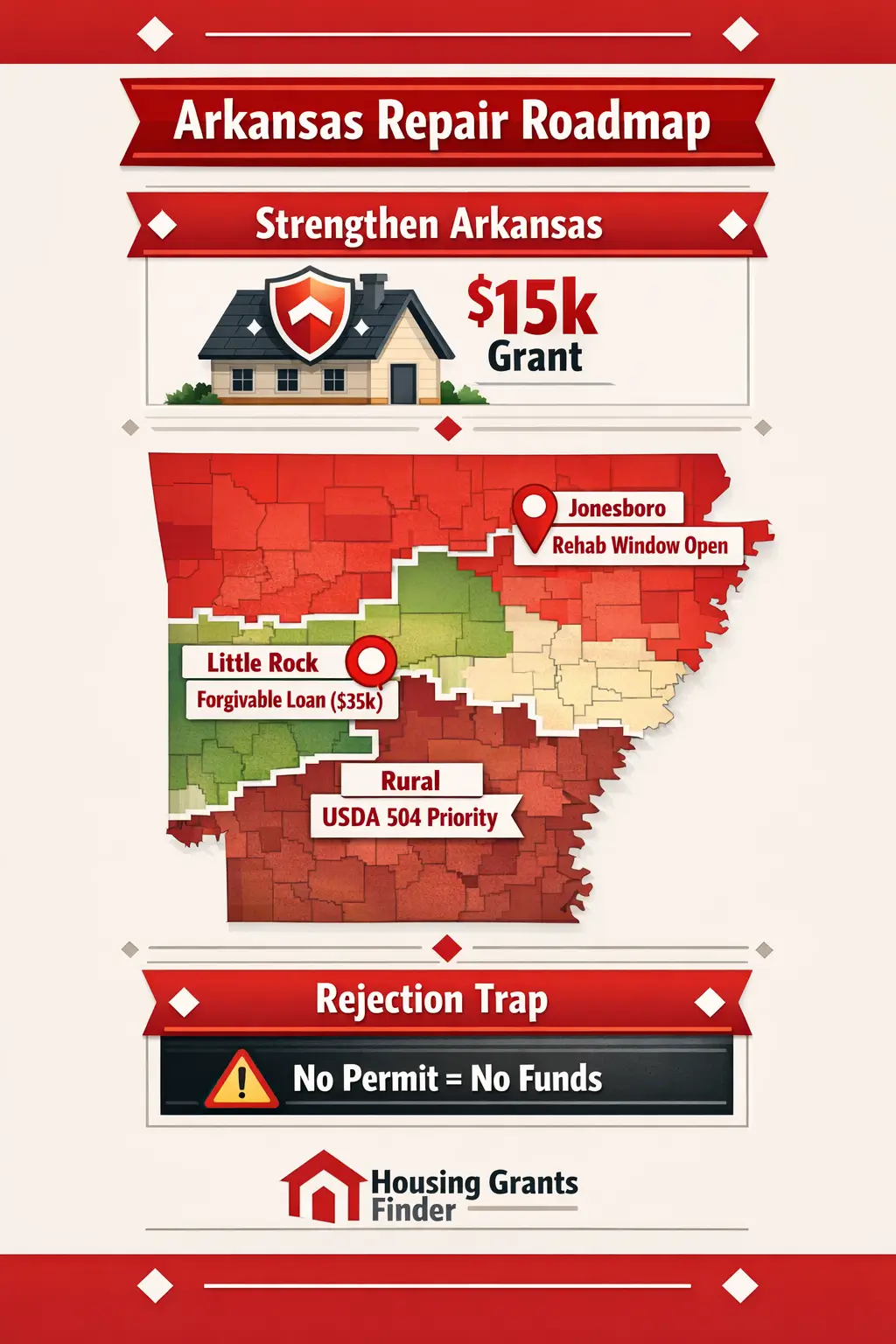
Following the passage of SB 366 (Act 427), Arkansas has officially launched a grant program specifically to help you upgrade your roof to the fortified standard. This is not just a shingle swap; it’s an engineering upgrade designed to survive high-speed winds and hail.
Grants up to $15,000 for roof replacements on existing homes. Arkansas law requires insurers to give you a 20% to 35% discount on your premiums once certified.
You cannot just hire any roofer. You must use a FORTIFIED Certified Professional. If you use a standard contractor, you will be disqualified from the grant and the insurance discounts.
USDA Section 504
For residents in rural counties such as Bibb, Pike, or Winston, the USDA remains the gold standard for senior assistance. Up to $10,000 for seniors (62+) to fix safety hazards.
- The 2026 Disaster Update: If recent storms hit your home, the grant limit jumps to $15,000. (See our USDA guide).
- Link: USDA Arkansas Home Repair Portal
The Weatherization Assistance Program (WAP)
WAP is the best way to reduce outdoor heating by fixing insulation and air leaks, resulting in an average of $5,000 in free energy upgrades.
Waitlists in Little Rock and Northwest Arkansas are currently 12 to 14 months long.
- Navigator’s Advice: If your heater is red-tagged as dangerous during a winter freeze, skip the WAP line. Request Emergency LIHEAP Repair (emergency heating repair Arkansas) through your local agency. It moves in days, not months.
- Link: Find Your Local Community Action Agency (WAP/LIHEAP)
Lead, Tribal, and Solar Money
Lead Hazard Reduction
If your home was built before 1978, you are likely sitting on a health liability. Arkansas is currently distributing HUD Lead Hazard Reduction funds to de-lead homes where children under six reside. This can cover the full cost of window and siding replacements.
If you test positive for lead, the state requires a Certified Abatement Contractor. Never try to scrape this yourself; you will be barred from the program for creating a hazard.
Native American Housing Assistance (NAHASDA)
If you have tribal affiliation, you may be eligible for the Indian Housing Block Grant (IHBG). These funds bypass the standard state waitlists. Help with rehabilitation, handicap mods, and even storm shelters.
You must provide a CDIB card (degree of Indian blood).
- Action: Contact your Tribal Designated Housing Entity (TDHE), such as the Cherokee Nation Housing Authority.
2026 Solar & Energy Tax Credits
Arkansas is an Energy State, and while the federal solar tax credit remains in effect, the Homestead Tax Credit was recently increased. The Arkansas Homestead Credit is now up to $600 per year for your primary residence.
- The Strategy: Use a grant like WAP to seal your home first. Then, explore the 30% federal tax credit for heat pumps. By reducing your energy load first, you can purchase a much smaller, less expensive heating system later. (See AC grant details).
2026 Regional Navigator: Localized City Grants
Localized grants are often faster because fewer people are aware of them.
The Jonesboro Application Window
The City of Jonesboro is accepting 2026 applications for homeownership, demolition, and Homeowner Rehab Assistance.
- Link: City of Jonesboro CDBG Program
- Meeting Alert: Training for application assistance is scheduled for Thursday, February 12, 2026, at the Municipal Building.
Why Most Arkansas Applications Fail
The Permit Trap
This is a common reason for rejection in Pulaski and Benton counties.
- If you started a repair without a city permit and then applied for a grant to finish it, the agency will likely deny you.
The Rule: Most grant programs require an Environmental Review before any work begins. If you jump the gun, you forfeit the funds.
The Heir Property Trap
If your home is still in your late parents’ name, you will be rejected.
- The Fix: Arkansas has thousands of homes where the deed was never officially transferred to the children.
- Action: Clear the title at the Chancery Clerk’s office before you apply.
FAQs
Can I fix a mobile home in Arkansas?
Most city grants say no. However, the USDA 504 program may be available if the home is on a permanent foundation and you own the land.
Do I have to repay the money?
Grants are free. However, if you sell the home within 3 years, the USDA will request a refund. City programs usually have a 5-year forgivable period.
What if repairs cost more than the grant?
This is the Gap Funding rule. If a roof costs $20,000 but the grant is $15,000, you must demonstrate that you have the remaining $5,000 in your bank account before they will sign a contract.
What if I have a Contract for Deed?
Avoid this trap. Most programs do not consider a Rent-to-Own arrangement to be true ownership. You usually need a recorded Warranty Deed in your name. (Read more on contractor scams).
Conclusion
Finding a home repair grant in Arkansas during 2026 is a race against narrow application windows. Because funding is spread across local city halls rather than one central state office, your success depends on being the squeaky wheel at your local office.
Focus on safety issues such as failing roofs or hazardous electrical panels first. Keep your 2026 Social Security Award letters and a clean tax record ready to beat the inevitable rush.