South Carolina Home Repair Grants 2026: HTF & Safe Home Guide
In South Carolina, a roof leak or a failing septic tank can quickly become a significant expense. For 2026, the state is moving away from small, scattered grants and toward Whole-Home Preservation. This means that if you enroll in a program this year, they are more likely to address issues ranging from HVAC to the foundation rather than just patching a single problem.
If you wait for August’s humidity to apply for an AC grant, you will be at the back of a 1,000-person waitlist. This guide is your protective roadmap to jumping that line.
SC Housing Trust Fund (HTF)
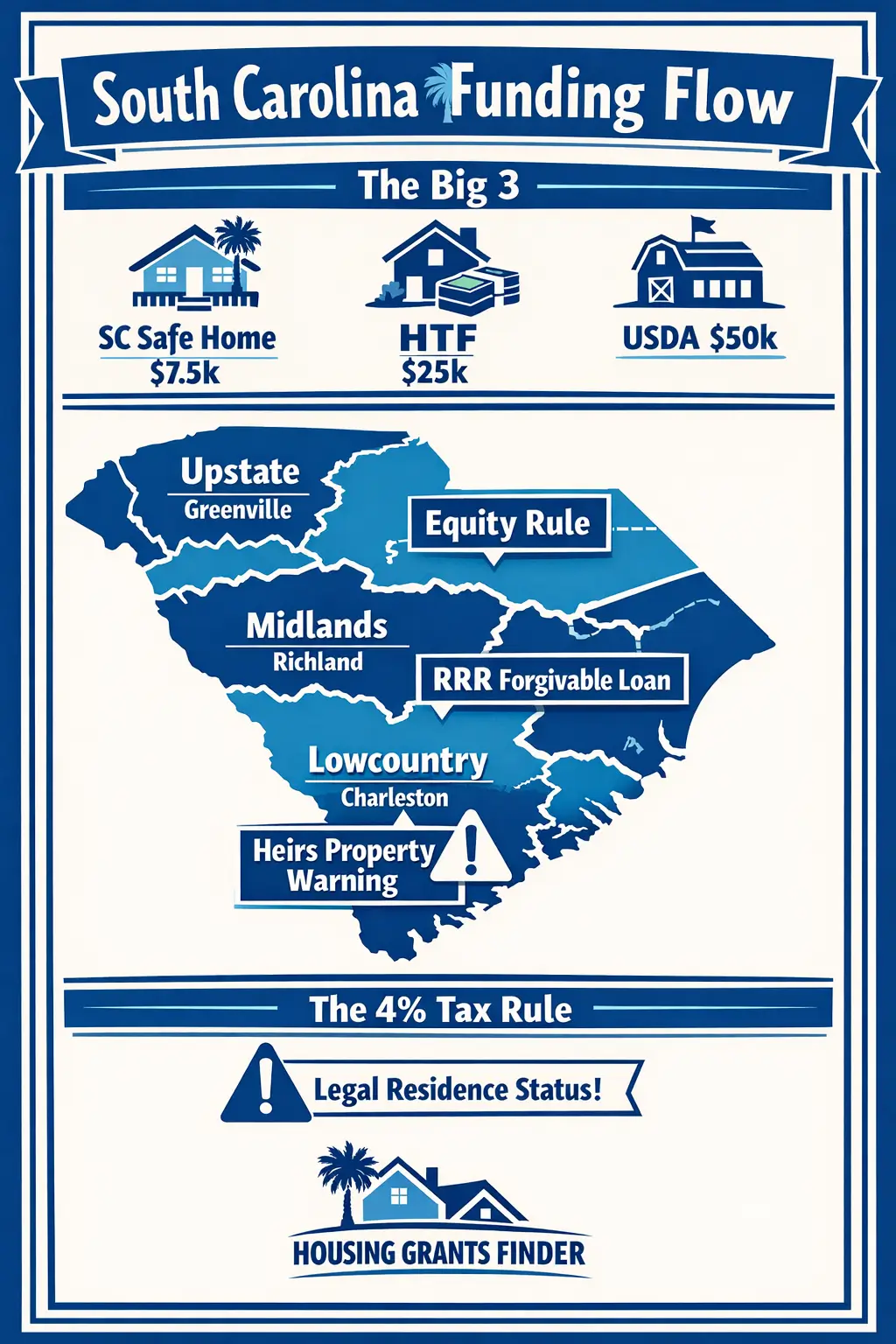
The South Carolina Housing Trust Fund (HTF) is the state’s most potent tool for 2026. Unlike federal grants, this money is generated by a state’s documentary stamp tax on real estate transfers, and grants up to $25,000 for beneficiary home repairs.
The Repairs: It targets the Big Five: Roofs, HVAC, Septic/Plumbing, Electrical, and Foundations.
- You don’t apply to the state directly. You must work with an Approved Nonprofit Partner, such as a local Habitat for Humanity or Community Action Agency.
- Call your local Regional Council of Governments (COG). Ask them: Which nonprofit is currently managing the 2026 HTF Beneficiary funds for my county?
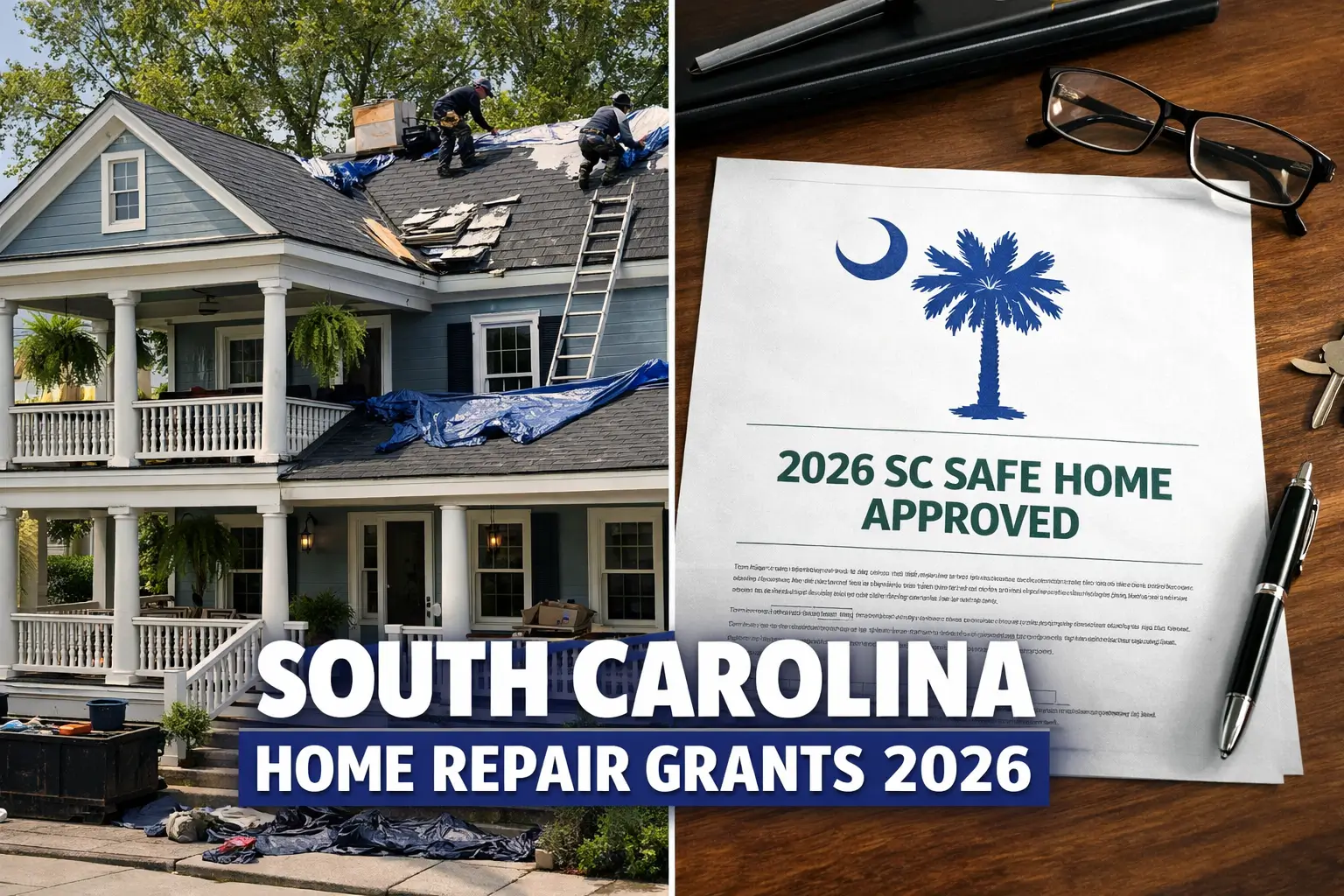
Coastal Protection: SC Safe Home (Opens February 10)
If you live near the coast, this is the most famous grant in the state. Up to $7,500 to make your home hurricane-ready (roof reinforcement, shutters).
- Timeline: The 2026 portal opens on February 10. If your house was built before 2007, you are a high-priority applicant.
You must have an active Homeowners Insurance policy. If your insurer has dropped you, you are not eligible for this grant.
Official Link: SC Safe Home Official Site
The County-by-County Treasure Map
In 2026, many South Carolina counties have launched their own Emergency Repair pots using federal CDBG funds.
Richland County: RRR Program
The Rehabilitation, Residential, and Repair (RRR) program is for homeowners in unincorporated Richland County.
- The Money: Up to $25,000.
- It’s a 5-year, forgivable loan. If you stay in the home for 60 months, the debt is erased.
- The Real-World Detail: They prioritize Life-Safety issues. If your house is deteriorating but your roof is intact, they will focus on the floor joists first.
- Link: Richland County Government Housing
Charleston County: Community Development
Charleston County (excluding the city limits) operates its own program that provides grants of up to $15,000 for sudden failures (septic, water line, furnace). A major hurdle in Charleston is Heirs’ Property.
If your deed lists “The Estate of [Name]”, you will be rejected. Use the Center for Heirs’ Property Preservation to fix your deed before you apply for roof replacement grants.
Link: Charleston County Community Development
Greenville County: Community Development
Greenville has one of the largest waitlists in the state. They open their application window annually (usually in the spring).
You must have at least $5,000 in home equity. If you owe more than the house is worth, they view it as a bad investment and won’t fix it.
Link: Greenville County Redevelopment Authority
Lexington County: Minor Home Repair
Lexington focuses on Minor Home Repairs for residents at or below 80% AMI.
- Repairs: Roofing, electrical, and plumbing.
- Note: You must be current on your mortgage and taxes.
- Link: Lexington County Community Development
Spartanburg County: Owner-Occupied Rehab
The Spartanburg County Community Development office partners with local agencies for substantial rehab projects.
- Limit: Can vary, but typically covers major code violations up to $15,000.
- Link: Spartanburg County Community Development
Why People Get Rejected
Avoid these Secret Killers that will end your application instantly:
- The 4% Tax Rule: In South Carolina, you must be taxed at the 4% Owner-Occupied rate. If your tax bill shows you are taxed at the 6% (Second Home/Rental) rate, the grant office will assume you don’t live there and reject your application.
- The Social Security Award Letter: Don’t send your bank statement as proof of income. These programs are audited. They require the Official 2026 Social Security Award Letter.
- The Contractor Licensing Trap: South Carolina is strict. For any job over $200, the contractor must be registered with the SC Residential Builders Commission. If you use someone without a license (or investigate repair fraud), they won’t pay the bill.
Specialized Help: Seniors & Veterans
Weatherization (WAP)
This is the only way to get a free HVAC unit if yours is older than 15 years.
- The Process: A state-certified energy auditor inspects your home to find the most cost-effective upgrades (insulation, air sealing, HVAC).
- Eligibility: Targeted at those below 200% of the Poverty Level.
Veteran HISA Grants
If you are a veteran with a disability, the VA provides Home Improvements and Structural Alterations (HISA) grants.
- The Limit: Up to $6,800 for service-connected conditions.
- Detail: This can be used for medically necessary bathroom modifications, like walk-in tubs or roll-in showers. (More on senior grants).
- Link: VA HISA Grants Official Page
FAQs
Can I get a grant for a mobile home?
Yes, but only for Weatherization (WAP) and USDA 504. Most county-level CDBG grants, such as those in Richland or Greenville, strictly exclude mobile homes unless they were built after 1994 and are on a permanent brick foundation.
Does the grant pay the contractor, or do I?
The program almost always pays the contractor directly. You will be asked to sign a Satisfaction of Completion form before the check is cut. Never sign that form until you have personally inspected the work and ensured the leak is gone.
What is the Clawback period?
For many SC grants, such as USDA or County-Level Grants, there is a residency requirement. If you sell the home within 3 to 5 years, the grant may turn into a loan that you must repay from the sale proceeds.
Conclusion
The 2026 funding cycle is active, but South Carolina grant pots often vanish by June. To secure yours, ensure your tax bill reflects the 4% Owner-Occupied rate immediately; a 6% assessment will trigger an automatic rejection. You must also verify your deed is in your name alone. Heirs’ property title traps disqualify thousands.
Skip the general state lines and contact your Regional Council of Governments, such as BCDCOG or Central Midlands COG. Ask the Housing Rehabilitation Manager to identify the specific nonprofit holding the current 2026 home repair grants finder funds for your zip code.