Washington Home Repair Grants 2026: HRGP & Weatherization
Living in the Pacific Northwest means fighting a constant battle against moisture, mold, and rising heating bills. If your roof is leaking or your furnace is failing, you don’t have to face it alone. In 2026, Washington has refreshed its funding for the Home Rehabilitation Grant Program (HRGP), Weatherization Plus Health, and county-specific emergency pots.
Whether you are a senior on a fixed income, a veteran, or a first-time homeowner in a rural area, use this guide to find the money you need to keep your home safe and dry. (See how this compares to Missouri’s HeRO program).
State-Level & Special Programs
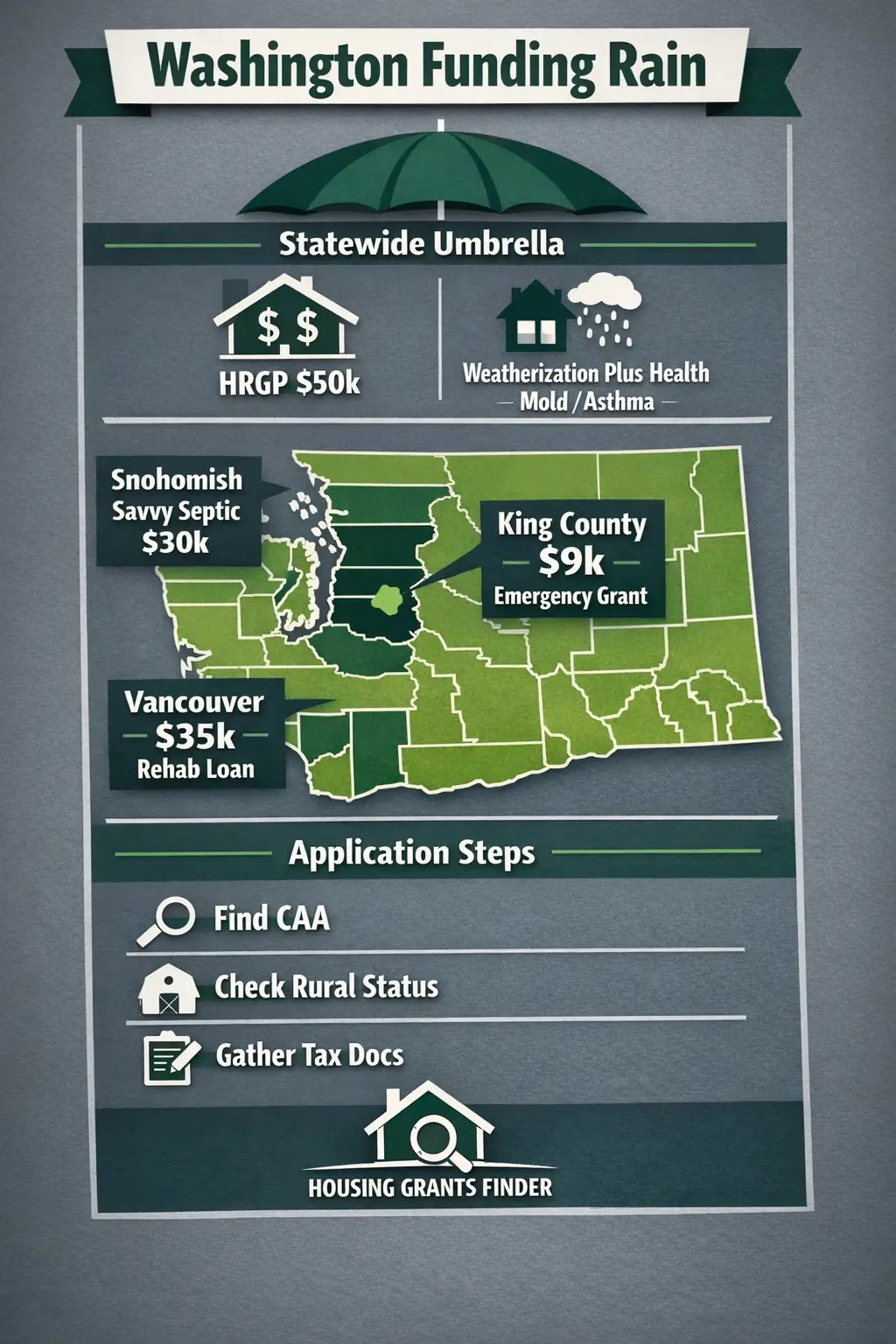
Home Rehabilitation Grant Program (HRGP)
Managed by the Washington Department of Commerce, this program stops your home from falling into disrepair.
- Use it for: Foundations, roofing, plumbing, electrical systems, and wheelchair ramps.
- Get: Up to $50,000.
- The Catch: You must be at or below 80% Area Median Income (AMI). Priority is given to seniors (62+), veterans, and families with young children.
- Link: Apply through your local CAA
Weatherization Plus Health (W+H)
Washington is one of the few states that treats your home like a medical prescription. This is vital for Pacific Northwest moisture control.
- Use it for: Mold removal, removing old carpet (for asthma relief), HEPA filtration, and moisture control. It also covers insulation and HVAC upgrades.
- Get: Repairs at zero cost.
- The Catch: Your income must be at or below 60% State Median Income (SMI). You’ll jump to the front of the line if a doctor confirms your home is making your asthma or COPD worse.
- Link: Washington Weatherization Portal
County-Specific Programs for 2026
King County Housing Repair Program
This is for residents outside Seattle’s city limits. You get $9,000 Emergency Grants for urgent safety issues; $11,000 Grants for mobile homes; or up to $50,000 Deferred Payment Loans.
- Eligibility: Income under 50% AMI for grants. You must have lived in the home for at least one year.
- Link: King County Housing Repair
Pierce County Human Services Repair
This program is designed to keep you in your home without adding new debt.
- Get Full coverage for health and safety repairs, including roofing and heating.
- Eligibility: Income under 80% AMI. Your home value must be $527,250 or less unless you have a property tax exemption.
- Link: Pierce County Home Repairs
Snohomish County Savvy Septic & Minor Repair
If your septic system is failing, this is your best bet: up to $30,000 in septic system repairs; free labor for minor carpentry and plumbing fixes.
- Note: Septic grants are popular, and the inspection process is slow. Apply before your system entirely fails to avoid an emergency pump-out cost.
- Link: Snohomish County Housing Projects
Clark County & City of Vancouver Rehab
An excellent option for homeowners in Southwest Washington. Up to $35,000 in 2% interest loans for dry rot, foundations, and weatherization.
- The Catch: You don’t make monthly payments, but you must pay it back when you sell the house.
- Link: Vancouver Housing Rehab
Federal, Veteran, & Tribal Assistance
USDA Section 504 Rural Repair
The safety net for people in small towns with populations under 35,000. Get up to $10,000 in Grants (for seniors 62+) or a $40,000 Loan at just 1% interest.
- Warning: The rural boundary is strict. Check the map before you spend hours on the paperwork. (See our USDA 504 guide).
- Link: USDA Washington Office
Veterans Specially Adapted Housing (SAH)
Up to $126,526 to remodel your home for disability access. You must have a service-connected disability. The VA is notoriously slow with inspections; start this process months before you need the work done.
- Link: VA Housing Grants
Tribal Housing Improvement Program (HIP)
Members of tribes like the Yakama or Tulalip have a dedicated path. Up to $60,000 for repairs or even a complete Home Replacement if yours is condemned.
- Link: BIA Housing Improvement
How to Apply: 3 Essential Steps
- Find Your Agency: Most Washington money flows through Community Action Agencies (CAA). They are the gatekeepers. Find yours on the Department of Commerce Map.
- Verify Your Address: Use the USDA Map to determine whether your address is in a rural area. If you aren’t, don’t bother with the 504 grant; focus on county funds instead.
- Gather the Big Three: You need your 2025 tax returns, your 2026 benefit letters (SSI or VA), and your property deed. (Watch out for scammers when hiring contractors).
FAQs
Can I get help with a failing septic system?
Yes. Snohomish and King counties make this a priority. If you smell sewage or see pooling water in your yard, call your county housing office today.
Why do these applications get rejected?
The reason is missing documents. If you forget to include your 1099 form or a bank statement, your application will remain in a pending status for months while others are funded.
Do I have to repay the money?
Grants are free money, but there’s a catch. If you sell your home within 3 years, you typically have to repay the grant. Loans are often deferred, meaning you make no monthly payments, but the balance comes due when the house changes hands.
Conclusion
Getting a grant in 2026 is a race against the clock. These programs are first-come, first-served, and the money often runs out by summer. See if you are below 80% of your county’s median income. That is the Golden Ticket for most of these programs.
Don’t just email. Call your local Community Action Agency and ask, “Is there a waitlist for the 2026 HRGP funds?” When the program sends a home inspector, they will identify issues you may not be aware of. This actually helps you get more House grants funding.