Do You Pay Back Home Repair Grants? Liens and Loan Rules
Do you have to pay back home repair grants?
Quick Answer: Generally, NO. Most government home repair grants do not need to be paid back unless you sell your home within a specific “recapture period” (usually 3 years). Unlike loans, grants are financial awards designed to improve safety without debt.
A true home repair grant usually does not work like a normal loan. You do not make monthly payments, and you usually do not repay the money as long as you follow the program rules. The repayment risk comes from the fine print: selling too soon, moving out, transferring ownership, using the money for unapproved work, or accepting help that is actually a deferred or forgivable loan.
This guide explains when home repair grants have to be paid back, how the USDA Section 504 three-year rule works, what a recapture period means, when a lien can be placed on your home, and how to tell the difference between a grant, a loan, and a forgivable repair program.
The short answer
Most true home repair grants are not repaid. Repayment usually happens only if:
- You sell or transfer the property during a required time window.
- The assistance is actually a forgivable or deferred loan secured by a lien.
- You violate key program terms, such as occupancy rules or the approved use of funds. (Learn more about avoiding home repair scams here).
Grant vs Loan vs Forgivable Loan: The Simple Difference
| Help Type | Monthly Payment? | When You May Repay It |
|---|---|---|
| True Grant | Usually no | Only if you violate rules, sell too soon, or transfer the home during the required period. |
| Low-Interest Loan | Yes | You repay it according to the loan terms. |
| Deferred Payment Loan | Usually no | Usually due when you sell, refinance, transfer title, or stop living in the home. |
| Forgivable Loan | Usually no | Forgiven over time if you stay in the home and follow program rules. |
What Is a Recapture Period?
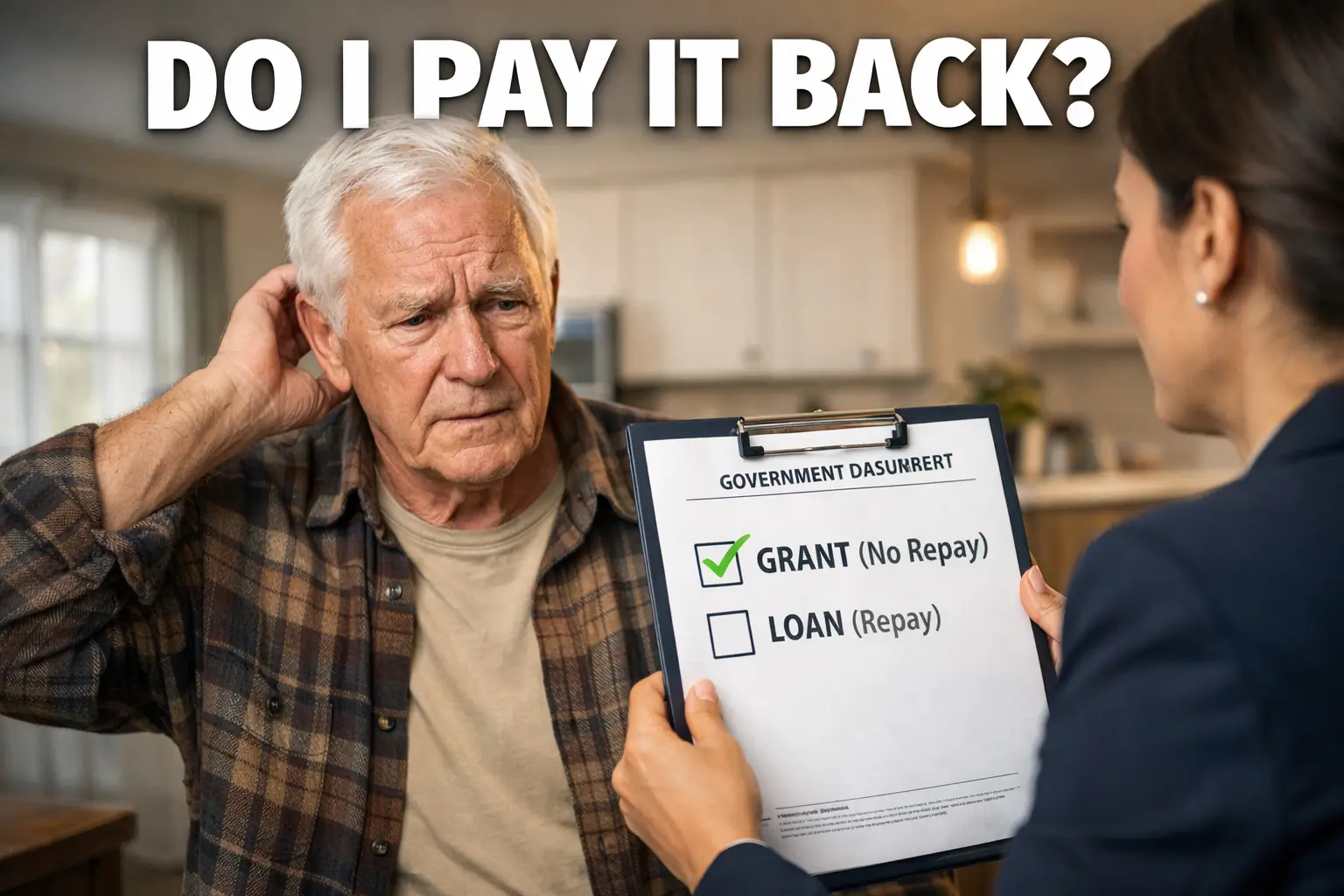
A recapture period is the time you must keep living in the home after receiving repair assistance. If you sell, transfer ownership, rent the home out, or stop using it as your primary residence during that window, the program may require repayment.
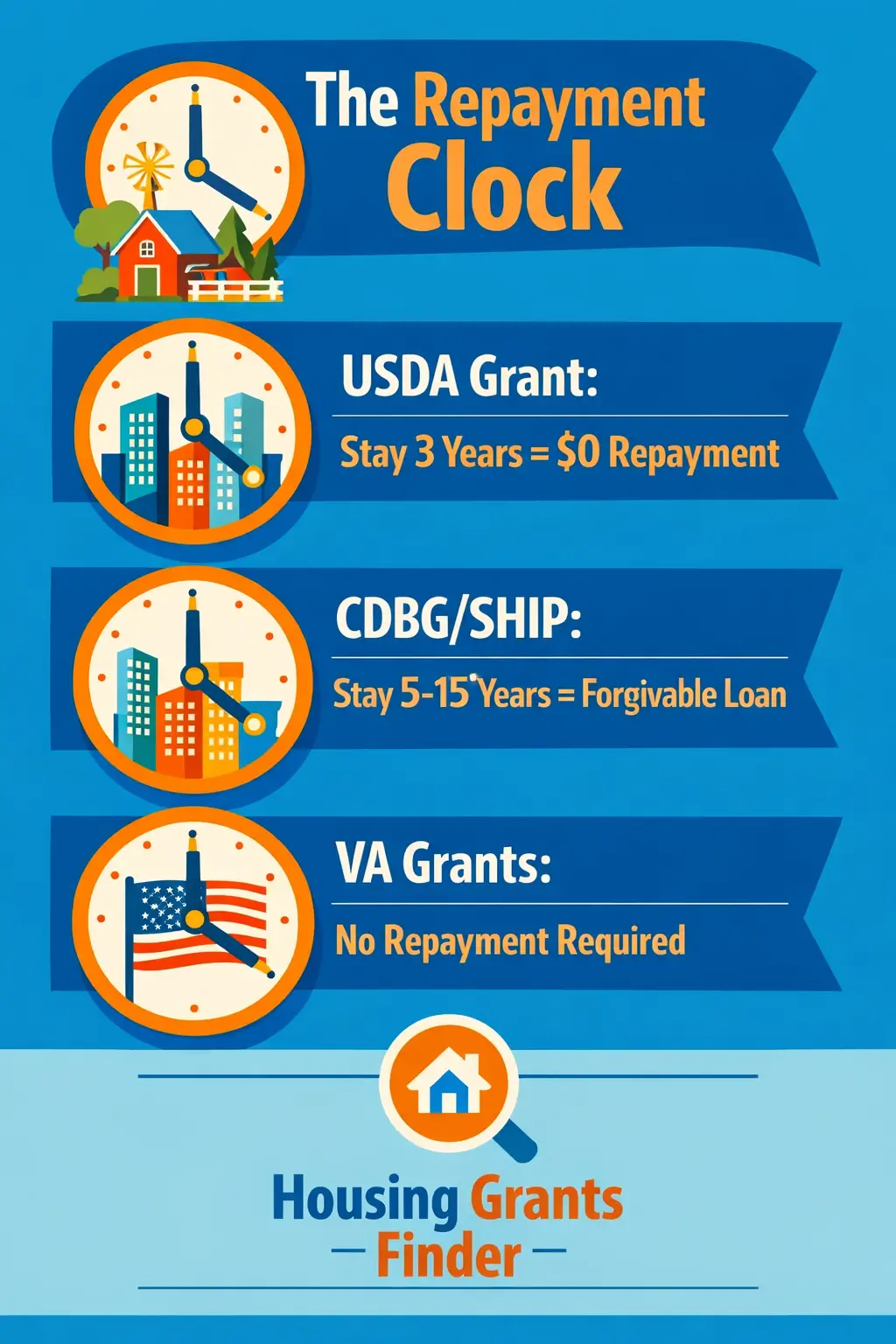
- USDA Section 504 grants: Usually use a 3-year repayment trigger if the property is sold or transferred.
- City and county rehab programs: Often use 5-year, 10-year, or 15-year affordability periods.
- Weatherization: Usually works as a service, not a cash grant or lien-based loan.
The Three-Year Rule: USDA Section 504
The USDA Section 504 Home Repair Program is one of the strongest options for rural homeowners, but it has strict eligibility requirements.
The Numbers Block: 2026 Limits
- Maximum Grant: $10,000, lifetime limit.
- Disaster Bonus: If your home was damaged in a Presidentially Declared Disaster Area, the grant limit can be $15,000.
- Maximum Loan: $40,000, fixed at 1% interest for up to 20 years.
- Loan + Grant Combo: Up to $50,000 total or $55,000 in disaster zones.
Who Qualifies
To qualify, you generally must:
- Own and occupy the home as your primary residence.
- Live in a USDA-eligible rural area.
- Have a household income under the very-low-income limit for your county.
- Be unable to obtain affordable credit elsewhere.
- For the grant portion, be 62 or older (See our Seniors Grant Guide).
How Repayment is Triggered
This is the key rule people worry about:
- If the property is sold or otherwise transferred within 3 years, the grant must be repaid in full.
- If you stay in the house for three years and one day, the repayment trigger expires, and the debt is legally extinguished.
Official Resource: USDA Rural Development Fact Sheet
Will a Home Repair Grant Put a Lien on My House?
A true grant may not create a lien, but many city and county home repair programs do record a lien because the help is structured as a deferred or forgivable loan. That lien protects the program if you sell or transfer the property before the required period ends.
This does not always mean you made a bad choice. A 0% deferred loan or forgivable lien can still be useful if you plan to stay in the home. The key is knowing the repayment trigger before you sign.
- Ask for the lien term: Is it 3, 5, 10, 15, or 30 years?
- Ask what triggers repayment: Sale, refinance, death, moving out, renting the home, or title transfer may matter.
- Ask if the balance shrinks: Some programs forgive a percentage every year, while others keep the full balance due until the end.
Local CDBG and SHIP programs
Many city and county repair programs funded through HUD CDBG or SHIP do not structure help as a simple cash grant. Instead, they use a Deferred Payment Loan secured by a lien, which is forgiven over time.
Example: Flagler County, Florida
Flagler County publishes a forgivable lien model that serves as a perfect example for 2026:
| Program Type | Max Amount | Forgiveness Terms |
|---|---|---|
| Owner-Occupied Rehab | Up to $80,000 | 15-year deferred |
| Roof Replacement | Up to $25,000 | 5-year deferred |
| Senior Barrier-Free | Up to $12,000 | Forgivable |
How the Vanishing Act Works
- A lien, sometimes called a silent second mortgage, is recorded against your property.
- You typically do not make monthly payments.
- The balance is forgiven over an affordability period if you continue to meet program rules.
- If you sell, move, or transfer ownership before the period ends, the program can recapture the remaining balance from the home sale proceeds.
VA Grants and Weatherization
If you want help that is closest to a no-repayment timer model, these two programs are often the cleanest.
VA Housing Grants: For Eligible Veterans
For Veterans with qualifying service-connected disabilities, the VA provides disability housing grants:
- SAH Grant (FY 2026): $126,526 cap.
- SHA Grant (FY 2026): $25,350 cap.
- TRA Grant: Up to $50,961 (SAH-qualified) or $9,100 (SHA-qualified) if living temporarily in a family member’s home.
- Repayment Rule: Per official VA policy, these are earned benefits. Generally, there is no requirement to repay these funds if you sell the home later.
Official Resource: VA Housing Grants
Weatherization Assistance Program (WAP)
Run by the Department of Energy (DOE), this program provides services like insulation and air sealing to lower energy bills. (See our WAP Windows Guide).
Eligibility
Households at or below 200% of the Federal Poverty Guidelines, or households receiving SSI, are generally considered categorically eligible, though local agencies still conduct screening and an energy audit.
Repayment
Weatherization is a service delivered to the home, not a cash payment. It typically does not operate like a repayable loan and does not result in a lien.
What Happens if You Don’t Pay
If repayment is required under the program terms and it is not paid, it is treated as a delinquent debt.
Treasury Offset Program (TOP)
Under the Debt Collection Improvement Act, delinquent federal debts (such as a USDA grant that wasn’t repaid after an early sale) can be referred to TOP. This allows the Treasury to:
- Withhold federal tax refunds.
- Offset a portion of federal benefit payments, including Social Security (subject to legal limits and protected minimum amounts).
Local lien enforcement
If a city or county program recorded a lien, that lien will block the sale or title transfer of your home until the debt is satisfied from the proceeds.
Official Resource: Treasury Offset Program (TOP) Info
Questions to Ask Before You Accept Repair Assistance
Before accepting any repair money, ask the agency these questions in writing. Do not rely only on a phone explanation.
- Is this a grant, loan, deferred loan, or forgivable loan?
- Will a lien be recorded against my home?
- How long do I have to stay in the home?
- What happens if I sell, refinance, move, or transfer ownership?
- Does the amount forgive over time, or does the full balance stay until the end?
- Can I choose my own contractor, or must I use an approved contractor?
If someone pressures you to sign without explaining repayment, liens, or contractor rules, read our home repair scam warning guide before moving forward.
FAQs
Do I really have to pay back a home repair grant?
Usually no, but many programs have a residency timer. Under USDA Section 504, the grant must be repaid if the property is sold or transferred within 3 years. Local programs often use 5 to 15-year periods.
How do I qualify for the USDA 504 home repair program?
You must be 62+ for the grant, very-low-income, an owner-occupant in an eligible rural area, and unable to obtain affordable credit elsewhere.
What can the grant money be used for?
USDA grants must be used to remove health and safety hazards. Loans can be used for broader repairs, improvements, and modernization. (See roof replacement rules).
What are the 2026 limits for VA disability housing grants?
SAH is $126,526, SHA is $25,350, and TRA is up to $50,961. Eligible Veterans can use these funds up to 6 different times over their lifetime until they reach the total cap.
How does the Weatherization Assistance Program work?
It provides services like insulation and air sealing, not cash. It can reduce energy use and lower bills, with average annual savings of around $372.
Does a home repair grant create a lien?
Sometimes. A true grant may not create a lien, but many local repair programs are actually deferred or forgivable loans. Those programs often record a lien and forgive it only after you stay in the home for the required period.
Conclusion
Most true home repair grants are not repaid like a normal loan. The real risk comes from selling too soon, transferring the home, moving out, or accepting a program that is actually a deferred or forgivable loan with a lien.
Before you sign, ask whether the help is a grant, loan, deferred loan, or forgivable loan. Also ask about the recapture period, lien rules, and repayment triggers. For broader repair funding options, visit Housing Grants Finder and compare the program terms before accepting assistance.