Alaska Home Repair Grants 2026: AHFC, USDA and BIA Help
In Alaska, home repairs can become urgent fast. A small roof leak, failing boiler, shifting foundation, or storm-damaged wall can turn into a serious safety problem once winter, salt air, permafrost movement, or remote shipping delays enter the picture. In 2026, homeowners may be able to use AHFC weatherization, AHFC renovation loans, USDA Section 504, BIA Housing Improvement Program funds, tribal housing repair help, local Healthy Homes programs, and disaster assistance for qualifying repairs.
This guide explains the main Alaska home repair grants, loans, weatherization programs, tribal repair options, disaster recovery resources, roof repair help, emergency heating assistance, and mobile home repair pathways. For a broader look at U.S. programs, search for home grants on our main directory.
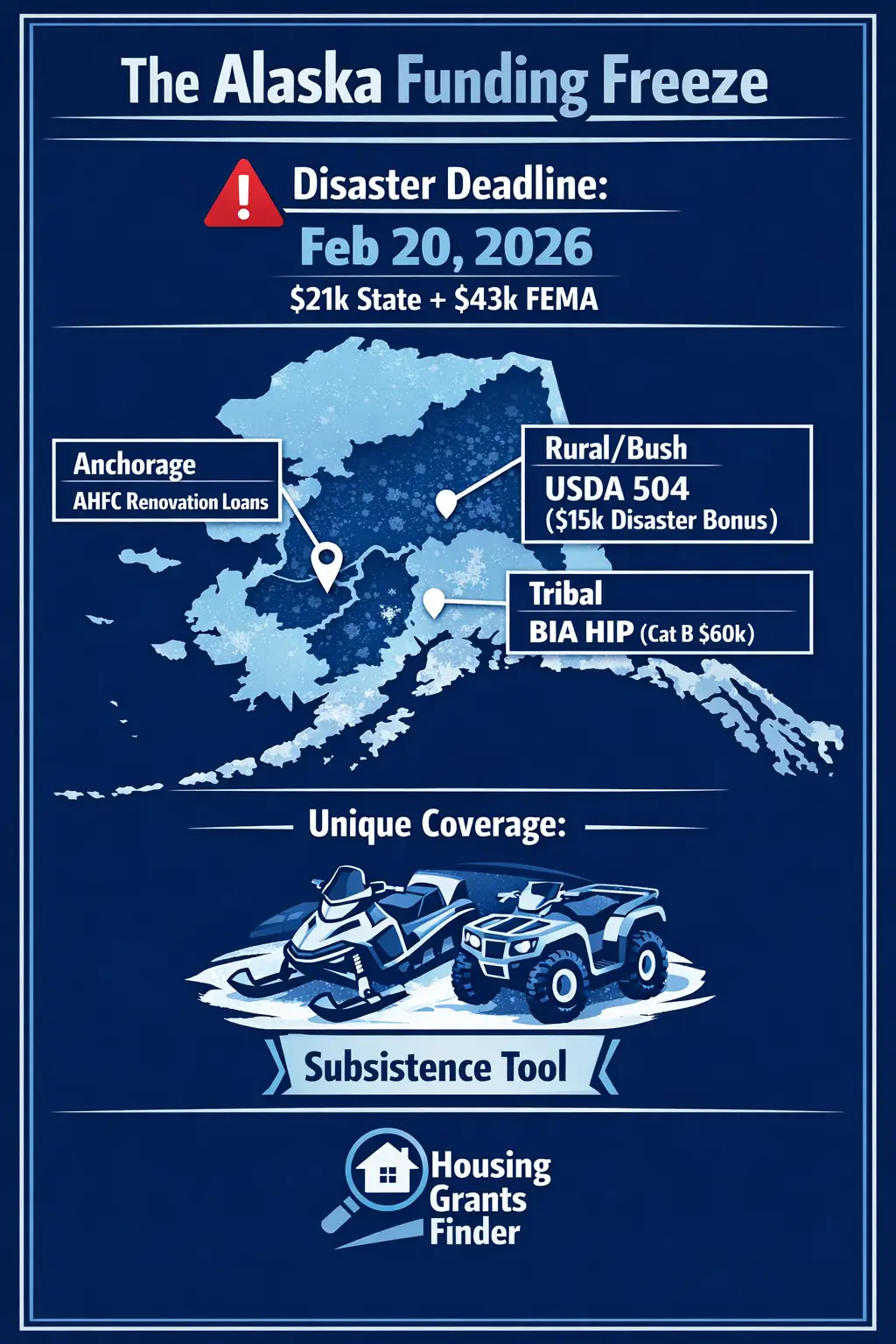
THE CRITICAL DEADLINE: Disaster Recovery
If your home was damaged by the October 2025 West Coast Storms or the December 2025 Mat-Su Wind Disaster, check the current application status before starting paperwork. The original February 20, 2026 deadline has passed, but appeals, documentation reviews, FEMA follow-ups, SBA disaster loan steps, or later state updates may still matter for some households. The State Individual Assistance (IA) and FEMA programs are designed to make essential living areas safe and functional after declared disasters.
In Alaska, this uniquely covers subsistence equipment. If your snowmachine or ATV is your primary means of transportation for food gathering and is damaged, it qualifies as essential personal property.
How to Apply: You must register with both the State and FEMA IA to maximise your payout. If FEMA denies a claim, the State program can often step in to fill the gap. Call 1-844-445-7131 or apply via the links below.
Best Alaska Repair Program by Need
| Repair Need | Best Program to Check First | Why It Fits |
|---|---|---|
| Insulation, air sealing, old boilers, heating loss | AHFC Weatherization | Best fit for energy-related repairs and heating efficiency upgrades. |
| Major structural repair or full renovation | AHFC Renovation Loan | Useful when the repair is too large for a grant-only program. |
| Rural senior safety repairs | USDA Section 504 | Strong option for seniors 62+ who need health and safety hazard repairs. |
| Alaska Native or tribal housing repairs | BIA HIP or tribal housing authority | Best fit for eligible households with limited resources and major repair needs. |
| Storm or disaster damage | State IA, FEMA, SBA Disaster Loans | Best fit when damage is tied to a declared disaster area. |
Statewide Grant & Repair Powerhouses
For non-disaster repairs, the programs focus on energy savings and safety. These remain open year-round, but waitlists are long. You need to be the squeaky wheel to get inspected before the ground thaws. (Compare with Oklahoma’s tornado recovery efforts).
AHFC Weatherization Assistance Program: Heating, Insulation, and Energy Repairs
WAP is the gold standard for stopping outdoor heating. It focuses on thermal envelopes, insulation, and replacing ancient, fuel-chugging boilers or furnaces. Free energy upgrades. In road-system areas like Anchorage, the work value averages $10,000, but in remote villages it often increases due to higher shipping costs.
Waitlists for Southeast Alaska are moving faster this year, but the Bering Strait region remains backlogged.
- The Catch: Do not try to apply at the Public Assistance office. Those drop-boxes are for Heating Assistance (LIHEAP), not Weatherization. You must contact the regional provider for your specific zip code.
- Link: AHFC Weatherization Provider List
AHFC Renovation Loans (Purchase & Second Mortgage)
For major structural overhauls, the Alaska Housing Finance Corporation (AHFC) grants financing that standard banks won’t touch. Offers up to $100,000 for home improvements on a home you already own, with an alternative evaluation. If you get a full appraisal, that limit jumps to $574,912.
- Bonus: You can incorporate universal design principles into the loan at lower interest rates.
- How to Apply: Contact an AHFC-approved lender, not the state.
- Link: AHFC Renovation Loan Programs
USDA Section 504 (Rural Home Repair)
Specifically for rural villages and smaller towns like Bethel, Dillingham, or Utqiagvik. The Grant is up to $10,000 for seniors (ages 62+) to address health and safety hazards.
If your home sustained damage in a Presidentially declared disaster area, the grant limit increases to $15,000. (Check our full USDA guide).
- The Catch: The website often lags on Monday mornings. Try submitting your Form RD 3550-35 late Tuesday night.
- Link: USDA Alaska Rural Home Repair
Roof repair note: In Alaska, roof help usually depends on whether the damage threatens health, safety, or habitability. USDA Section 504, BIA HIP, AHFC renovation loans, and some disaster programs can help when a leaking roof causes mold, structural risk, water damage, or unsafe living conditions. For broader roof-specific funding, compare this with our government roof replacement grants guide.
Tribal Housing: The Alaska Secret
If you are an Alaska Native or American Indian, Tribal authorities provide the largest repair funds through the Housing Improvement Program (HIP).
HIP serves individuals with no other insurance or resources. It is a true safety net. For 2026, the AVCP (Association of Village Council Presidents) is currently soliciting material bids for house packages in Kasigluk and Tuluksak. Bids close February 26, 2026.
The Trap: HIP applications don’t last forever. You must update your application annually to remain in the selection pool. If you applied in 2024 and didn’t refresh it, you are likely no longer being considered.
Official Link: BIA Housing Improvement (Alaska)
Borough & Local Secrets
Localised grants move faster because the gatekeepers are your neighbours.
Juneau: Healthy Homes
This HUD-funded program tackles home hazards at NO COST. It runs through October 2026. They look for lead, mould, and safety issues that AHFC might miss.
- How to Apply: Visit Alaska Heat Smart to schedule a home assessment.
- Link: Alaska Heat Smart
North Slope Borough: Housing Upgrade Division
The General Housing Request (GHR) assists residents with life-and-safety issues, such as failing plumbing or emergency heating repair Alaska residents rely on.
- 2026 Shipping Bonus: The CWAT Alternative Shipping Assistance for 2026 is currently open for remote communities. This helps fly in materials that are otherwise impossible to get.
- Link: North Slope Housing Upgrades
Strategy for Success in 2026
The Stale Document
- You must use your 2026 Social Security Award Letter.
- Agencies will reject 2025 letters immediately because they don’t show the current cost-of-living adjustment.
- Get a fresh copy from the SSA portal before you start.
The Permafrost Rule
- If your home is shifting due to permafrost thaw, AHFC may require an Engineer’s Certificate before they fund a roof.
- They will not put a new roof on a house that is sinking into a bog.
- Prove the foundation is stable first.
Permit Barrier
- Anchorage and Fairbanks require permits for boilers and major electrical work.
- If you perform a repair without a permit, you may be ineligible for future grants.
- The state won’t bless work that wasn’t inspected by the city.
Mobile Home Repair Help in Alaska
Mobile home repair help in Alaska usually depends on foundation status, ownership, location, and whether the repair is tied to safety. USDA Section 504 may help if the home is on a permanent foundation and meets rural program rules. Rural CAP, tribal housing authorities, AHFC weatherization providers, and some local programs may also help with skirting, heating, insulation, weather sealing, and urgent safety repairs.
If the repair involves a furnace, boiler, or unsafe heating system, also review our heating grant guide before applying.
FAQs
Can I get help with my roof?
Yes. Roof replacement is a primary use for USDA Section 504 grants (seniors), BIA HIP Category B ($60,000), and AHFC Renovation Loans.
Does State Assistance cover snowmachines?
Yes, under the Individual Assistance (IA) program. If an ATV or snowmachine is your primary mode of subsistence transport (hunting/gathering), it can be repaired or replaced if damaged in a declared disaster.
Can I stack grants?
Yes. You can use Tribal HIP for structural work and WAP for insulation. Just ensure the work items are clearly separated on different invoices.
I have a mobile home. Can I get a grant?
Yes. Rural CAP in Anchorage has a specific 2026 program for mobile home safety, and the USDA 504 program covers them if they are on a permanent foundation.
What if the repairs cost more than the grant?
This is Gap Funding. You must show the remaining balance in your bank account before any state-contracted work begins. The agency wants to know whether the job will be completed. (Beware of scammers asking for upfront fees).
Conclusion
Finding home repair grants in Alaska in 2026 depends on the repair type and where you live. AHFC Weatherization is the strongest starting point for heating loss, insulation, and energy repairs. USDA Section 504 works best for rural seniors and safety hazards. BIA HIP and tribal housing authorities are critical for eligible Alaska Native and American Indian households. Disaster assistance may help only when damage is tied to a declared event and the application or appeal window is still open.
Before applying, gather your 2026 income documents, proof of ownership, repair photos, contractor estimates, insurance paperwork, and any disaster claim numbers. For more repair funding options, visit Housing Grants Finder and compare the program that matches your repair need.