2026 Disaster Recovery Guide: FEMA & HUD Grants for Storms
If you are standing in your living room looking up at the sky through a hole in your roof, the last thing you want is a mountain of paperwork. Fortunately, the government’s approach to disaster aid was overhauled in 2024, and these streamlined rules are now the standard as of 2026. The days of being forced to apply for an SBA loan just to qualify for basic FEMA help are over, and the application process has been significantly simplified to get you help faster.
🚨 Immediate Disaster Action
Don’t wait. You must apply at DisasterAssistance.gov within 60 days of the declaration to secure your spot.
While there are no secret triggers or instant $100,000 grants, knowing the actual reforms can help you access Serious Needs Assistance for immediate essentials and unlock higher caps for home repairs. Here is the accurate way to navigate the system today.
Serious Needs Assistance (SNA)
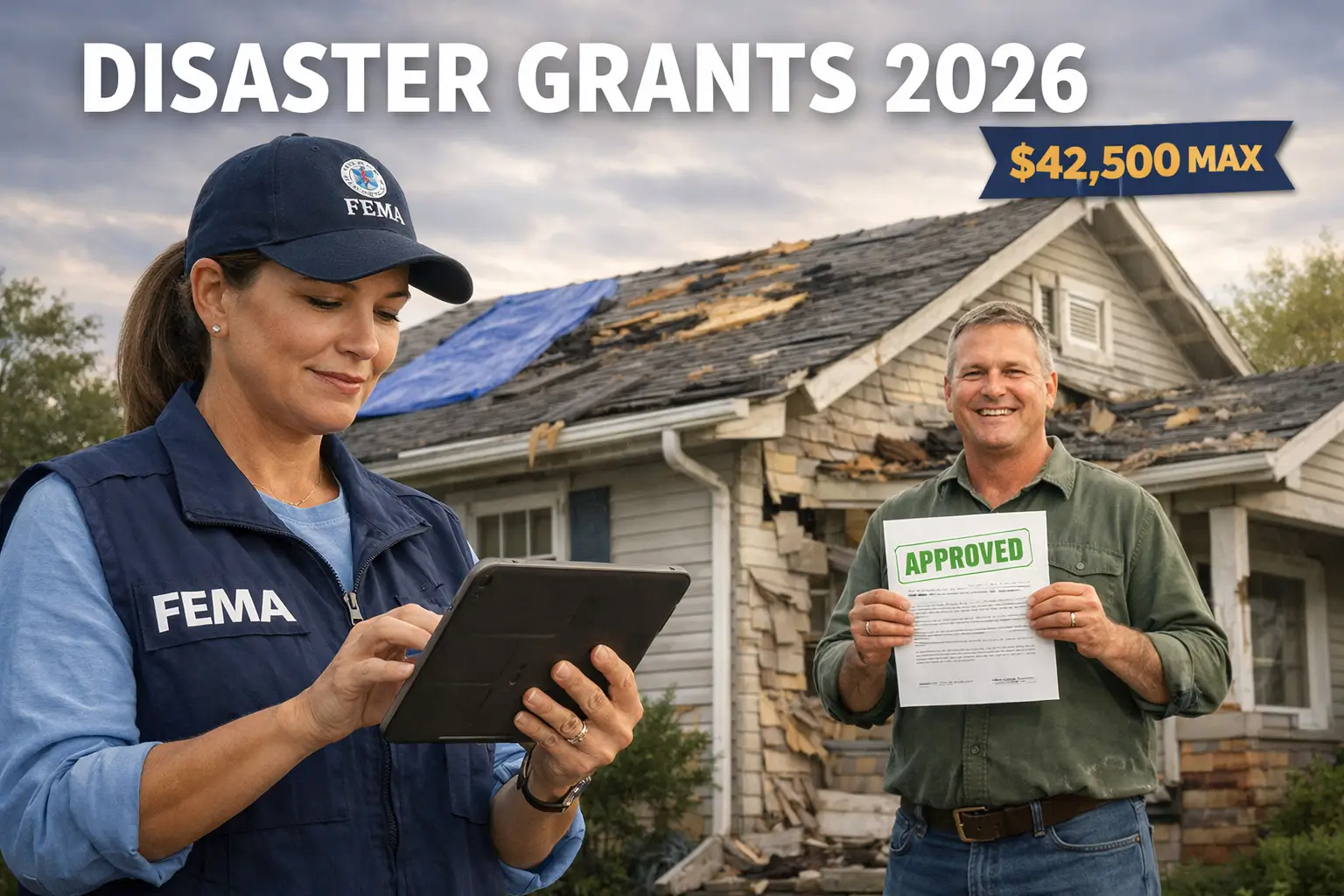
In 2026, FEMA officially retired the old Critical Needs payments. They have been replaced by Serious Needs Assistance (SNA), which has been adjusted for 2026 inflation to $770 per household.
- Instant Denial Trap: A common complaint is that survivors get a denial code before an inspector even arrives.
The Secret: When you fill out your application, you must check YES to the question: Do you have serious needs for food, water, or medication?
The Unified Application Strategy
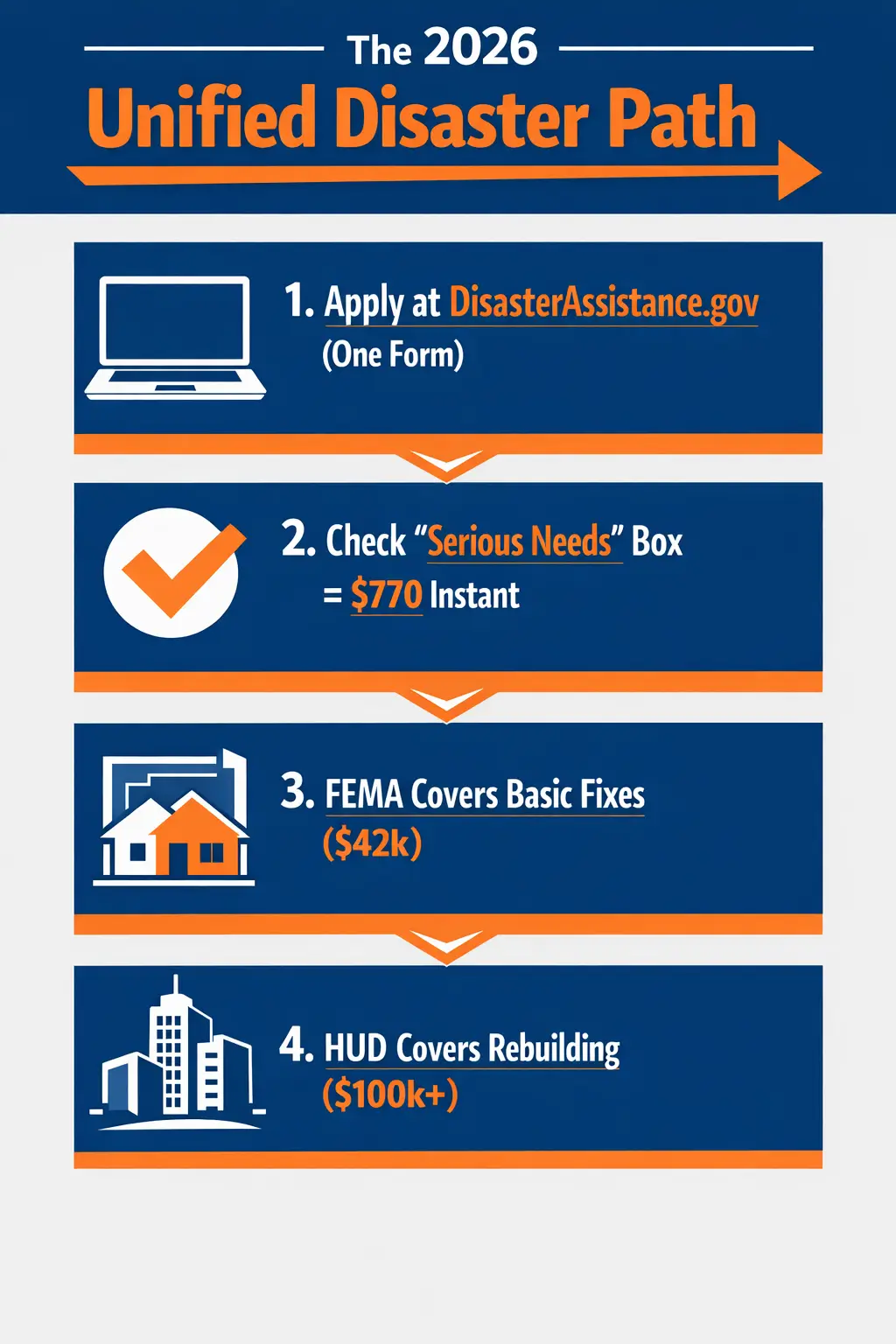
The biggest win for homeowners in 2026 is the Unified Disaster Application System. For the first time, you no longer have to apply for a Small Business Administration (SBA) loan just to be denied before receiving FEMA grant money. That SBA First rule is officially dead.
- One Form, Three Checks: Your application at DisasterAssistance.gov now automatically screens you for:
- FEMA Individual Assistance (IA): The immediate band-aid money.
- HUD CDBG-DR: The Big Money for long-term rebuilding.
- USDA Section 504 Disaster Grants: Specifically for very-low-income rural homeowners (see our USDA 504 guide for income limits).
- The Magic Words: Even though the form is unified, the system is still an algorithm. In the Description of Damage box, always use the phrase: “Home is currently inaccessible and uninhabitable due to structural failure and lack of safe sanitation.” This triggers a high-priority flag in the 2026 system.
FEMA vs. HUD: Bridging the Gap
Many survivors feel lowballed because FEMA only covers the cost of a safe, sanitary home, not a beautiful one. To get fully rebuilt, you must bridge the gap between FEMA and HUD.
| Agency | Program Name | 2026 Max Grant | Real-World Use Case |
|---|---|---|---|
| FEMA | Individual Assistance (IA) | $42,500 | The Fix: Pays for a working toilet, a kitchen sink, and plywood to patch the roof. |
| HUD | CDBG-DR Grant | $100,000+ | The Rebuild: Pays for flooring, cabinets, paint, and complete structural restoration. |
| USDA | Rural Disaster Grant | $10,000 | The Bonus: Extra funding for rural homeowners to “stack” on top of FEMA. |
The Trap: The 2026 FORTIFIED Roof Mandate
This is the most critical update for 2026. If you are using federal grant money, especially HUD or FHLB funds, to replace a storm-damaged roof, you are now required to build to the FORTIFIED Standard.
- What is it? It’s a construction method that uses ring-shank nails, sealed roof decks, and high-wind shingles to ensure your roof won’t blow off in the next storm.
- The Grant Risk: If your roofer installs a standard code-minimum roof, the government can claw back your grant money or refuse to pay the final invoice.
- The ROI: In states like Florida and Alabama, a FORTIFIED Certified roof can lower your 2026 home insurance premiums by up to 25%.
Important: Always ask your roofer: “Are you an IBHS Certified FORTIFIED contractor?” You can learn more about this in our roof replacement grant guide.
Video Guide: What to Expect Before Applying for FEMA Assistance
Appeal: The Fair Hearing Right
In 2026, FEMA is legally required to be more transparent via the new Individual Assistance Dashboard. If you get an Ineligible letter, it’s usually just a request for a missing document.
- Code “I” (Insured): The most common denial. It means FEMA believes your insurance covered the damage. To fix this, you must upload your Insurance Settlement Letter or Denial of Coverage.
- Your Legal Hammer: If the agency is stalling, you have the right to a Fair Hearing. In an emergency, states are now mandated to hear your appeal within 10 business days. Mention the “Fair Hearing Coordinator” by name during your follow-up calls to signal that you know your rights.
Plan B: What to Do if FEMA Says No
If you are denied federal help because your damage was pre-existing or you are slightly over the income limit, use these 2026 alternatives:
- State-Led Housing Recovery: States such as Florida and North Carolina now operate their own housing programs that take over when FEMA funds are exhausted.
- Medical Hardship Waiver: If a household member has a respiratory condition (Asthma/COPD) and the storm caused mold, use a medical waiver to force FEMA to pay for Proactive Remediation (professional mold removal) regardless of your standard grant cap.
- The Gap-Fillers: Contact the Salvation Army (HeatShare) or St. Vincent de Paul. They keep private “disaster pots” for families who fall through the cracks of government programs.
FAQs
Does FEMA cover mold damage in 2026?
Yes. Under the new Proactive Remediation rules, you no longer have to wait for a full inspection to begin cleanup. If you have a medical condition like asthma and can provide photos and receipts of professional mold removal, FEMA can reimburse these costs as part of your initial grant.
Can I apply for FEMA if I have private insurance?
Absolutely. You should apply for FEMA the same day you file your insurance claim. While FEMA won’t duplicate benefits, it covers the gap left by insurance, such as deductibles and underinsured limits. You will simply need to upload your insurance settlement letter later.
What is the Serious Needs Assistance $770 payment?
This is a 2026 upfront payment for immediate essentials such as food, water, and baby formula. Unlike regular home repair grants, this is often approved within 24-48 hours of your application if you declare an immediate need.
Why was my FEMA application denied for “Identity Verification”?
This is soft denial in 2026. It usually means your current address doesn’t match your public records, like your driver’s license. To fix this, simply upload a copy of a utility bill or lease agreement from the last 3 months to your portal.
How long do I have to apply after a storm?
Generally, you have 60 days from the date of the federal disaster declaration. However, in 2026, many states will be granted automatic 30-day extensions for significant events. Always check the Individual Assistance Dashboard for your specific county’s deadline.
Conclusion
In 2026, rebuilding is about knowing which federal statute to cite. The FEMA Act of 2025 was built to help you, but you have to be the one to push the buttons. Don’t wait for a caseworker to find you. Government agencies prioritize the people who speak the loudest and know the most.
Your Action Plan for Today:
- Apply within 24 hours at DisasterAssistance.gov to secure your place in line.
- Declare a Serious Need to trigger your immediate $770 SNA payment.
- Demand a FORTIFIED roof from your contractor to ensure you keep your grant money and lower your insurance.
Explore more free grants for seniors home repairs and recovery at Housing Grants Finder