Connecticut Home Repair Grants and Loans: 2026 Guide
Keeping a house standing in Connecticut is a workout. Between the bone-chilling freezes in the Litchfield Hills and the swampy humidity of the River Valley, your home takes a beating. In 2026, repair help is spread across municipal, state, federal, and non-profit programs, often as deferred loans, targeted grants, or direct services rather than one state wide check.
This guide cuts through the noise to help you find the money to fix everything from your leaky roof to your sagging subfloors.
Quick Answer: Connecticut homeowners may find repair help through municipal CDBG programs, Connecticut Children’s Healthy Homes, energy assistance, weatherization, USDA Section 504, and VA accessibility grants. Help may be a grant, deferred loan, low-interest loan, or direct service. Terms and intake vary. As of July 2026, Healthy Homes says its queue is at capacity, the 2025-2026 CEAP deadline passed on May 29, 2026, and 2026-2027 CEAP details are pending.
Use the housing assistance eligibility checker as an informational starting point. The responsible agency makes the official decision.
The Whole House Fix: CDBG and Municipal Rehab
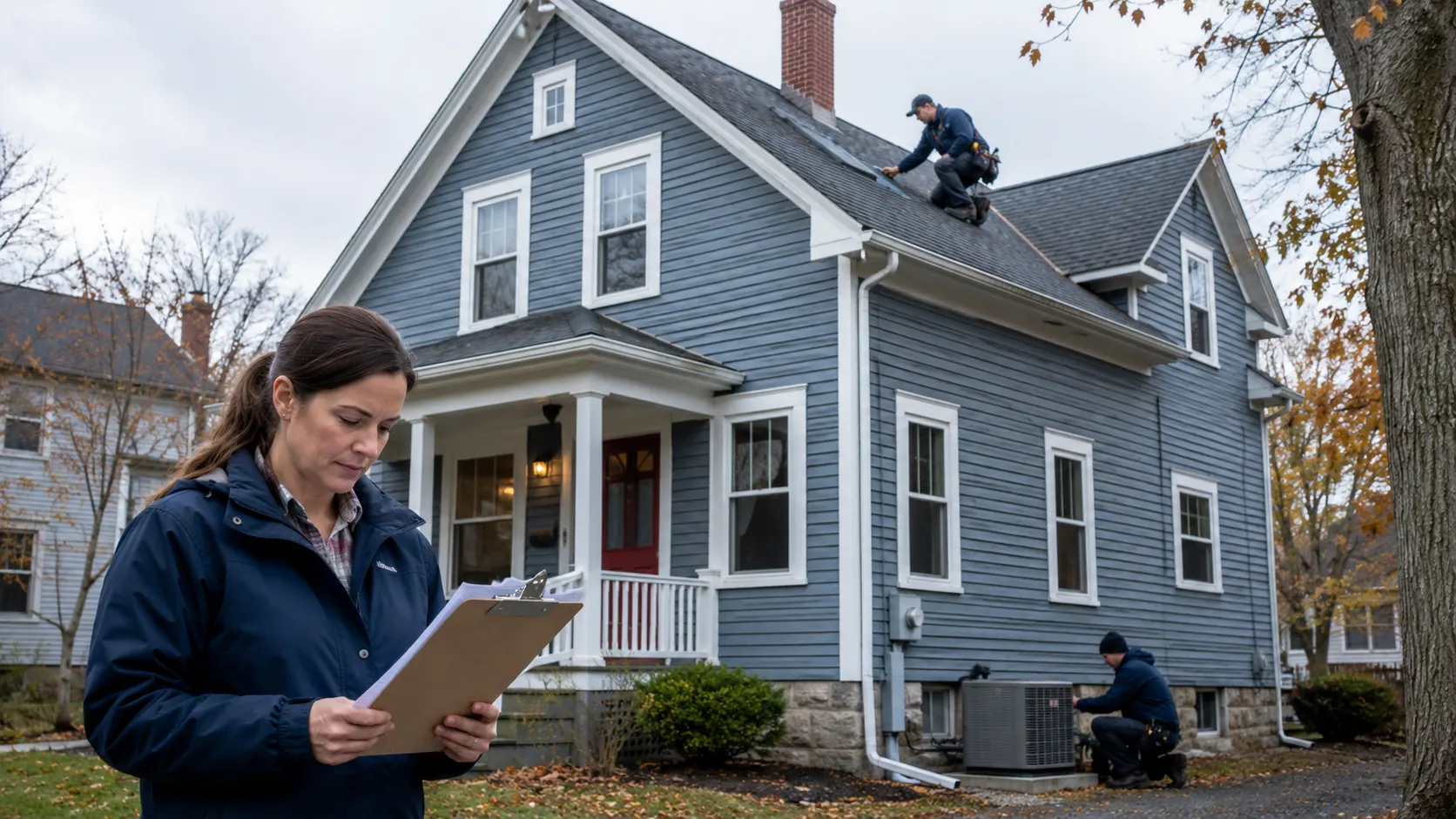
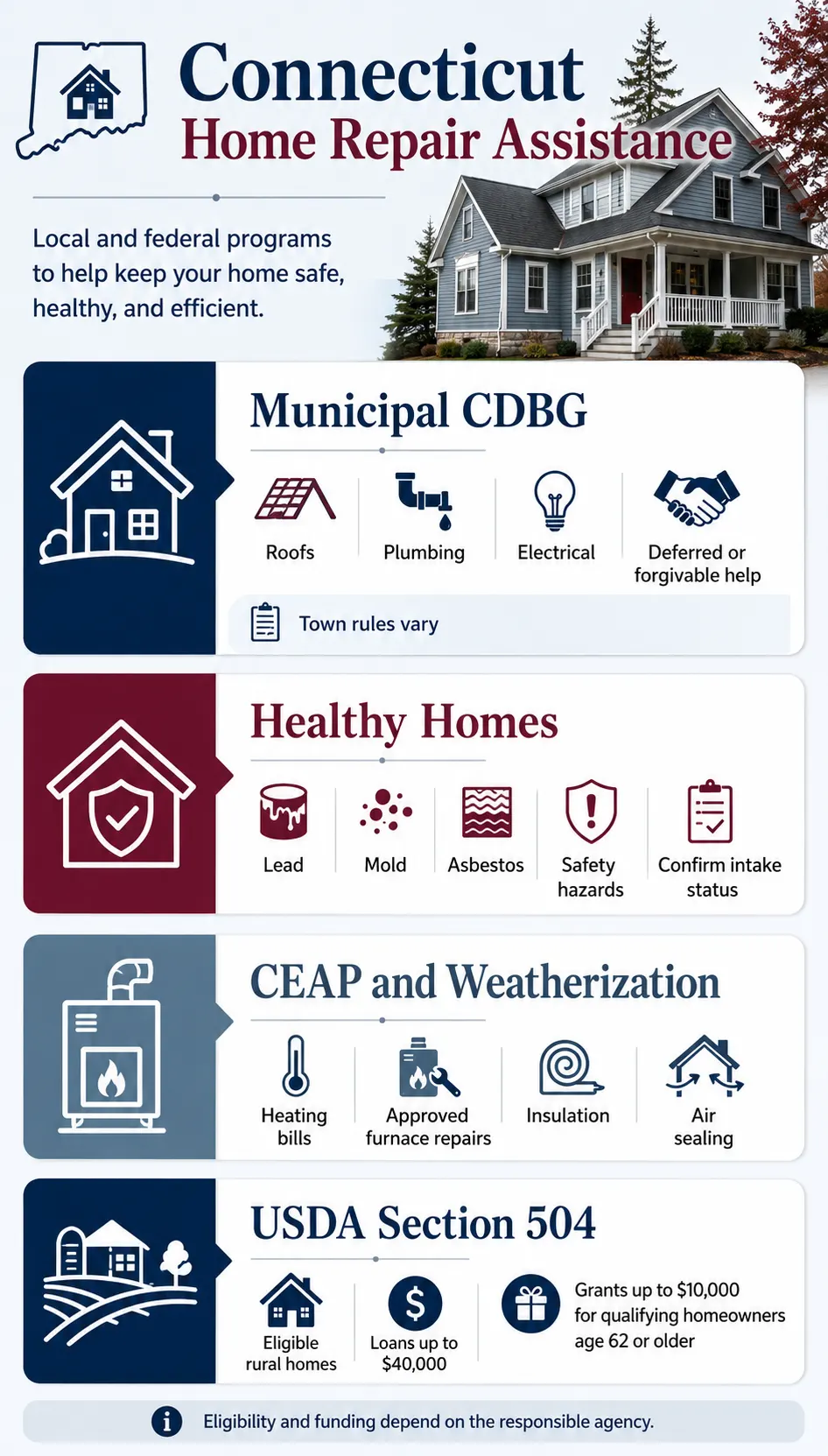
If your kitchen is falling apart, your bathroom is a disaster, or your wiring is ancient, the Community Development Block Grant (CDBG) is a major funding source behind local housing rehabilitation programs. In Connecticut, it is usually handled through your town or city.
- The Help: Often a 0% deferred loan, forgivable loan, or similar assistance. Repayment and lien rules vary by town.
- The Scope: May cover roofs, siding, heating, plumbing, electrical hazards, kitchens, and bathrooms when included in the approved work.
- 2026 Availability: Intake changes by town. The Small Cities Program serves eligible municipalities with populations under 50,000.
- The Action Plan: Call Town Hall and ask for the Housing Rehabilitation Coordinator, Planning Department, or Community Development office.
Contractors may hesitate because CDBG paperwork is heavier than a normal private job. Pro tip: Ask the administrator for contractors familiar with Small Cities work, inspections, and payment documentation.
Review when repair assistance may need to be repaid before signing program documents.
Official Link: Connecticut Department of Housing Small Cities CDBG Program
Structural and Health Safeguards: Healthy Homes
Run by Connecticut Children’s, Healthy Homes addresses housing hazards that can affect children and families. Eligibility and assistance depend on the funding source and current capacity.
- The Help: Assistance may support approved hazard-remediation work. The official page does not publish one universal $15,000 to $25,000 benefit.
- Repairs: Lead-based paint, mold, asbestos, unsafe windows or stairs, and related hazards identified through assessment.
- 2026 Update: The program currently says its queue is at capacity and it cannot accept new applications or add projects.
The program may inspect the home and prepare a scope of work. If serious hazards are found, work must follow safety rules and temporary relocation may be required. A pre-1978 home can present lead concerns, but age alone does not guarantee assistance.
Official Link: Connecticut Children’s Healthy Homes Program
The Mechanical Lifeline: Furnace and Energy Repair
If your furnace is dead or your electric bills are terrifying, you may need to combine heating assistance with weatherization.
Energy Assistance (CEAP) and Heating-System Help
The Connecticut Energy Assistance Program (CEAP) mainly helps with heating costs. Recipients may also qualify for heating-equipment repair or replacement, but a new furnace or boiler is not automatic.
- The Benefit: Heating-bill assistance and, when approved, heating-equipment repair or replacement.
- 2025-2026 Deadline: The last day to apply was May 29, 2026. Connecticut says 2026-2027 details will be posted when available.
See the LIHEAP emergency furnace repair guide for related options.
Weatherization Assistance Program (WAP)
- The Work: Heating-system tune-ups or repairs, blower-door-guided air sealing, attic and sidewall insulation, and health and safety inspections.
- Insider Tip: WAP is not a general roof program. If a leak blocks weatherization, ask whether a limited prerequisite repair is allowed or another program must fix it first.
An energy audit may include a blower-door test to measure air leakage. Ask the crew about pets, room access, appliances, and health concerns before testing.
Official Links: Connecticut Energy Assistance Program and Weatherization in Connecticut
The Rural Lifeline: USDA Section 504
If your home is in an eligible rural area, including parts of Tolland, Windham, Litchfield, and other counties, USDA Section 504 may help. Eligibility is address-specific.
- The Grant: Up to $10,000 for homeowners age 62 or older who meet very-low-income and other rules, for health and safety hazards.
- The Loan: Up to $40,000 at a fixed 1% interest rate for 20 years.
- Disaster Assistance: A qualifying presidentially declared disaster grant may reach $15,000. Combined help may reach $50,000, or $55,000 in a qualifying disaster area.
Read the USDA Section 504 guide and other home repair options for seniors.
Official Links: USDA Section 504 program and USDA Income and Property Eligibility Site
Comparison of 2026 Connecticut Programs
| Program | Best For | Maximum or Benefit | Main Limitation |
|---|---|---|---|
| Municipal CDBG | Roofs, kitchens, bathrooms, code repairs | Varies by town | May involve a lien or deferred repayment |
| Healthy Homes | Lead, mold, asbestos, safety hazards | Varies by project | Queue currently at capacity |
| USDA Section 504 | Rural health and safety repairs | $50,000 combined, or $55,000 disaster-area maximum | Rural, income, age, and credit rules |
| CEAP and WAP | Heating, insulation, air sealing | Depends on assessment and eligibility | Seasonal deadlines and approval |
2026 Eligibility Criteria: Do You Qualify?
Connecticut is expensive, but there is no single eligibility test for every repair program.
- CEAP and WAP: For 2025-2026, the limit was generally 60% of State Median Income. The published household-of-four limit was $91,854. Check again when 2026-2027 details are released.
- USDA: Uses county-specific very-low-income limits and requires applicants to be unable to obtain affordable credit elsewhere.
- Municipal CDBG: Uses local or HUD-based income limits that vary by town, household size, and program year.
- Asset Test: Do not assume savings, assets, debt, or available credit will be ignored. Rules vary.
- Occupancy: USDA and many municipal programs require you to own and occupy the home.
- Good Standing: A town may review taxes, mortgage status, insurance, liens, or code issues.
How to Apply: The Verified Roadmap
- Call 2-1-1: Dial 2-1-1 or use 211 Connecticut to find the agency serving your town.
- Municipal Intake: Ask Town Hall’s Planning or Community Development office for the rehab application, intake status, and repayment terms.
- Healthy Homes: Review the official page for lead, mold, asbestos, or other hazards. Confirm intake has reopened before applying.
- Veteran Help: Ask the VA about Home Improvements and Structural Alterations (HISA). The lifetime benefit may be up to $6,800 for qualifying categories or $2,000 for other covered disabilities. See the official HISA guidance.
Documents to Prepare
- Photo ID, proof of residence, deed, and insurance page
- Recent income and benefit documents
- Mortgage and property-tax information, if requested
- Repair photos, reports, notices, and estimates
FAQs
Can I get a new roof for free?
Generally, no. Roof help is more often a deferred municipal loan, a USDA grant for an eligible older rural homeowner, or disaster-specific assistance. Approval usually must come before work begins. Review roof replacement assistance options.
What if I live in a condo?
You may find help for equipment or accessibility work inside your unit, but roofs and siding are usually controlled by the condominium association. Confirm responsibility and program eligibility first.
How long is the waitlist?
There is no reliable statewide wait time. Timing depends on funding, inspections, contractor availability, and urgency. For a heating failure, contact your Community Action Agency or 2-1-1 immediately, but do not rely on a guaranteed two- or three-day replacement.
Is help available for disabled veterans?
Yes, if VA disability and housing rules are met. For federal fiscal year 2026, the Specially Adapted Housing (SAH) maximum is $126,526, while the Special Home Adaptation (SHA) maximum is $25,350. See the official VA disability housing grant page.
Conclusion
Start by checking the USDA Eligibility Map if you live in a rural area. At the same time, call Town Hall to ask whether its CDBG or municipal rehabilitation list is open, and review other home repair assistance guides by state.
Prepare a digital folder with your deed, insurance page, income documents, mortgage statement, property-tax information, repair photos, and inspection reports. Complete records can reduce delays, but they do not guarantee approval or priority.