Illinois Home Repair Grants 2026: HRAP, IHWAP & Chicago Guide
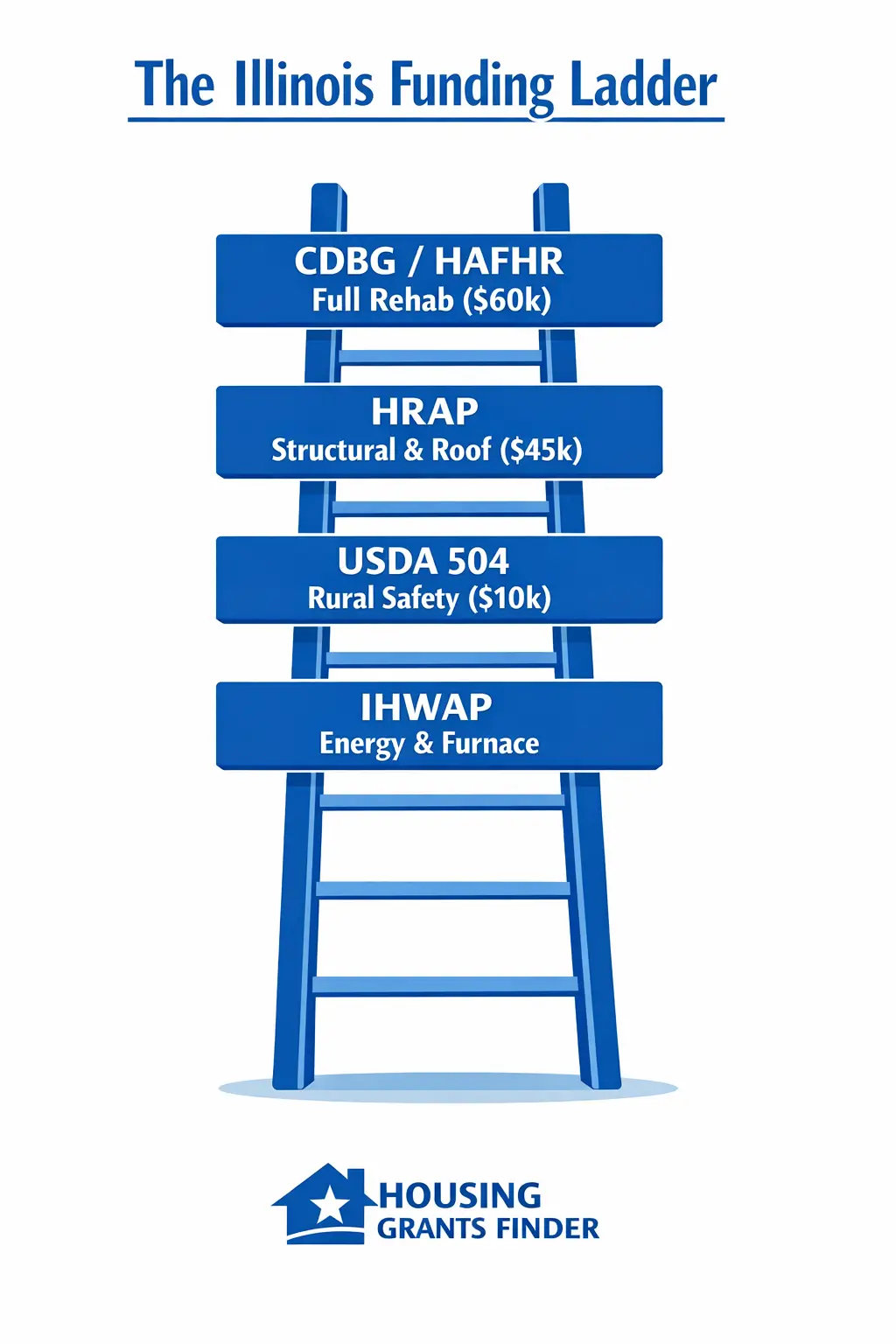
Illinois homes are built to handle the wind, but the winters take a toll. Between freezing pipes in January and heavy, humid summers, your home’s major systems work overtime. The state has refined its funding into three major streams: the Home Repair and Accessibility Program (HRAP), the CDBG Housing Rehabilitation Program, and the Homeowner Assistance Fund Home Repair (HAFHR). But there is a catch.
Illinois has made it easier than ever to access single-family rehabilitation funds by partnering with a dedicated network of local nonprofits, city offices, and regional councils right in your community. We’ve simplified the 2026 landscape so you can confidently find the right experts to help you secure your funding and start your home improvements today.
The Home Repair and Accessibility Program (HRAP)
In 2026, HRAP is the most versatile tool for Illinois homeowners. It is designed to fix structural failures and make homes safer for seniors or residents with disabilities.
What it fixes
This program targets Life-Safety issues. It is not for remodelling your kitchen.
- Structural Safety: Roof damage (see roof grants), foundation issues, and failing porches.
- Mechanical Systems: Ancient boilers, failing electrical, and plumbing leaks.
- Accessibility: Walk-in tubs, ramps, and widened doorways for mobility.
The Forgivable Loan Structure
While many call this a grant, it is technically a forgivable loan. You do not make monthly payments, but the debt is wiped out only if you stay in the house for the “affordability period.”
- Full Rehab & Accessibility: Usually a 5-year forgiveness period.
- Roof-Only Projects: Usually a 3-year forgiveness period.
- The Benefit Amount: Caps vary by grantee and project type. Most Full Rehab projects cap between $45,000 and $50,000, while Roof-Only limits are typically around $21,500 to $25,000.
- How to Start: Use the IHDA Local Agency Finder to find a partner in your specific county.
DCEO CDBG Housing Rehabilitation Program
This is a major repair funding pathway delivered through local governments, cities or counties rather than nonprofits.
The $60,000 Powerhouse
The Community Development Block Grant (CDBG) program is for comprehensive repairs. If your home needs a total overhaul to be safe, a new roof, windows, a furnace, and structural work, this is the program to find.
- Household Limit: Up to $60,000 per home.
- The Logic: The state awards a block of funding to a single community, which then uses that money to fix a targeted number of homes based on local need and repair costs.
The Municipal Window
Unlike other programs that run year-round, CDBG help is only available if your city or county applied for and won a grant for the 2026 cycle. You must contact your local City Hall or County Board and ask: “Is our community currently administering a CDBG Housing Rehab grant?”
Chicago Specifics: The 2026 Reality
If you live in Chicago, the landscape has changed significantly due to overwhelming demand.
The Roof and Porch Status
For 2026, the City of Chicago’s Home Repair Program, formerly the Roof and Porch Lottery, has stated that registration will not open due to the massive backlog of existing applications.
- What this means for you: Do not wait for a city lottery window this year.
- Your Alternatives: Your best path forward in Chicago is through NHS Chicago or Rebuilding Together.
NHS Chicago Home Repair
Neighbourhood Housing Services (NHS) offers grants and low-interest loans for specific Chicago neighborhoods. They operate on their own funding cycles and have stricter geographic rules. Check if your Zip Code is on their “Targeted Area” list.
- How to Apply: Visit the NHS Chicago Home Repair Application to see if your neighborhood qualifies.
Illinois Home Weatherization Assistance Program (IHWAP)
If your energy bills are higher than your mortgage, IHWAP is your solution. In 2026, the caps were updated to reflect the rising cost of materials and labor. (Check our windows and doors guide).
The New 2026 Caps
The DCEO has published specific limits for weatherization work:
- Energy-Related Work: Up to $20,000 for insulation, air sealing, and furnace/AC repair.
- Health & Safety Measures: Up to $4,000 for smoke detectors, ventilation, and minor repairs needed to make weatherization safe.
- Combined Total: Up to $24,000 in total assistance.
- Agency Link: Find your local Community Action Agency via the Illinois IHWAP Agency Map.
Rural Illinois: USDA Section 504
For those in the Downstate rural zones or farming communities, the USDA is a cornerstone of 2026 help.
- Maximum Grant: $10,000 for seniors (62+) to fix health hazards. (See senior grants).
- Maximum Loan: $40,000 at a 1.0% fixed interest rate.
- Official Portal: Apply through the USDA Rural Repair (IL) Portal.
City and County-Specific Programs
Beyond the state-wide IHDA and DCEO programs, several Illinois cities and counties receive direct HUD funding. These local programs often have their own application portals and specific repair priorities for 2026.
Peoria: The Roof Program Lottery
The City of Peoria maintains a specialized Roof Program Lottery to help homeowners address failing roofing systems. Homeowners must check the city’s official housing page for the specific 2026 lottery window to enter for assistance.
Link: Emergency Home Repair Program
Lake, DuPage, and Will Counties
In suburban Chicago, counties like Lake, DuPage, and Will manage their own Housing Rehabilitation programs.
- Lake County: Offers a Homeowner Rehabilitation Program for eligible owner-occupants to address code violations and health/safety issues.
- Direct Contact: If you live in a high-population county, visit the county’s Community Development or Housing department website. These local offices often have Direct Path funding that bypasses the statewide IHDA waitlists.
Rockford and St. Clair County
Larger urban centers like Rockford and counties like St. Clair (East St. Louis area) frequently administer emergency repair or accessibility grants.
- Rockford: Homeowners should monitor the Community Development Department for any 2026 openings in emergency repair or lead-hazard reduction.
- St. Clair: The Intergovernmental Grants Department is the primary hub for home repair and weatherization inquiries in the Metro East region.
Top Reasons Illinoisans Get Rejected in 2026
Mobile Home Ownership
In Illinois, if you own a mobile home but rent the lot, you are often ineligible for HRAP. Most rehab grants require you to own both the structure and the land.
Land Trust Ownership
Many Chicago-area homes are held in Land Trusts. Grant applications often stall because the Owner of Record must typically be an individual.
Property Tax Issues
If your property taxes have been sold or you have active tax liens, your application will likely hit a wall. You need proof of a clear title or payment plan.
FAQs
What is the $7,500 first-time home buyer grant in Illinois?
This is the IHDA 1st HomeIllinois program. It provides a $7,500 forgivable loan for down payment and closing costs over five years to buyers in specific targeted counties.
What grants are available in Illinois?
In 2026, the primary grants are HRAP for structural safety, HAFHR for COVID-related repairs, CDBG for municipal-wide rehab, and IHWAP for energy efficiency and weatherization.
What is the homeowner relief program in Illinois?
The Illinois Homeowner Assistance Fund (ILHAF) provides financial relief for those behind on mortgage or tax payments. The HAFHR branch of this fund specifically offers up to $60,000 for critical home repairs.
What is the Section 504 home repair program?
This is a USDA Rural Development program. It gives $10,000 grants to seniors (62+) and $40,000 low-interest (1%) loans to very low-income families in rural areas to address health and safety hazards. (Check USDA eligibility).
Do I have to pay for the initial home inspection?
No. Approved Illinois grantees provide an inspector at no cost. If a contractor asks for an upfront fee to inspect for the grant, it is a red flag.
Can I pick my own contractor?
Usually not. Programs like HRAP use lists of approved or qualified contractors that meet specific licensing and insurance standards.
What is the One Per Lifetime rule?
Many city and local programs operate on a one-time-only basis. If they provide a major repair in 2026, you often cannot return for another project for many years. It is best to prioritize the most expensive shell repair (like the roof) first.
How do I prove residency and ownership?
In 2026, you will need your Property Index Number (PIN), a copy of your recorded deed, and a recent utility bill. Most programs require proof of ownership, income, and residency before they will even schedule an inspection.
Conclusion
In 2026, Illinois home repair grants are about proving two things: your home is unsafe, and your income qualifies. Whether you use the COVID-related HAFHR funds, the structural HRAP loans, or the comprehensive CDBG grants, the key is acting before the local windows close.
Start by finding your local community action agency or nonprofit partner. Verify your PIN and ensure your property taxes are up to date. This ensures you are ready the moment the 2026 portals open.
Are there any grants or assistance programs for home renovations?