
Explore Home Repair Grants and Housing Assistance Options in 2026.
Independent educational guide for USDA, HUD, weatherization, and state home repair resources.
If you are dealing with a leaking roof, drafty windows, unsafe wiring, heating problems, or accessibility needs, this guide explains common federal, state, and local assistance paths for seniors, veterans, and lower-income homeowners.
Note: Housing Grants Finder is an independent informational website. We do not approve applications, distribute funds, guarantee grants, or represent any government agency. Final eligibility depends on the official program, funding availability, location, and required documents.
Eligibility Factors Guide
Review common factors that may affect fit for home repair assistance programs. This is educational only and does not submit an official application.
Educational guide only. No official application is submitted on this card.
What Kind of Home Repair Help Do You Need?
Select a category below to read about common repair assistance paths and state-level resources.
Roof Repair Financial Assistance
Are you looking for government grants for roof repair? This guide explains assistance options for leaking roofs and structural repairs. These programs may cover costs when repairs are necessary for health and safety.
Read Roof Repair Guide →Window and Door Replacement
Upgrade to energy-efficient windows and doors. These programs can help lower monthly utility bills and improve comfort in winter and summer.
Read Window & Door Guide →Free Home Repair for Senior Citizens
Specialized funding for seniors (62+) to install walk-in tubs, wheelchair ramps, grab bars, and other accessibility modifications.
Read Senior Repair Guide →Heating and Cooling (HVAC)
Get help repairing or replacing broken furnaces, air conditioners, and water heaters through energy assistance programs.
Read HVAC Help Guide →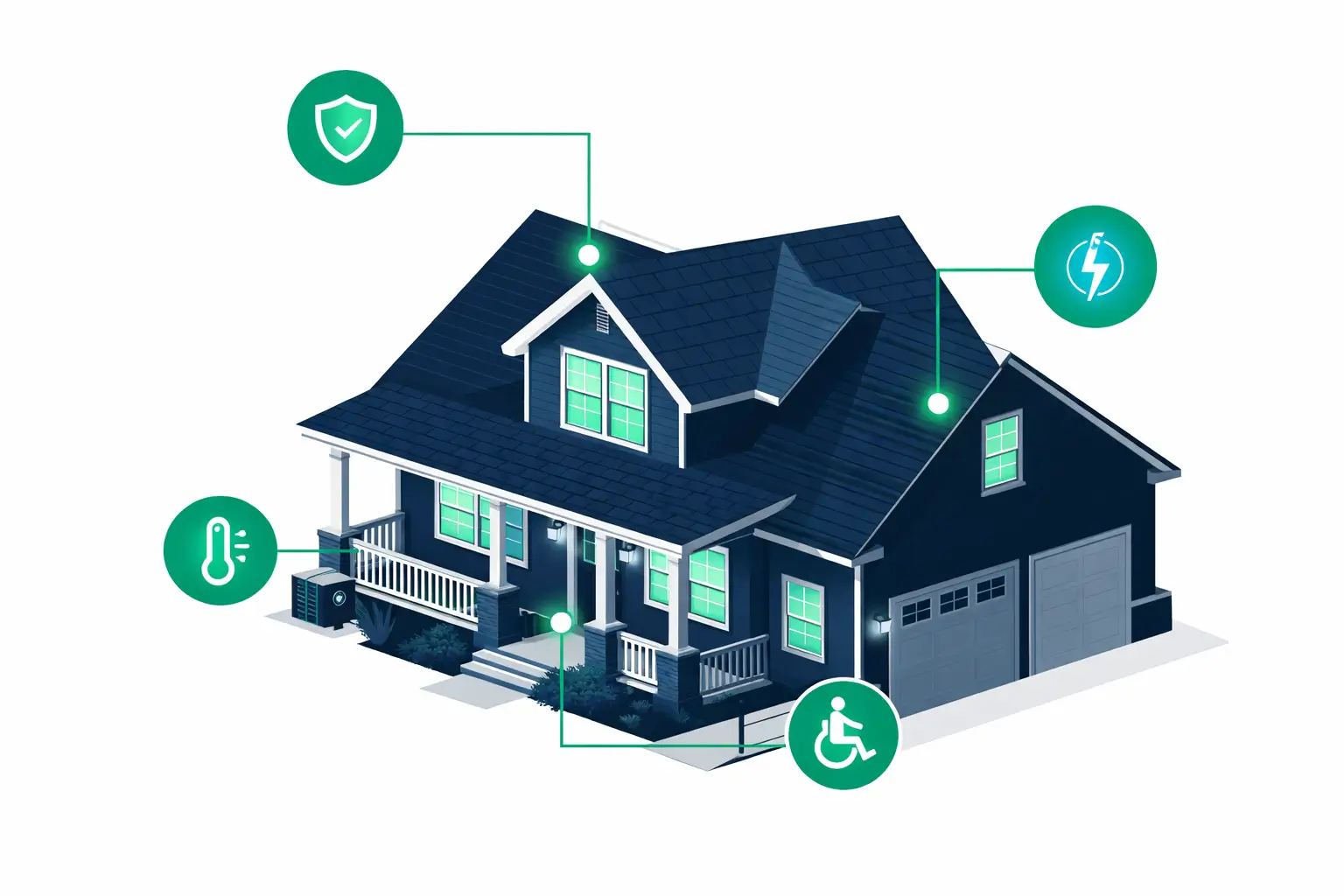
Top Government Home Repair Programs in 2026
If you cannot afford necessary home repairs, these federal and federally supported programs are common starting points.
USDA Section 504 Home Repair Program
Assistance PathWeatherization Assistance Program (WAP)
Energy UpgradesLIHEAP (Energy Assistance)
Energy AidHUD Home Improvement Options
Loan OptionsWho Is Eligible for Home Repair Grants?
While rules vary by state, most homeowner grants for repairs require applicants to meet these four key criteria:
Income Level
Must be within low to very-low income limits (varies by county & family size).
Home Ownership
You must generally own and occupy the home as your primary residence.
Age Priority
Seniors (62+) often get priority for grant funding, especially for safety upgrades.
Safety Need
Repairs must be for health, safety, or energy efficiency (not cosmetic upgrades).


How to Prepare Before Applying
Researching home repair assistance can take time. Use this process to stay organized before contacting an official program or agency.
Gather Your Documents
Before applying, ensure you have these common requirements ready:
Find a Local Agency
Most federal funds are distributed through local Community Action Agencies. You must apply through the office that serves your specific county.
Schedule Inspection
An official will likely visit your home to verify that the repairs are necessary for health, safety, or energy efficiency.
Submit Through the Official Program
Submit official forms only through the agency, nonprofit, lender, or program listed by the relevant state or local resource. Double-check every field before sending documents.
Find Home Repair Grants in Your State
Funding availability and eligibility rules change by location. Select your state below to access local program directories and application details.
Frequently Asked Questions
These answers cover common questions about home repair grants, eligibility, repayment, documents, and how housing assistance programs usually work.
Grants generally do not need to be repaid if you follow the program rules. Loans do need to be repaid. Always confirm whether you are applying for a grant, a loan, or a mixed funding program.
Many home repair grant pathways focus more on household income, ownership status, and repair need than on credit score. However, loan-based options may include lender or repayment requirements.
Approval timelines vary by program, funding availability, and documentation. Some urgent heating or safety repairs may move faster, while larger projects such as structural repairs can take longer.
A denial does not always mean you have no options. Some households review another grant route, a local nonprofit repair program, an accessibility fund, or a lower-cost emergency repair path depending on their location and repair type.
Programs often prioritize low-income homeowners who live in the property as their primary residence and need help with essential repairs involving health, safety, sanitation, weather damage, accessibility, or habitability.
Most traditional home repair grants are designed for owner-occupied homes. Some local programs or accessibility-related assistance paths may still help renters in limited situations, often with landlord involvement.
Programs often focus on urgent and essential repairs such as roof leaks, broken heating systems, plumbing failures, unsafe wiring, structural hazards, and accessibility changes that help a person remain safely in the home.
Many programs give added attention to seniors, especially when the repair affects safety, accessibility, or the ability to continue living independently at home.
In many cases, yes. Applicants are often asked to provide proof of identity, proof of homeownership, proof of residence, income documents, and evidence of the damage or repair need.
Usually not. Most home repair assistance programs focus on essential repairs rather than optional remodels or cosmetic improvements.
Federal programs set broad rules or funding structures, while state and local agencies may manage applications, add local requirements, or offer separate repair assistance options based on where you live.
You may still begin researching or screening your eligibility, but many formal applications move more smoothly when you can provide contractor estimates, photos of damage, and basic supporting documents.
Your Guide to Home Improvement Grants
Housing Grants Finder brings common home repair and improvement assistance pathways into one place, so you can quickly understand which programs exist, what they cover, and where applications are processed. Use the sections above to match your repair need, then choose your state to find the right local entry point.
Why Readers Use This Resource
Editorial Leadership
Elena Rossi
Lead ResearcherSpecializes in translating complex federal housing rules into easy-to-follow guides.
Marcus Thorne
Content ReviewerEnsures all program details match official HUD/USDA documentation standards.
⚠️ Fraud Warning
Be cautious of any person, contractor, or website that promises guaranteed grant money for a fee. Always verify program details through official sources.
⚖️ Site Disclaimer
HousingGrantsFinder.com is a private, independent information hub. We are not affiliated with the USDA, HUD, or any federal agency. We do not charge fees or provide grants directly.
Digital Operations